
The strategy focuses on continuous pressure, enhanced surveillance using drones and sensors, and strong inter-agency cooperation with J&K Police, CRPF, and VDGs.
Srinagar:
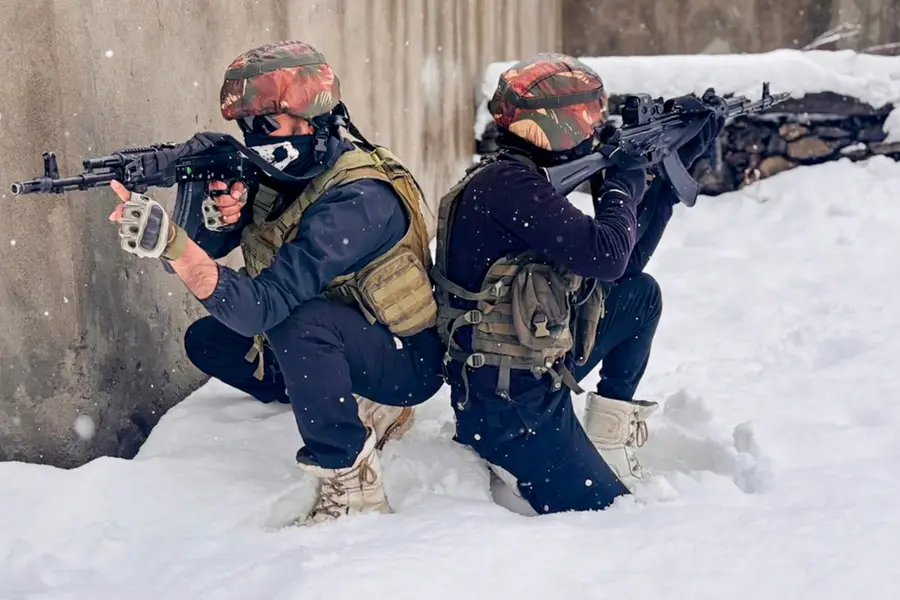
The Indian Army is currently engaged in one of its most gruelling counter-terrorism operations in recent years, braving the "Chillai Kalan," the harshest 40-day phase of winter, to track an estimated 30 to 35 terrorists across Jammu and Kashmir.
Security agencies report a tactical shift by Jaish-e-Mohammad terrorists, who are active despite the freezing temperatures that typically bring a lull to regional conflict. Unlike previous winters, these groups have abandoned their traditional practice of seeking shelter in local villages, instead isolating themselves in uninhabited, high-altitude ridges in the Doda and Kishtwar belts.
Officials believe this change is driven by necessity; following the April 22, 2025, terror attack in Pahalgam, local support for terrorists has reportedly evaporated.
"The terrorists have taken a big risk, both in logistics and health-wise," an Intelligence Bureau official said, noting that operating at such elevations in sub-zero conditions makes them vulnerable. However, authorities remain on high alert, warning that the terrorists’ current isolation may be a sign of desperation that could lead to attempts at low-scale attacks to boost cadre morale.
The intensified military campaign follows Operation Sindoor, a massive retaliatory strike launched in May 2025 that severely damaged terror infrastructure across the Line of Control. With infiltration routes effectively blocked, Pakistani handlers are reportedly activating existing units within the Valley, directing them to operate in small, fragmented groups to avoid detection.
In response, the Indian Army has discarded its traditional winter defensive posture in favour of a "proactive winter strategy." Special winter warfare sub-units have established snowbound bases and surveillance posts deep in the mountains, utilising drones and thermal imaging to maintain a "surveillance-sweep-surveillance" cycle.
Union Home Minister Amit Shah recently instructed forces to maintain a state of "very high alert," citing intelligence that several launchpads in Pakistan-occupied Kashmir (PoK) remain active. Despite these threats, officials expect the security situation to improve significantly after the Chillai Kalan concludes on Jan. 31, when weather conditions will become more favourable for ground troops.
With inputs from IANS
Published: 28 Dec 2025, 09:15 am IST
Related Topics
Disclaimer: Kindly avoid objectionable, derogatory, unlawful and lewd comments, while responding to reports. Such comments are punishable under cyber laws. Please keep away from personal attacks. The opinions expressed here are the personal opinions of readers and not that of Mathrubhumi.
