
High-level talks are set for Friday in Islamabad, led by U.S. Vice President JD Vance and Iranian Speaker Mohammad Bagher Ghalibaf, marking a critical step toward resolving the month-long conflict.
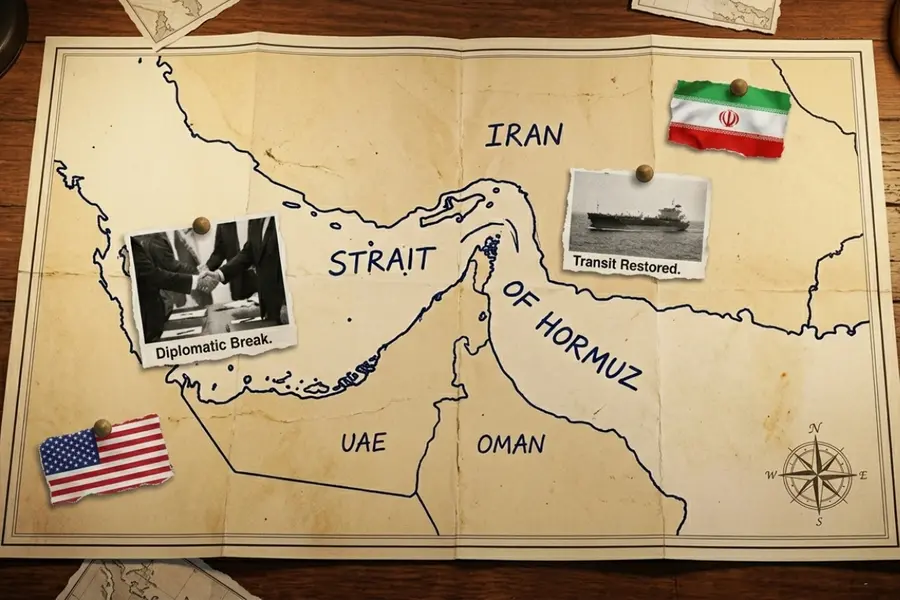
New Delhi: India’s Ministry of External Affairs (MEA) issued a formal statement on Wednesday welcoming a newly brokered ceasefire between the United States and Iran, expressing optimism that the reprieve will foster a "lasting peace" within the Middle East.
The diplomatic breakthrough followed an announcement by U.S. President Donald Trump that he would suspend the "bombing and attack" campaign against the Islamic Republic for a period of 14 days. The president indicated that a 10-point proposal submitted by Tehran has been deemed a viable foundation for a permanent resolution.
“We welcome the ceasefire reached and hope that it will lead to a lasting peace in West Asia," the MEA stated. "As we have continuously advocated earlier, de-escalation, dialogue and diplomacy are essential to bring an early end to the ongoing conflict. The conflict has already caused immense suffering to people and disrupted global energy supply and trade networks. We expect that unimpeded freedom of navigation and global flow of commerce would prevail through the Strait of Hormuz.”
The Role of Regional Mediation
President Trump credited the leadership of Pakistan for playing a pivotal role in the sudden de-escalation. In a post on his Truth Social platform, the president revealed that a direct appeal from Islamabad led to the suspension of a massive military strike scheduled for Tuesday night.
“Based on conversations with Prime Minister Shehbaz Sharif and Field Marshal Asim Munir, of Pakistan, and wherein they requested that I hold off the destructive force being sent tonight to Iran, and subject to the Islamic Republic of Iran agreeing to the COMPLETE, IMMEDIATE, and SAFE OPENING of the Strait of Hormuz, I agree to suspend the bombing and attack of Iran for a period of two weeks. This will be a double-sided CEASEFIRE!” Trump said.
The president asserted that the United States has already "met and exceeded all Military objectives" and is nearing a definitive long-term peace agreement. He noted that the extension provides the necessary window to finalise points of past contention.
Tehran’s Reciprocal Response
The Iranian government signalled its acceptance of the peace overture, agreeing to a cessation of defensive operations and the temporary reopening of the Strait of Hormuz. Iranian Foreign Minister Seyed Abbas Araghchi clarified on social media that the pause in hostilities remains contingent on the absence of American strikes.
“Considering the request by the U.S. for negotiations based on its 15-point proposal as well as announcement by POTUS about acceptance of the general framework of Iran's 10-point proposal as a basis for negotiations, I hereby declare on behalf of Iran's Supreme National Security Council: If attacks against Iran are halted, our Powerful Armed Forces will cease their defensive operations," Araghchi wrote.
He added that during the two-week period, "safe passage through the Strait of Hormuz will be possible via coordination with Iran's Armed Forces and with due consideration of technical limitations."
High-Level Talks in Islamabad
The ceasefire sets the stage for a critical diplomatic summit scheduled for Friday in Islamabad, Pakistan. The American delegation will be led by Vice President JD Vance, while the Iranian side will be represented by Parliament Speaker Mohammad Bagher Ghalibaf.
The meeting marks the first formal, high-level negotiation between the two adversaries since the conflict began on Feb. 28. While the two-week window offers a respite from a month of devastating aerial campaigns and maritime blockades, the MEA and other international observers emphasised that the ultimate success of the ceasefire depends on the transition from a temporary pause to a sustainable diplomatic framework.
With inputs from ANI
Published: 08 Apr 2026, 03:35 pm IST
Related Topics
Disclaimer: Kindly avoid objectionable, derogatory, unlawful and lewd comments, while responding to reports. Such comments are punishable under cyber laws. Please keep away from personal attacks. The opinions expressed here are the personal opinions of readers and not that of Mathrubhumi.
