
Vijay Diwas marks one of India’s most decisive military victories, commemorating the 1971 war that led to the liberation of Bangladesh and showcased the unmatched courage of the Indian Armed Forces.
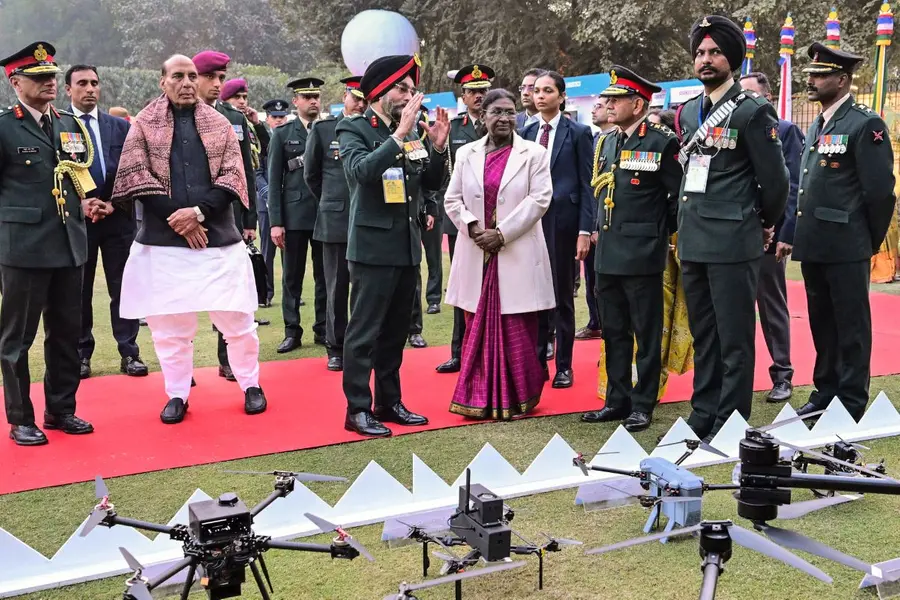
New Delhi: India on Monday commemorated the 54th Vijay Diwas, marking its decisive victory in the 1971 war, with Prime Minister Narendra Modi, President Droupadi Murmu, senior ministers, political leaders, and the Indian Armed Forces paying glowing tributes to the heroes who shaped history.
In a post on X, Prime Minister Modi remembered the bravery and sacrifice of the soldiers whose courage ensured India’s historic triumph and the liberation of Bangladesh. He said their steadfast resolve and unmatched spirit of nationalism continue to inspire generations and remain a source of national pride.
President Droupadi Murmu also paid her respects, saluting the valour and devotion of the Indian Armed Forces. She recalled their courage in 1971 and highlighted the Army’s growing self-reliance through indigenisation, citing Operation Sindoor as a modern example of strategic resolve and preparedness.
Defence Minister Rajnath Singh underlined the flawless coordination between the Indian Army, Navy, and Air Force during the 1971 war, stating that their discipline and combat spirit reshaped history and asserted India’s strategic dominance on the global stage.
Uttar Pradesh Chief Minister Yogi Adityanath described the victory as an immortal saga of heroism, saying the nation remains forever indebted to the sacrifices of its brave warriors.
Congress president Mallikarjun Kharge also saluted the armed forces and Mukti Bahini, crediting the leadership of then Prime Minister Indira Gandhi for turning the victory into a defining example of humanity and justice that redrew the map of South Asia.
Meanwhile, the Indian Army marked Vijay Diwas by recalling the historic liberation of Bangladesh in a post shared by its Additional Directorate General of Public Information.
The Army described the 1971 war as a triumph that ended atrocities and oppression, noting that in just 13 days, nearly 93,000 Pakistani soldiers surrendered—one of the largest military surrenders in global history.
The Eastern Command of the Indian Army also commemorated the day with a Military Tattoo in Kolkata, reinforcing the legacy of courage, loyalty, and justice symbolised by Vijay Diwas, which continues to resonate “then and now.”
About Vijay Divas:
The 1971 India–Pakistan War stands as one of the most decisive and swift military victories in modern history. Triggered by the humanitarian crisis caused by widespread atrocities in then East Pakistan, the conflict saw India intervene in support of the Mukti Bahini and the Bangladesh Liberation Movement.
In a remarkable 13-day campaign marked by seamless coordination between the Indian Army, Navy, and Air Force, Indian forces overwhelmed Pakistani defences, leading to the surrender of nearly 93,000 Pakistani troops on December 16, 1971—one of the largest military surrenders since World War II.
The victory resulted in the birth of Bangladesh as an independent nation and permanently altered the geopolitical map of South Asia.
Vijay Diwas, observed annually on December 16, commemorates this historic triumph and honours the courage, sacrifice, and strategic brilliance of the Indian Armed Forces. Beyond a military victory, the day symbolises India’s commitment to justice, humanitarian values, and standing by oppressed communities.
Vijay Diwas serves as a reminder of the nation’s military prowess, unity, and resolve, while paying tribute to the soldiers whose bravery continues to inspire generations and strengthen India’s national consciousness.
Published: 16 Dec 2025, 10:12 am IST
Related Topics
Disclaimer: Kindly avoid objectionable, derogatory, unlawful and lewd comments, while responding to reports. Such comments are punishable under cyber laws. Please keep away from personal attacks. The opinions expressed here are the personal opinions of readers and not that of Mathrubhumi.
