
The unions are rallying workers and farmers for a united protest, stating their concerns were ignored.
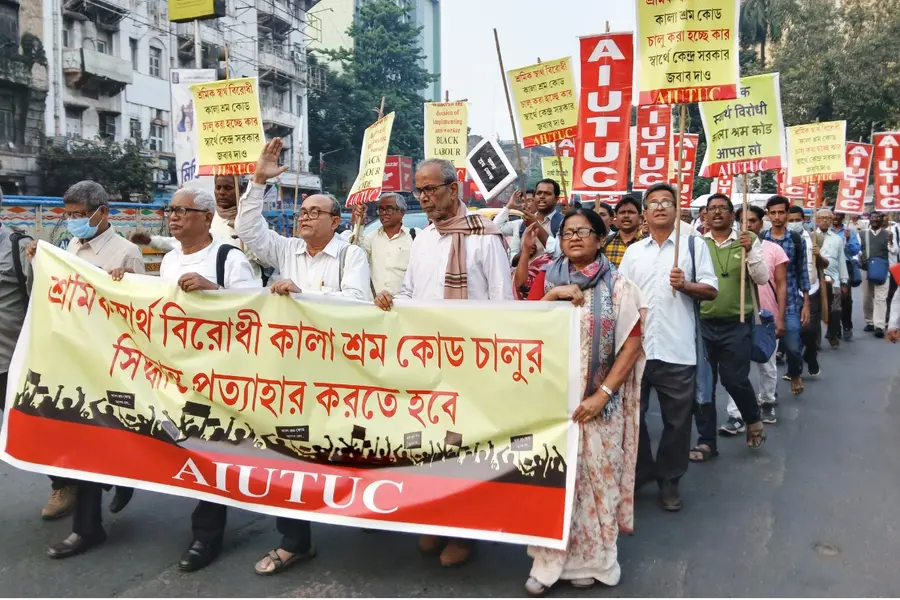
New Delhi: Ten major Indian trade unions have condemned the government’s implementation of four new labour codes as a "deceptive fraud" against workers and have announced plans for nationwide protests on November 26.
The government officially introduced the new labour codes on November 21, aiming to consolidate 29 existing labour laws into streamlined regulations covering wages, industrial relations, social security, and occupational safety. Prime Minister Narendra Modi described the reforms as a step toward universal social security, timely wage payments, safer workplaces, and more job opportunities.
Despite these claims, the Joint Platform of Central Trade Unions, comprising ten major unions including the All India Trade Union Congress and the Indian National Trade Union Congress, denounced the codes as "anti-worker" and "pro-employer." They argued that the new laws undermine worker protections such as fixed-term employment and collective bargaining rights. Amarjeet Kaur, general secretary of AITUC, highlighted concerns about inadequate safety measures for women permitted to work night shifts.
The trade unions have called on workers across all sectors to participate in protests on November 26, wearing black badges and mobilising alongside farmers' groups in a unified resistance. The unions contend the government ignored their repeated appeals for meaningful dialogue and pushed the codes through unilaterally.
While some business groups fear the codes could increase operating costs for small and medium enterprises, others like the Bharatiya Majdoor Sangh, affiliated with the ruling party, support the reforms as a necessary milestone. Among the key changes are universal minimum wages, expanded social security to gig workers, and raising the threshold for layoffs requiring government approval from 100 to 300 workers, allowing greater flexibility for employers.
The government and Labour Ministry maintain that these codes will modernise India's labour framework, protect workers' rights, and promote economic growth, but the strong backlash from unions signals continued challenges ahead for industrial relations in the country.
Published: 22 Nov 2025, 10:03 pm IST
Related Topics
Disclaimer: Kindly avoid objectionable, derogatory, unlawful and lewd comments, while responding to reports. Such comments are punishable under cyber laws. Please keep away from personal attacks. The opinions expressed here are the personal opinions of readers and not that of Mathrubhumi.
