
India defended the operation as measured and responsible, targeting terrorist camps and dismantling infrastructure in Pakistan and Pakistan-occupied Jammu and Kashmir.
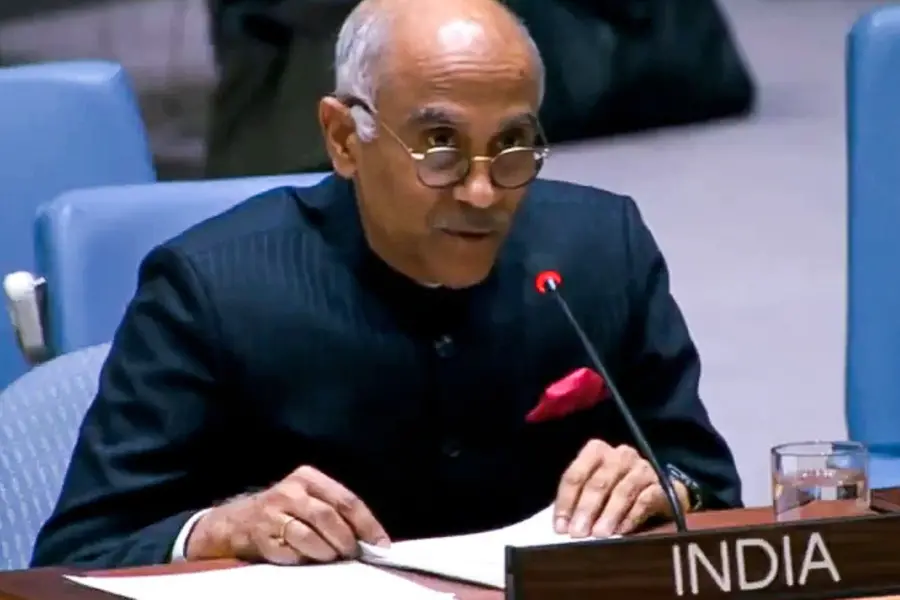
New York: India delivered a blistering rebuttal to Pakistan at the United Nations on Monday, dismissing Islamabad’s criticism of New Delhi’s retaliatory military strikes as "false and self-serving" while asserting that the neighbouring nation has no authority to intervene in Indian internal affairs.
Speaking during a UN Security Council Open Debate, India’s Permanent Representative, Ambassador Harish Parvathaneni, accused Pakistan of maintaining a "single-point agenda" centred on harming India and its citizens.
The diplomatic clash follows "Operation Sindoor," a May 2025 military action launched by the Indian Armed Forces in response to a deadly terror attack in Pahalgam on April 22 of last year, which claimed the lives of 26 civilians.
Defending Operation Sindoor
Ambassador Parvathaneni stated that Pakistan’s account of the operation was a distortion of well-documented facts. He reminded the Council that the body itself had previously condemned the Pahalgam massacre and called for the sponsors and financiers of the attack to be held accountable.
"That is exactly what we did," Parvathaneni said, describing the Indian military response as "measured, non-escalatory and responsible."
Operation Sindoor, carried out in the pre-dawn hours of May 7, 2025, targeted nine terrorist training camps located within Pakistan and Pakistan-occupied Jammu and Kashmir (PoJK). The envoy noted that the operation successfully dismantled terrorist infrastructure, including significant damage to several Pakistani airbases.
"The destruction caused to multiple Pakistani airbases by the Indian operation, including images of destroyed runways and burnt-out hangars, are in the public domain," he said.
Rejection of a 'New Normal'
Responding to Pakistani officials who referenced a "new normal" in regional relations, the Ambassador insisted that state-sponsored terrorism can never be categorised as such.
"It is not normal to tolerate Pakistan's continued use of terrorism as an instrument of state policy," he said, warning the Council against becoming a platform that legitimises such acts. "We will do whatever required to protect and ensure the safety and security of our citizens."
Sovereignty and Treaty Suspensions
The Indian envoy reiterated that the Union Territory of Jammu and Kashmir "has been, is, and will always remain an integral and inalienable part of India," flatly stating that Pakistan has "no locus standi" to comment on the region.
The exchange also touched on the 65-year-old Indus Waters Treaty. Parvathaneni argued that while India entered the pact in good faith, Pakistan’s history of cross-border aggression had violated its spirit. He confirmed that India was "compelled to place the treaty in abeyance" until Pakistan takes "credible and irrevocable" steps to end its support for terrorism.
A Call for Introspection
In a sharp concluding jab, Parvathaneni advised the Pakistani delegation to examine its own domestic governance before criticising others, specifically citing recent constitutional shifts in Islamabad.
"Pakistan is well advised to introspect about the rule of law," the envoy said. "It could start by asking itself how it has let its armed forces engineer a constitutional coup through the 27th amendment and giving lifetime immunity to its Chief of Defence Forces."
The Ambassador ended by calling for a reformed multilateralism to ensure the United Nations can fulfil its mandate of maintaining global security.
With inputs from ANI
Published: 27 Jan 2026, 09:43 am IST
Related Topics
Disclaimer: Kindly avoid objectionable, derogatory, unlawful and lewd comments, while responding to reports. Such comments are punishable under cyber laws. Please keep away from personal attacks. The opinions expressed here are the personal opinions of readers and not that of Mathrubhumi.
