
Estimates also suggest that premature mortality in 2022 due to outdoor air pollution in India translated into a financial loss of USD 339.4 billion -- about 9.5 per cent of the country's GDP.
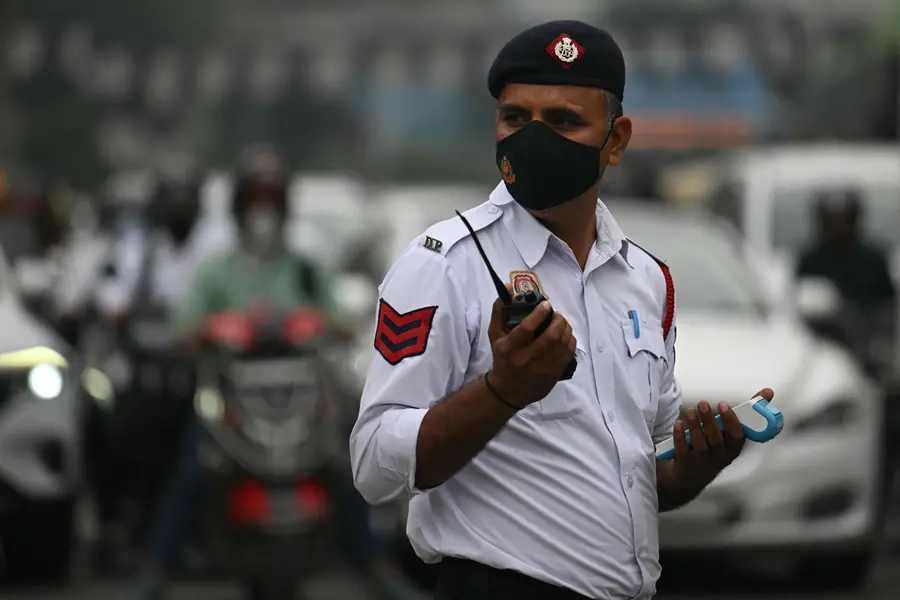
New Delhi: Human-caused PM2.5 pollution led to more than 17 lakh deaths in India in 2022, marking a 38 per cent rise since 2010, with fossil fuels contributing to nearly half of them, according to a global report published by The Lancet journal.
The ‘2025 Report of The Lancet Countdown on Health and Climate Change’ revealed that fossil fuels were responsible for 44 per cent of these deaths, while the use of petrol for road transport alone accounted for 2.69 lakh deaths. The report was produced by an international team of 128 experts from 71 academic institutions and UN agencies, led by University College London.
Air pollution toll equals 9.5% of India’s GDP
The study estimated that premature deaths due to outdoor air pollution in 2022 resulted in a financial loss of USD 339.4 billion, equivalent to about 9.5 per cent of India’s GDP.
“There were over 1,718,000 deaths attributable to anthropogenic air pollution (PM2.5) in 2022 in India, an increase of 38 per cent since 2010. Fossil fuels (coal and liquid gas) contributed to 752,000 (44 per cent) of these deaths in 2022,” the authors wrote in a country-related data sheet accompanying the Lancet report.
The findings come as Delhi continues to grapple with severe air pollution, with air quality oscillating between ‘poor’ and ‘very poor’ in recent days. Cloud-seeding trials were conducted last week in areas including Burari, Karol Bagh, and Mayur Vihar to combat pollution. However, environmentalists have dismissed the effort as a “short-term measure” that fails to address the root causes of the crisis.
Fossil fuels still dominate India’s energy mix
The report highlighted that fossil fuels continue to power nearly all road transport in India (96 per cent), while electricity contributes a mere 0.3 per cent. As of 2022, coal made up 46 per cent of the country’s total energy supply and three-fourths of total electricity, while renewables accounted for just 2 per cent of total energy and 10 per cent of electricity.
The authors warned that continued over-reliance on fossil fuels and the failure to adapt to climate change are costing India lives, health, and livelihoods. They also noted that India’s preparedness for a low-carbon transition fell by two per cent from 2023.
The report further estimated that an average of 10,200 deaths each year between 2020 and 2024 could be attributed to PM2.5 pollution from forest fires, a 28 per cent increase from 2003–2012 levels.
In addition, 58 per cent of household energy in India came from highly polluting solid biofuels in 2022, while electricity accounted for only 18 per cent. Household air pollution linked to these fuels was associated with 113 deaths per one lakh population, with higher mortality in rural areas compared to urban regions.
Published: 30 Oct 2025, 02:13 pm IST
Related Topics
Disclaimer: Kindly avoid objectionable, derogatory, unlawful and lewd comments, while responding to reports. Such comments are punishable under cyber laws. Please keep away from personal attacks. The opinions expressed here are the personal opinions of readers and not that of Mathrubhumi.
