
The project will divert water for irrigation in drought-prone areas of Jammu and Kashmir and Punjab, and also generate hydropower.
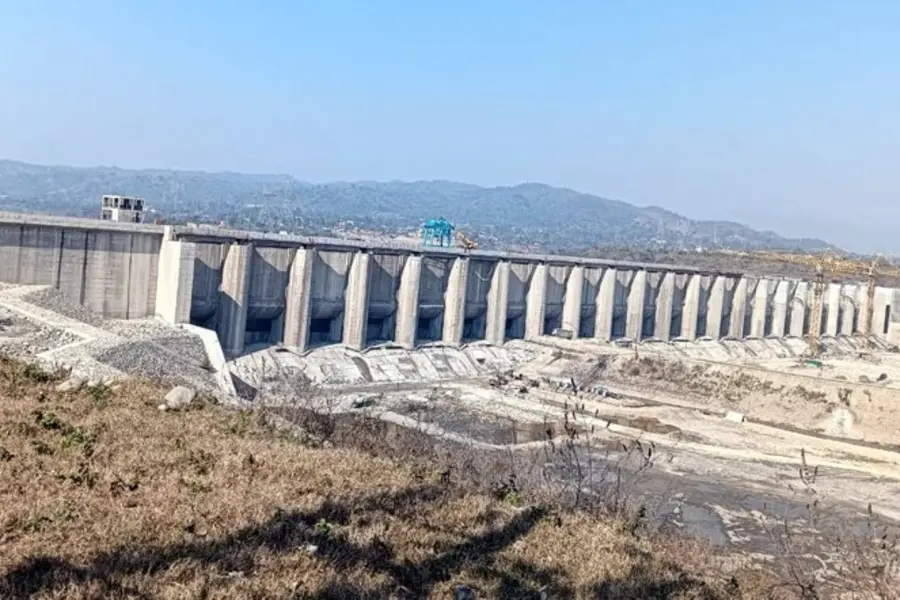
New Delhi: India is moving to eliminate the flow of surplus water from the Ravi River into Pakistan by March 31, 2026, a deadline set by regional officials as the centrepiece of a strategic pivot in the subcontinent's decades-long water diplomacy.
The completion of the Shahpur Kandi Barrage, a project delayed for nearly 40 years, follows New Delhi’s decision to place the 1960 Indus Waters Treaty (IWT) in "abeyance" following a major terrorist attack in Pahalgam last year.
The Engineering Cutoff
Jammu and Kashmir Water Resources Minister Javed Ahmed Rana confirmed Monday that the barrage, located on the border with Punjab, is in its final operational stages.
- The "Waste" Factor: For decades, approximately 1,150 cusecs of India’s entitled water share flowed downstream to Pakistan due to insufficient storage infrastructure.
- Redirection: Starting in April, this water will be diverted to irrigate over 32,000 hectares in the drought-prone Kandi belts of Kathua and Samba, and another 5,000 hectares in Punjab.
- Power Output: The project will also enable Punjab to generate 206 MW of hydropower, optimising the output of the upstream Ranjit Sagar Dam.
A Policy of "Water Abeyance"
The fast-tracking of the barrage is part of a broader punitive strategy initiated after the April 2025 Pahalgam attack, which left 26 people dead.
- Treaty Suspension: India has suspended its obligations under the IWT, including data sharing and official inspections.
- Western Rivers: In addition to the Ravi (an Eastern River), India has accelerated four major hydroelectric projects on the Chenab River (Pakal Dul, Kiru, Kwar, and Ratle), slated for commissioning by 2027-2028.
- J&K Autonomy: Local officials are also pushing for the revival of the Tulbul Navigation Project on the Jhelum, which was previously stalled by Pakistani objections under the treaty.
The Geopolitical Crisis
Islamabad has condemned the moves as the "weaponisation of water," warning that the cutoff could devastate Pakistan's agricultural sector, which accounts for nearly a quarter of its GDP.
"Yes, excess water to Pakistan will be stopped. It has to be stopped," Minister Rana told reporters. "Why are you bothered about Pakistan? Let them stew in the problems of their own making."
The World Bank, which originally brokered the 1960 treaty, has yet to issue a definitive ruling on India's unilateral suspension, though Pakistan has sought urgent arbitration at the Court of Arbitration in The Hague, a process New Delhi has formally rejected.
Published: 18 Feb 2026, 09:08 am IST
Disclaimer: Kindly avoid objectionable, derogatory, unlawful and lewd comments, while responding to reports. Such comments are punishable under cyber laws. Please keep away from personal attacks. The opinions expressed here are the personal opinions of readers and not that of Mathrubhumi.
