
The program aims to modernise the Indian Air Force's fleet by replacing and supplementing its aging transport aircraft. Ultimately, it strengthens India's ability to rapidly deploy troops, equipment, and humanitarian aid across vast distances.
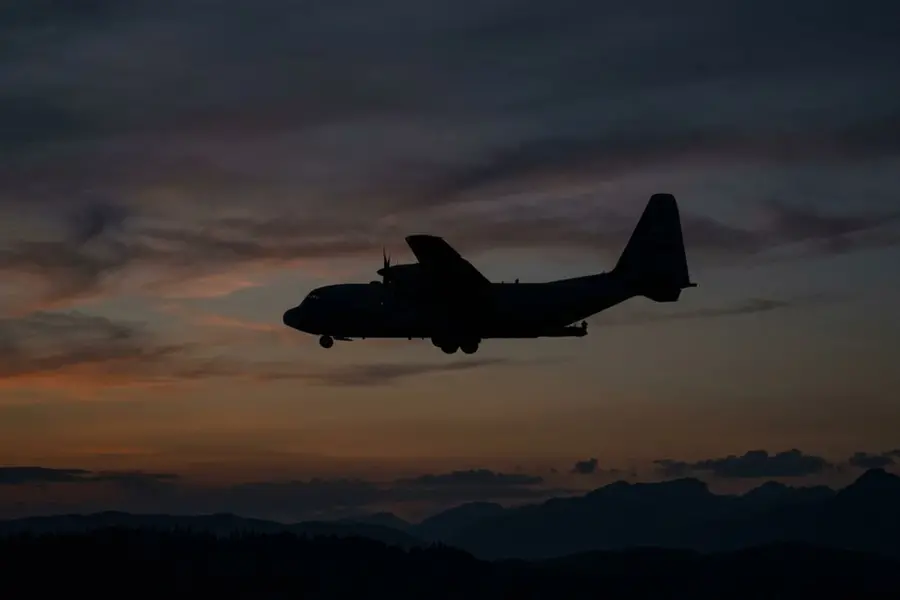
India's long-pending military transport aircraft acquisition programme appears to be entering a decisive phase. According to Embraer, New Delhi is expected to issue a Request for Proposal (RFP) within the next few months for the procurement of between 60 and 80 medium transport aircraft, potentially making it one of the largest military aviation contracts in recent years.
The programme is intended to replace and supplement ageing transport aircraft while strengthening the Indian Air Force's ability to rapidly move troops, equipment, humanitarian aid, and military supplies across the country's vast geography and beyond.
Speaking on the sidelines of IATA AGM in Rio de Janeiro, Embraer CEO Francisco Gomes Neto expressed confidence that the procurement process would soon gain momentum, with a final decision expected by the end of 2027.
For global aircraft manufacturers, the competition represents a significant opportunity. For India, it represents an important decision that could shape military airlift capabilities for the next three to four decades.
Why India needs new transport aircraft
Military transport aircraft are among the least visible but most important assets in any air force. Unlike fighter jets that dominate headlines, transport aircraft quietly perform critical missions every day. They carry troops to remote military bases, deliver supplies to border regions, support disaster relief operations, evacuate civilians during emergencies, and transport heavy equipment across long distances.
India's strategic requirements have expanded considerably over the last decade. The military must support operations across the Himalayas, the Indian Ocean region, and increasingly participate in international humanitarian and peacekeeping missions.
As geopolitical tensions continue to evolve and India's military modernisation gathers pace, the need for a modern, versatile transport fleet has become increasingly urgent.
Embraer sees India as a big market
Embraer has made no secret of its ambitions in India. The company is actively promoting its C-390 Millennium transport aircraft and has partnered with the Mahindra Group to strengthen its local industrial footprint and align with India's "Make in India" objectives.
For Embraer, securing the Indian order would represent one of the largest military transport aircraft contracts in its history and significantly boost the global profile of the C-390 programme. The aircraft has already attracted attention from several countries seeking a modern alternative to older transport aircraft platforms.
The battle between C-390 Millennium vs C-130 Hercules
At the heart of the competition lies a contest between two very different aircraft philosophies.
The Embraer C-390 Millennium represents a newer generation of military transport aircraft, while the Lockheed Martin C-130 Hercules is a proven workhorse with decades of operational experience. The C-130 is already familiar to India. The Indian Air Force currently operates C-130J Super Hercules aircraft for special operations and tactical transport missions.
The C-390, however, offers a more modern design with higher speed and greater cargo capacity.
C-390 Millennium
The C-390 is powered by two jet engines and is capable of cruising at significantly higher speeds than traditional turboprop transport aircraft. The aircraft can carry heavier payloads, transport armoured vehicles, helicopters, military equipment, and perform aerial refuelling missions. It is designed for rapid deployment and can cover long distances quickly.
Supporters of the C-390 argue that its jet-powered design offers greater operational flexibility and reduced transit times, which can be valuable for a country as geographically large as India.
C-130 Hercules
The Hercules remains one of the most successful military aircraft ever built.
Its biggest advantage is its proven track record. The aircraft has been used by dozens of air forces worldwide and has accumulated millions of flight hours in virtually every operational environment imaginable.
The C-130's turboprop engines provide excellent short-field performance, making it particularly effective for operations from rough, unprepared, or high-altitude airstrips.
Since India already operates the C-130J, selecting additional Hercules aircraft would simplify pilot training, maintenance, logistics, and spare parts management.
Head-to-Head Comparison
| Capability | Embraer C-390 Millennium | Lockheed Martin C-130J Hercules |
| Aircraft Type | Twin-jet transport aircraft | Four-engine turboprop transport |
| Maximum Speed | Around 870 km/h | Around 670 km/h |
| Payload Capacity | Approximately 26 tonnes | Approximately 20 tonnes |
| Operational Experience | Relatively new platform | Decades of proven service |
| Existing Indian Fleet | No | Yes |
| Logistics Ecosystem | Developing | Established |
| Fleet Commonality | Limited | High |
| Strategic Partnership | Mahindra-Embraer | Existing Lockheed relationship |
Which aircraft might suit India better?
The answer depends largely on what India prioritises.
If the Indian Air Force seeks maximum speed, higher payload capacity, and a modern platform designed around contemporary operational requirements, the C-390 presents a compelling case. It offers greater transport efficiency and may provide better long-term capability growth.
However, if India prioritises proven reliability, fleet commonality, lower integration risks, and seamless compatibility with existing infrastructure, the C-130 Hercules retains significant advantages.
The Indian military has traditionally balanced innovation with operational certainty. Given the scale of the proposed acquisition, decision-makers will likely evaluate not only aircraft performance but also lifecycle costs, industrial benefits, technology transfer opportunities, and domestic manufacturing participation.
The make in India factor
One factor that could play an important role is industrial participation. India increasingly expects major defence procurements to contribute to domestic manufacturing, technology transfer, and local employment generation.
Embraer's partnership with Mahindra reflects an effort to align with these expectations. Any proposal that offers substantial local production and supply-chain development could receive closer attention from policymakers.
The transport aircraft competition is therefore likely to be about much more than aircraft performance alone.
Conclusion
India's upcoming transport aircraft programme is not simply a fleet replacement exercise. It is a decision that will influence military mobility, disaster response capabilities, and defence-industrial development for decades.
Both contenders bring unique strengths to the table. The C-390 offers modern performance and greater payload capability, while the Hercules provides unmatched operational experience and existing integration within the Indian Air Force.
As the expected RFP approaches, the competition is shaping up to be one of the most closely watched defence aviation contests in the world. The eventual winner will not only secure a major contract but also gain a long-term role in supporting India's growing military ambitions in an increasingly complex environment.
Published: 09 Jun 2026, 03:29 pm IST
Related Topics
Disclaimer: Kindly avoid objectionable, derogatory, unlawful and lewd comments, while responding to reports. Such comments are punishable under cyber laws. Please keep away from personal attacks. The opinions expressed here are the personal opinions of readers and not that of Mathrubhumi.
