
The MIM-104 Patriot and S-400 Triumf are top-tier air defense systems, each designed with different strategic goals.
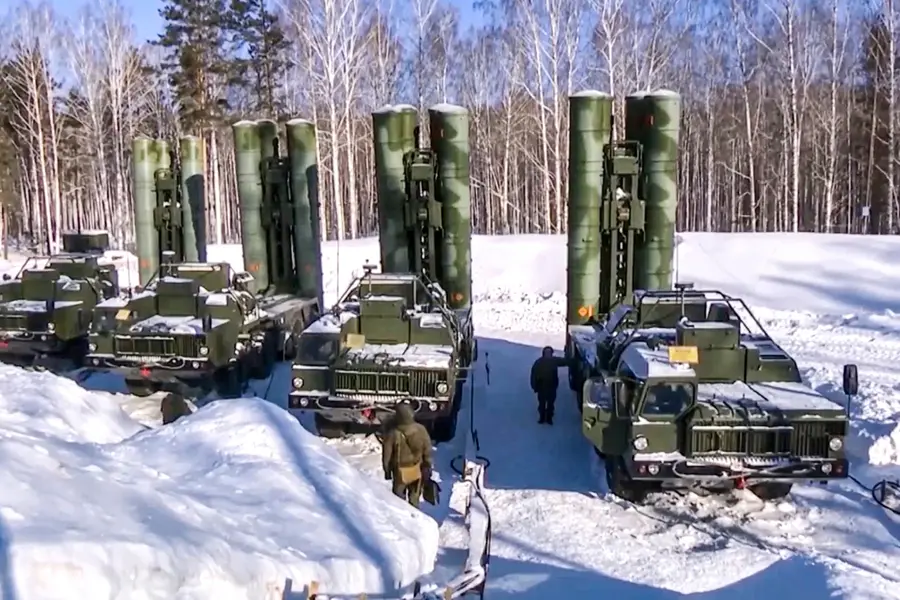
The MIM-104 Patriot and the S-400 Triumf are counted among the most advanced long-range air defence systems in the world today. Both are made to spot and destroy enemy aircraft, cruise missiles, and ballistic missiles before they can cause harm. But here is the interesting part: each system was built in a different way and follows a different way of thinking. So the real question is not just "which one is more powerful," but "which one fits the job better."
The American Patriot was specially designed as an integrated air and missile defence system. Its main job is to protect important military bases and critical places from advanced missile attacks. Russia's S-400, on the other hand, was built to create a big defensive umbrella that can catch many types of threats from far away. So when someone asks which system is better, the honest answer is simple—it depends on the mission and the role it has to play.
Two Different Ways of Thinking
The Patriot joined the U.S. Army in the 1980s, at first only to stop enemy aircraft. Slowly, it was upgraded into one of the best systems for hitting ballistic missiles in the last stage of their flight. Today's Patriot batteries use phased-array radar—a smart radar that can quickly find and track many targets at once—along with battle management systems and different interceptor missiles. Together, they guard bases, cities, and key infrastructure from planes, cruise missiles, drones, and ballistic missiles.
The S-400 came into Russian service in 2007 as the successor to the older S-300. Instead of depending on just one missile, it carries different missiles with different ranges. This lets it protect large areas and take on aircraft, cruise missiles, and ballistic missiles. Its design is all about building a wide air defence net that stops enemies from even entering that airspace.
Range Is Not Everything
One big difference is the maximum attack range. The S-400's longest-range missile, the 40N6, is officially claimed to hit some airborne targets up to 400 km (249 miles) away. The Patriot's range, however, depends on which missile is loaded. Its PAC-2 and PAC-3 missiles are built for specific jobs, focusing on the mission rather than chasing the longest possible distance.
But remember, the biggest number on paper does not always win the actual battle. Things like the target's height, radar limits, electronic warfare, terrain, and the kind of threat all decide the real performance. For example, low-flying cruise missiles can only be seen from a short distance because they stay below the radar horizon—the line of sight of the radar. So no matter how far a missile can fly, the radar must first spot the target.
Different Missiles for Different Jobs
The two systems also attack in different ways. The Patriot uses missiles like the PAC-2 GEM-T and the PAC-3 MSE, each made for a certain type of threat. The S-400 uses the 48N6, 9M96, and 40N6 missile families, again, each meant for different aerial dangers. Most of these missiles carry blast-fragmentation warheads, which destroy the target by exploding and throwing sharp metal pieces around. This layered style gives the operators more freedom to answer many kinds of attacks smartly.
Real Battle Experience
Perhaps the biggest difference is actual war experience. The Patriot has been in real combat for decades—starting from the Gulf War, then Iraq, Saudi Arabia, and now Ukraine. Its early Gulf War record is still debated, but it has been upgraded again and again. In recent fights, it has shown the power to stop ballistic missiles, cruise missiles, drones, and aircraft. Its use in Ukraine has become one of its toughest tests against advanced attacks.
The S-400 has been used by Russia and also sold to China, India, and Turkey. India's S-400 "Sudarshan Chakra" gave a landmark show in Operation Sindoor (May 7–10, 2025), its first combat use. It achieved a historic 300+ km kill of a Pakistani early-warning aircraft—the longest recorded surface-to-air kill—and downed five to six PAF jets. Working with the Akashteer network, it stopped drone swarms, Fatah-I rockets, and fighter incursions, taking full control of the sky. Still, experts separate a system's claimed power from its proven results, as independent checking remains limited.
So, Which One Is Better?
If the aim is to protect a city or base from ballistic missiles inside a well-connected allied network, the Patriot has the edge—thanks to its combat record, regular upgrades, and wide use by NATO partners. The S-400, meanwhile, is perfect for guarding large regions with its layered missiles and huge coverage. One is a combat-proven missile shield; the other is a long-range area protector. Judging them only by range misses the full picture—both are excellent at the exact role they were built for.
(Girish Linganna is an award-winning science communicator and a Defence, Aerospace & Geopolitical Analyst. He is the Managing Director of ADD Engineering Components India Pvt. Ltd., a subsidiary of ADD Engineering GmbH, Germany.)
Published: 02 Jul 2026, 04:09 pm IST
Related Topics
Disclaimer: Kindly avoid objectionable, derogatory, unlawful and lewd comments, while responding to reports. Such comments are punishable under cyber laws. Please keep away from personal attacks. The opinions expressed here are the personal opinions of readers and not that of Mathrubhumi.
