
This marks a major achievement for the nation's space program, bolstering communication capabilities, especially for the Indian Navy.
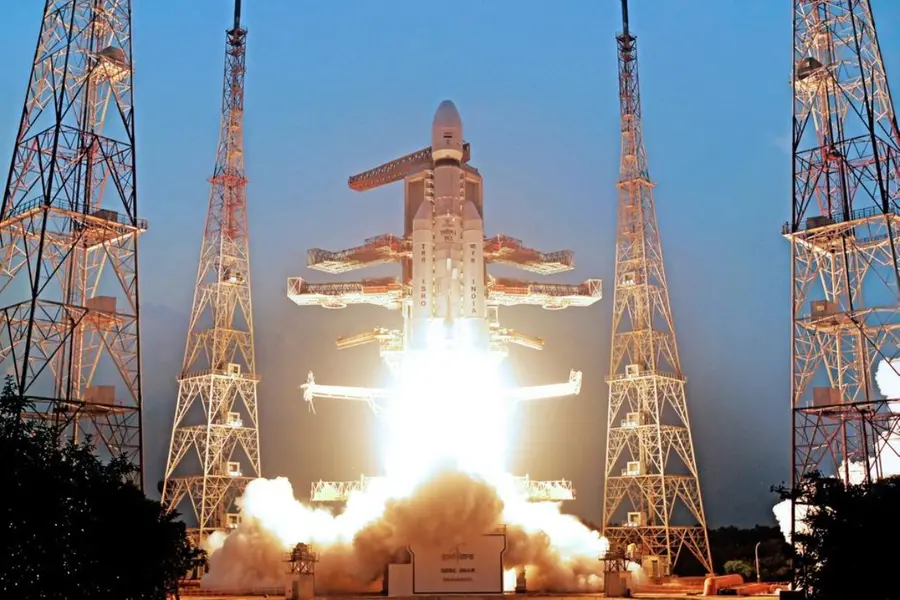
New Delhi: Prime Minister Narendra Modi congratulated the Indian Space Research Organisation (ISRO) on Sunday for successfully launching India's heaviest communication satellite, CMS-03. In a post on X, he expressed pride in the nation's space sector, stating, "Our space sector continues to make us proud! Congratulations, ISRO, on the successful launch of India's heaviest communication satellite, CMS-03. Powered by our space scientists, it is commendable how our space sector has become synonymous with excellence and innovation. Their successes have furthered national progress and empowered countless lives."
The CMS-03 satellite, also known as GSAT 7R, weighs approximately 4,410 kg and was placed into the Geosynchronous Transfer Orbit (GTO) by ISRO's LVM3-M5 rocket, popularly called 'Bahubali' for its heavy-lift capacity. The launch took place from the Satish Dhawan Space Centre in Sriharikota, Andhra Pradesh, at 5:26 pm. This mission marked the fifth operational flight of the LVM3 rocket, which previously achieved acclaim with the Chandrayaan-3 lunar landing mission.
Union Minister Jitendra Singh also lauded the launch, calling it a milestone that showcases India’s growing prowess in space technology under the steadfast support of Prime Minister Modi’s government.
The CMS-03 satellite, designed primarily for the Indian Navy, can provide multi-band communication services covering a wide oceanic region, including the Indian landmass. It enhances the Navy’s secure communication networks and maritime domain awareness through advanced indigenous components tailored for operational needs.
The LVM3-M5 rocket features a three-stage configuration with solid motor strap-ons (S200), a liquid core stage (L110) powered by twin Vikas engines, and a cryogenic upper stage (C25) developed indigenously. The successful launch demonstrates ISRO's capacity to independently launch heavy satellites from Indian soil, reinforcing the vision of Atmanirbhar Bharat (self-reliant India). The satellite is expected to serve for at least 15 years, boosting both strategic and civilian communication capabilities.
With inputs from PTI
Published: 02 Nov 2025, 08:05 pm IST
Related Topics
Disclaimer: Kindly avoid objectionable, derogatory, unlawful and lewd comments, while responding to reports. Such comments are punishable under cyber laws. Please keep away from personal attacks. The opinions expressed here are the personal opinions of readers and not that of Mathrubhumi.
