
India may have a 76-day fuel cushion, but as instability around the Strait of Hormuz rattles global markets, questions remain about the country's ability to cope with a prolonged supply shock.
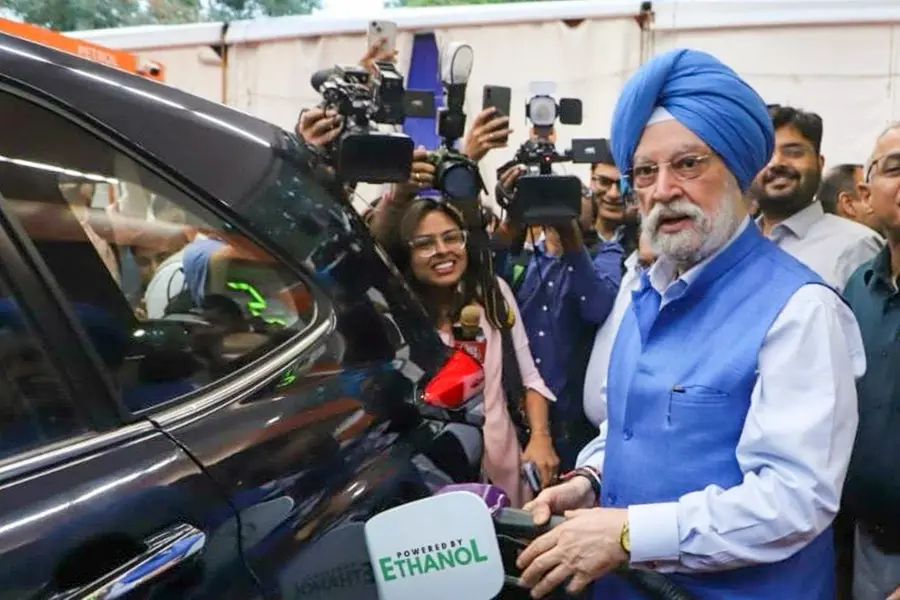
New Delhi: As tensions in West Asia continue to disrupt global energy markets, Petroleum Minister Hardeep Singh Puri has said India has fuel stocks sufficient for 76-80 days, but experts note that the country's long-term energy security will depend on how long the crisis lasts and whether global supply routes remain open.
What the minister said
Also Read

Amid growing concerns over the impact of the Iran-Israel conflict on global oil supplies, Petroleum Minister Hardeep Singh Puri said India currently possesses enough crude oil, LPG and natural gas reserves to manage disruptions for more than two months.
According to the minister, India's strategic petroleum reserves, refinery inventories and commercial stocks together provide a significant buffer against short-term supply shocks. He also emphasised that there has been no fuel shortage anywhere in the country despite ongoing instability in West Asia.
Puri further stated that India has diversified its energy sourcing strategy over the past few years and is increasingly relying on suppliers beyond the Gulf region, including countries in Africa and Latin America.
Why the Strait of Hormuz matters
The Strait of Hormuz is one of the world's most important maritime chokepoints. Roughly one-fifth of global oil trade passes through the narrow waterway connecting the Persian Gulf to international markets.
For India, the strait remains critical because a substantial share of crude oil imports still originates from Gulf producers such as Saudi Arabia, Iraq, the UAE and Kuwait.
Any prolonged disruption in Hormuz could affect shipping schedules, increase insurance costs, raise freight rates and create supply uncertainty even if oil continues to flow through alternative routes.
India's diversification strategy
India has spent years reducing its dependence on a single region for energy supplies.
Following sanctions-related disruptions and geopolitical conflicts over the past decade, Indian refiners expanded purchases from countries including Russia, the United States, Brazil and several African producers. The government has also invested in strategic petroleum reserves designed specifically to cushion temporary global supply shocks.
The minister cited additional LNG and LPG supply arrangements, including cooperation with the UAE and growing energy partnerships in Africa, as examples of this diversification effort.
However, diversification reduces risk rather than eliminating it. Oil remains a globally traded commodity, meaning supply disruptions in one region often influence prices worldwide regardless of where individual countries source their crude.
The real challenge is not supply, but duration
The key question is not whether India can handle a disruption lasting a few weeks, but whether it can withstand a crisis that extends for several months.
A short-term interruption can generally be managed through reserve drawdowns, inventory management and alternative imports. A prolonged closure of Hormuz, however, would likely create broader consequences.
Global crude prices could remain elevated, shipping costs could increase significantly, and competition for available cargoes could intensify as major importing countries scramble to secure supplies.
Even if India maintains physical access to oil, higher prices would increase import bills, widen trade deficits and place pressure on inflation.
Economic implications beyond fuel
India imports the majority of its crude oil requirements, making the economy sensitive to global price fluctuations.
Sustained high oil prices can affect:
- Transport and logistics costs
- Manufacturing expenses
- Fertiliser production
- Aviation fuel prices
- Consumer inflation
- Government fiscal planning
Historically, sharp oil price spikes have influenced economic growth rates and placed pressure on both businesses and households.
This is why energy analysts often focus not only on availability of fuel but also on affordability.
What happens in a worst-case scenario?
The minister himself acknowledged that an extended conflict stretching into 2027 would represent an entirely different scenario.
A prolonged regional war involving multiple countries could disrupt shipping routes beyond Hormuz, reduce global energy production, weaken international trade and trigger wider economic consequences.
Such a situation would not be an India-specific challenge but a global one, potentially affecting energy markets, supply chains, inflation and economic growth across continents.
The bigger picture
India's current reserves provide an important short-term cushion against immediate disruptions, and diversification efforts have strengthened resilience compared to previous decades. However, the country's energy security remains closely tied to global market stability.
The immediate risk of fuel shortages appears low. The larger uncertainty lies in whether tensions in West Asia ease quickly or evolve into a prolonged conflict capable of reshaping global energy markets. If disruptions remain temporary, India's reserves and diversified supply network may prove sufficient. If the crisis becomes long-term, the challenge will shift from securing fuel supplies to managing the economic impact of persistently high energy costs.
Published: 08 Jun 2026, 06:11 pm IST
Related Topics
Disclaimer: Kindly avoid objectionable, derogatory, unlawful and lewd comments, while responding to reports. Such comments are punishable under cyber laws. Please keep away from personal attacks. The opinions expressed here are the personal opinions of readers and not that of Mathrubhumi.