
"What is important is that, not the jet being down, but why they were being down," Chief of Defence Staff Anil Chauhan told Bloomberg TV.
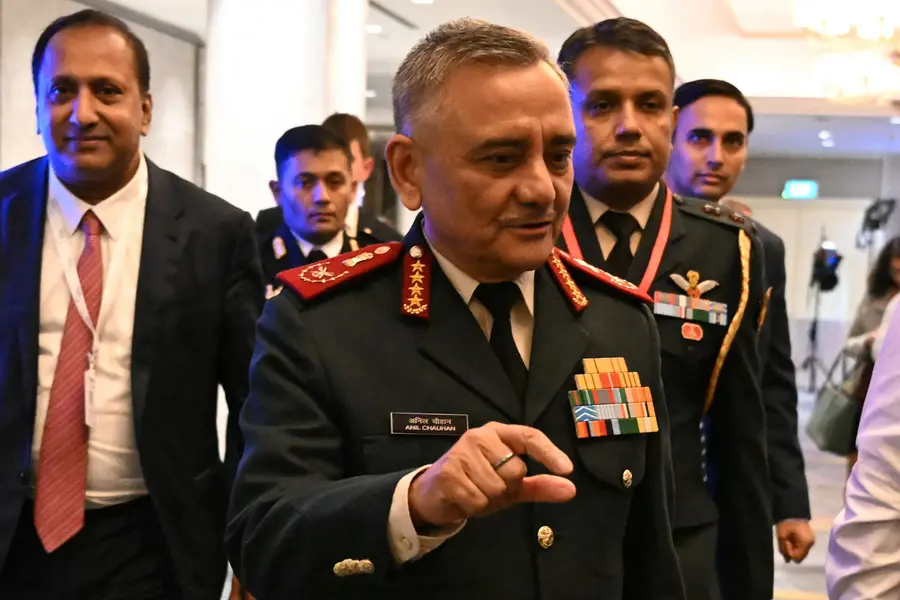
New Delhi: Chief of Defence Staff, General Anil Chauhan’s interview with Bloomberg has set the cat among pigeons after he reportedly indicated about Indian aircraft losses during the four-day face-off with Pakistan as part of Operation Sindoor.
The interview, held on the sidelines of the Shangri-La Dialogue in Singapore, saw General Chauhan respond to questions about Pakistani claims that it had shot down six Indian fighter jets.
General Chauhan is quoted as stating the critical importance of understanding the reasons behind any losses during military engagements with Pakistan, rather than simply focusing on the number of jets downed.
"I think what is important is not the jet being downed but why they were being downed," Gen Chauhan stated. He highlighted that the Indian military had identified and rectified tactical errors swiftly. "The good part is that we were able to understand the tactical mistakes which we made; remedied, rectified and then implemented it again after two days. We flew all our jets again targeting at long range," he asserted.
When directly questioned about Pakistan's claim of shooting down six Indian jets during what they termed "Operation Sindoor," Gen. Chauhan firmly denied the assertion, calling it "Absolutely incorrect."
His comments echo earlier statements from the Indian Air Force. On May 11, Air Marshal AK Bharti, Director General of Air Operations for the Indian Air Force, acknowledged that "losses are a part of combat" but maintained that all IAF pilots returned home safely.
General Chauhan is currently in Singapore, attending the Shangri-La Dialogue, a prominent security summit.
Meanwhile no official confirmation regarding such losses has been issued by New Delhi.
Several international news outlets have noted that Chauhan’s phrasing — particularly his emphasis on tactical learnings and remedies — could be interpreted as an indirect reference to operational setbacks. However, these remain interpretations by the press, not official positions. A senior Indian security source had earlier told AFP that three Indian aircraft crashed on Indian territory, without specifying cause or type.
The brief conflict, which ended with a ceasefire on May 10, was the most intense escalation between the nuclear-armed neighbours since the 1999 Kargil War. It followed a deadly April 22 attack in Jammu and Kashmir that left 26 civilians dead. India blamed the attack on Pakistan-backed militants, a charge Islamabad has denied.
During the interview, General Chauhan stated that the Indian Air Force had recognised and corrected a tactical error during the operation. “The good part is that we are able to understand the tactical mistake which we made, remedy it, rectify it, and then implement it again after two days and flew all our jets again, targeting at long range,” he said.
Chauhan also rejected claims that the conflict came close to a nuclear confrontation. “I personally feel that there is a lot of space between conduct of conventional operations and the nuclear threshold,” he said, emphasising that channels of communication with Pakistan remained open throughout the conflict.
He further noted that advanced weapon systems used by Pakistan — including those supplied by China — did not prove effective, and highlighted the Indian Air Force’s success in carrying out precision strikes deep inside Pakistani territory.
As both nations continue diplomatic engagements post-ceasefire, the situation remains tense. General Chauhan reiterated that the future of the current calm depends on actions taken by Pakistan, stating that India has laid out “clear red lines”.
Published: 31 May 2025, 06:03 pm IST
Related Topics
Disclaimer: Kindly avoid objectionable, derogatory, unlawful and lewd comments, while responding to reports. Such comments are punishable under cyber laws. Please keep away from personal attacks. The opinions expressed here are the personal opinions of readers and not that of Mathrubhumi.
