
The former diplomat also challenges the belief that the emergence of a multipolar world will necessarily benefit middle-sized powers such as India.
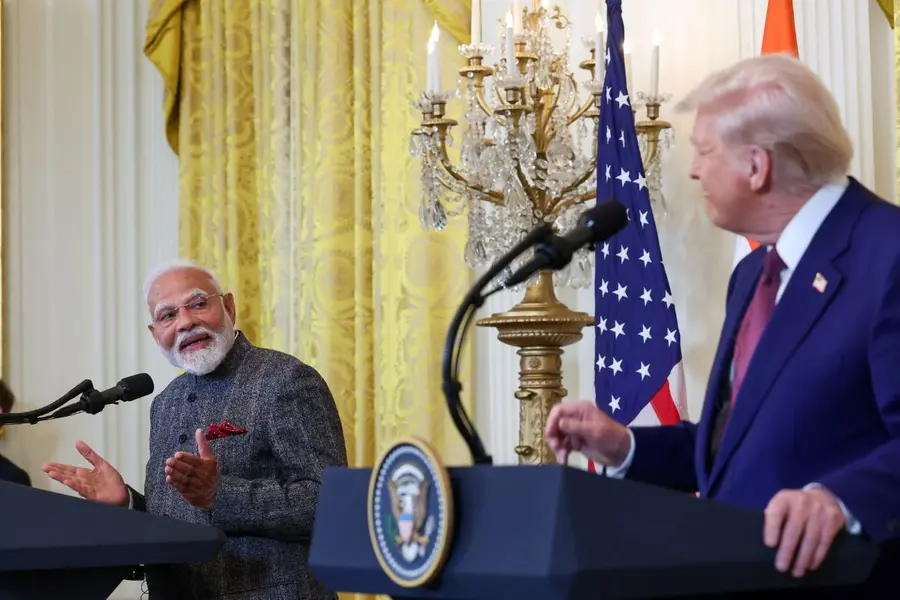
New Delhi: India may not depend on the United States for financial assistance or strategic protection, but it has still been unable to completely insulate itself from the impact of Donald Trump's policies, former diplomat Rajiv Dogra has argued in his new book.
In “How Nations Fail and the Unmaking of America's World”, published by Rupa, Dogra examines the decline and collapse of civilisations, empires and nations while offering a critical assessment of America's changing position in global affairs.
Dogra, who served as India's Ambassador to Italy, argues that the US has never been India's closest friend and has historically relied on pressure and displays of power in its dealings with other countries.
"Globally too, it has long been used to bulldozing its way through bluster, bullying and boast. But Trump's carnage regularly tests even these limits," Dogra writes.
He says nations that rely on Washington for financial or strategic support have often been compelled to accommodate Trump's demands.
India, however, occupies a different position, he argues.
"But India is neither an ally nor a foe. It is not dependent on the US for financial dole-outs or strategic protection. Still, it has not been able to shield itself fully from the ravages of Trump's policies," he writes, adding, "Sadly, it will find little comfort elsewhere."
Why India may have limited options
Dogra points to Europe's own security concerns, arguing that the continent is facing uncertainty over whether it possesses enough troops and modern weaponry to effectively resist a possible Russian invasion.
Russia, meanwhile, has strengthened its ties with China, Iran and North Korea, making their support for India in a conflict unlikely, he says.
"Russia is happily engaged with China, Iran and North Korea, so it and its partners will not come to India's aid in case of need in a conflict situation".
Against this backdrop, Dogra argues that occasional tactical advantages offered by Washington may not make up for the potential long-term strategic costs for India.
The former diplomat also challenges the belief that the emergence of a multipolar world will necessarily benefit middle-sized powers such as India.
According to Dogra, the idea represents “misguided optimism” rather than a reliable geopolitical outcome.
"But this is an illusory expectation. The end of the liberal world will not lead to plurality in global affairs. Instead, it may mean that the US and China will be two poles deciding the global destiny for many years to come," he writes.
Dogra takes aim at Western leadership
Dogra is also critical of the quality of political leadership in the West.
He argues that American leadership in the 21st century has included leaders who were either disengaged from foreign policy or ineffective in handling it.
"Sadly, in this millennium, the US has been led by leaders who were "either not interested in foreign policy or inept practitioners of it like Bush, or simply whimsical and vindictive like Trump"."
He extends that criticism to Europe, arguing that France, Germany and the UK have also experienced a period of relatively weak leadership.
"The argument can be extended further to say that the West in general has entered the age of mediocre leaders. France, Germany and the UK have, in recent years, been led by those for whom 'Peter Principle' seems a reasonable fit," he writes.
By contrast, Dogra describes Russian President Vladimir Putin and Chinese leader Xi Jinping as disciplined and strategically focused leaders who are able to project power without the same constraints.
‘US has never before’ faced such internal struggle during war
Dogra argues that the US is now confronting two conflicts simultaneously — one within the country and another abroad.
"This is something new because the US has never before got into a major war outside when consumed by an identity struggle within."
He also takes a broader look at America's military interventions over the past eight decades, arguing that many of its decisions to use force have ultimately proved unnecessary or poorly judged.
"Over the last 80 years, the US has been the most aggressive country in the world. But its decisions to attack are seen, in retrospect, as being either churlish, knee-jerk, whimsical or completely avoidable.
"The level of destruction caused by it leaves the victim country and its people traumatised; even a resilient people like those of Vietnam took nearly two generations to steady themselves. Those in Iraq, Libya, Syria and Afghanistan are still wondering why they were pulverised," the book says.
Dogra argues that these interventions have also damaged America's standing globally.
As a result, he writes, the phrase “In America we trust” no longer carries the same weight around the world.
China rises as US influence wanes
Despite America's enormous economic and military resources, Dogra argues that Washington has frequently struggled to achieve its objectives.
He points to China's growing influence as a key example of the shifting global balance.
"In this millennium, in particular, luck has not been kind to the US while its principal adversary China, has gone from strength to strength. Simply put, the US is no longer the global despot," he writes.
Published: 30 Aug 2026, 05:09 pm IST
ABOUT THE AUTHOR

Related Topics
Disclaimer: Kindly avoid objectionable, derogatory, unlawful and lewd comments, while responding to reports. Such comments are punishable under cyber laws. Please keep away from personal attacks. The opinions expressed here are the personal opinions of readers and not that of Mathrubhumi.