
Escalating conflict in West Asia is putting pressure on the global network that delivers fuels.
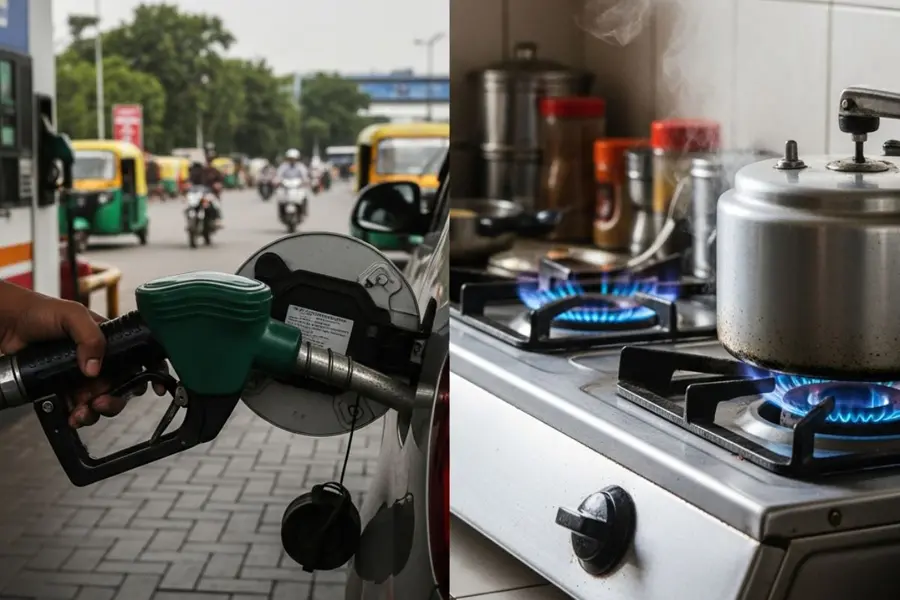
Every day, energy flows quietly across borders to power India. The blue flame in a kitchen, the hum of factories and the roar of aircraft all depend on fuels that often travel thousands of miles before reaching the country.
But escalating conflict in West Asia is putting pressure on the global network that delivers those fuels. The disruption threatens key maritime routes and suppliers that India relies on heavily for oil and gas imports.
For a country whose economy runs on imported energy, even distant instability can quickly ripple into homes, industries and transport systems.
The strategic chokepoint worrying energy markets
The Strait of Hormuz, a narrow waterway between Iran and Oman, carries enormous significance for global energy trade. Around 20% of the world’s oil and gas moves through this route.
For India, the dependency is even greater. Nearly half of its crude oil imports and more than 60% of its gas imports pass through this corridor.
When tensions escalate, shipping companies face a difficult choice: navigate the risky passage or avoid it altogether. The alternative route around the Cape of Good Hope at the southern tip of Africa can add up to 15 days to the journey. The longer route also pushes freight charges and insurance costs sharply higher.
India’s oil suppliers and refining strength
India is one of the world’s largest energy consumers and imports about 88% of the crude oil it uses.
To reduce risk, the country sources oil from more than 40 nations. However, the supplier mix has shifted in recent years.
Russia is currently the largest supplier, delivering more than a million barrels a day of “medium sour” crude. The Middle East remains crucial, with Saudi Arabia and Iraq continuing as major exporters. Iraqi crude, in particular, suits the processing needs of India’s public-sector refineries.
Imports from the United States are also rising, while newer partners such as Guyana and Brazil are entering the supply chain.
India’s advantage lies in its sophisticated refining capacity, including the massive Jamnagar complex. These refineries are capable of processing cheaper high-sulphur crude and converting it into high-quality petrol and diesel.
Gas supplies, cooking fuel and India’s safety buffer
While oil powers transport and industry, gas plays a critical role in households and factories. About half of India’s natural gas requirement is met through imports.
Natural gas arrives mainly as LNG, cooled to minus 162 degrees for transport by ships and used by industry. LPG, stored under pressure in cylinders, is widely used for cooking.
The current crisis has hit this sector particularly hard. Qatar, which supplies about half of India’s LNG, halted production following regional strikes.
LPG supply also faces pressure, as roughly 90% of India’s LPG imports come from three Gulf countries: Saudi Arabia, the UAE and Qatar. To prevent panic buying, authorities have introduced a 25-day gap between LPG cylinder bookings.
India still produces some of its own fuel. Domestic fields provide about 15% of the country’s oil and half of its natural gas. The offshore Mumbai High field continues to be a major contributor. In Rajasthan, the Barmer Basin accounts for roughly a quarter of India’s domestic crude production, while the Krishna-Godavari Basin in the Bay of Bengal has emerged as a key source of natural gas.
To manage disruptions, India maintains a strategic safety net. Between underground strategic reserves and commercial stocks held by oil companies, the country holds enough fuel to last about 74 days if global supplies stop.
At the same time, blending petrol with 20% ethanol made from grain or sugarcane is gradually reducing dependence on imported oil.
As the economy expands, India’s appetite for energy continues to grow, keeping its supply chains closely tied to global events.
Published: 14 Mar 2026, 11:13 am IST
Disclaimer: Kindly avoid objectionable, derogatory, unlawful and lewd comments, while responding to reports. Such comments are punishable under cyber laws. Please keep away from personal attacks. The opinions expressed here are the personal opinions of readers and not that of Mathrubhumi.
