
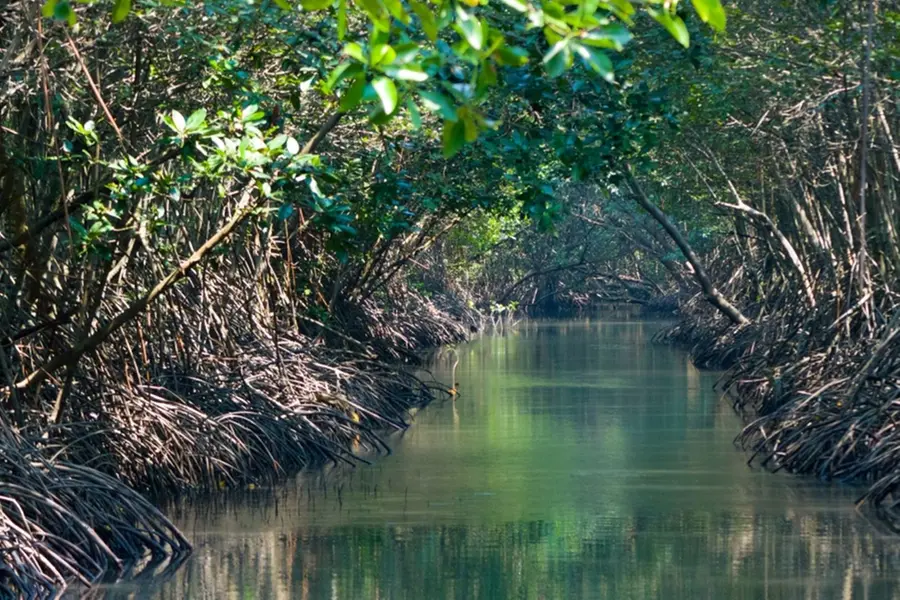
Kolkata: Concerns about Cyclone Dana's potential devastation in the Sundarbans region of West Bengal were greatly eased thanks to the protective barrier formed by mangrove forests. This natural shield, spanning the coastal areas of South 24 Parganas and North 24 Parganas, played a crucial role in reducing the cyclone's impact.
How mangroves mitigate storm damage
Also Read

Experts noted that the mangrove belt effectively diminished wind speeds, minimising the cyclone's effects and providing "storm surge protection" by absorbing wave energy. This not only safeguarded coastal communities but also stabilised the shoreline, with mangrove roots anchoring the soil and preventing erosion. Additionally, the mangroves contributed to "carbon sequestration," absorbing carbon dioxide and helping mitigate climate change.
Somendra Mohan Ghosh, a respected environmental activist and green technologist, explained how mangroves lessen cyclonic impact. He highlighted that the vegetation creates friction, significantly slowing wind speeds. “At the same time, the mangrove forests play an important role both in ‘water attenuation’ and ‘water filtration’. While ‘water attenuation’ helps in reducing the storm surge through absorption of water energy, ‘water filtration’ becomes instrumental in filtering out sediment, pollutants, and excess salts,” Ghosh explained.
Project Green Warriors
Recognising the vulnerability of the Sundarbans to cyclonic storms, the Nature Environment & Wildlife Society (NEWS) launched an initiative in 2007 to create lasting cyclone protection. Their "Project Green Warriors" focused on large-scale mangrove planting, beginning with just 50 hectares in three small villages: Dulki-Songaon, Amlamethi, and Mathurakhanda.
In May 2009, Cyclone Aila brushed against the Sundarbans, causing widespread damage. However, the areas where mangrove planting had occurred remained untouched, showcasing the project's effectiveness. This prompted NEWS to mobilise funding and conduct risk assessments. Between 2010 and 2015, over 18,000 local women participated in the initiative, expanding mangrove coverage to approximately 4,600 hectares across 183 villages in 14 community development blocks in the Sundarbans.
Agency
Published: 26 Oct 2024, 03:04 pm IST
Related Topics
Disclaimer: Kindly avoid objectionable, derogatory, unlawful and lewd comments, while responding to reports. Such comments are punishable under cyber laws. Please keep away from personal attacks. The opinions expressed here are the personal opinions of readers and not that of Mathrubhumi.