
The Election Commission says final decisions were unanimous despite reported objections by two commissioners. But how did disagreement turn into consensus?
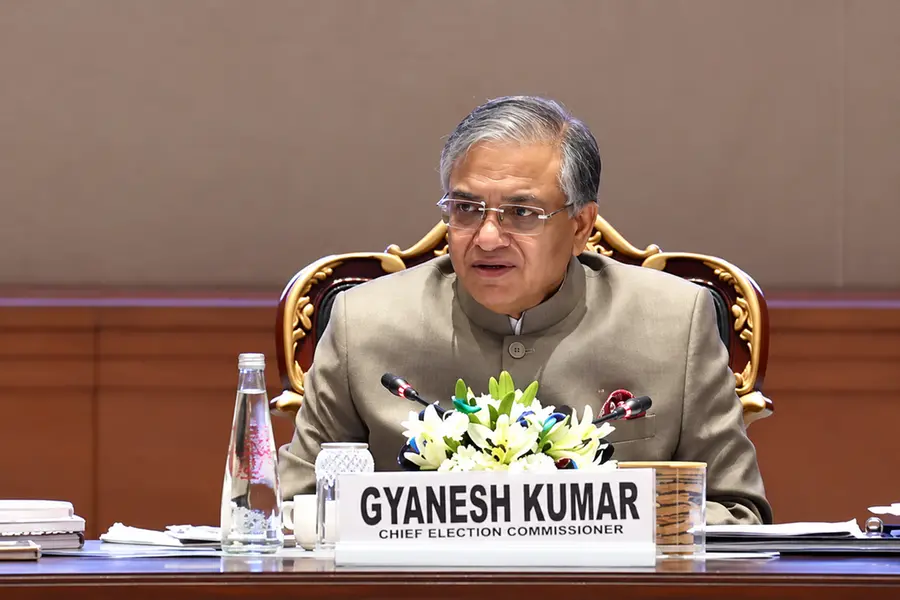
The Election Commission’s latest clarification was meant to settle questions over reported differences within the three-member poll panel. Instead, it has opened up another set of questions, this time over how those differences were resolved.
A recent investigation by The Indian Express reported that Election Commissioners Sukhbir Singh Sandhu and Vivek Joshi had formally recorded objections at least 14 times over 10 months to decisions and orders issued by the Election Commission.
Their objections reportedly covered issues including changes to Form 6 for new voters, deletion and restoration of names from electoral rolls, access to voter databases and the handling of appeals in the Special Intensive Revision process.
The report also said the two commissioners had described some steps as ‘unauthorised’ and ‘illegal’, while raising concerns about the alleged centralisation of access to the electoral roll database.
They also separately approached the Cabinet Secretary over changes in the allocation of work relating to the Election Commission’s IT systems.
The Election Commission, however, has offered a different explanation.
It has said that disagreements at the draft stage are not unusual and form part of the internal decision-making process.
More importantly, the Commission has maintained that the final decisions taken over the past year were unanimous, with the participation of all three election commissioners.
And that is where the next big question begins.
If the objections were recorded formally, and some of them were strongly worded, how exactly did the three commissioners arrive at unanimous final decisions?
There is a straightforward way to answer that question. Put the decisions on record.
If the Election Commission makes public the final orders and relevant records in cases where objections were raised during the drafting process, it would allow people to understand what changed between the objection and the final decision.
Were the concerns addressed through legal or technical explanations?
Were modifications made to the original proposals? Did the commissioners withdraw their objections after discussions?
Or were the objections simply part of the internal deliberation before a unanimous decision was reached?
At present, the public is being told that there was disagreement during the process but consensus at the end. What remains unclear is the bridge between the two.
The issue becomes particularly significant because the 2023 law governing the Election Commission says that the business of the Commission should, as far as possible, be transacted unanimously.
- If the commissioners differ in opinion, the law provides for a decision according to the majority.
- The law also says that the Commission's procedure and allocation of work are to be settled by unanimous decision.
So, disagreement itself is not necessarily unusual. The more important question is what happened after that disagreement.
There is another reason the issue has attracted attention. Despite the reported internal objections, the three-member Commission continued to present a united public face at several briefings over the past year.
India Today reported that the panel held multiple joint briefings during the period in which the objections were recorded.
That makes the question of transparency even more relevant.
The Commission does not necessarily have to prove that disagreement never existed.
Its own clarification accepts that differences can arise during deliberations. What it needs to establish is how those differences were addressed before decisions were finalised.
- For example, if an objection to a particular electoral-roll procedure was resolved after a legal clarification, that explanation could be placed on record.
- If a technical concern was addressed by changing the system or restoring safeguards, the relevant decision could be disclosed.
- If the commissioners simply concluded after discussion that the original proposal was legally sound, that too could be explained.
That would turn speculation into documentation.
The alternative is that the controversy continues to be driven by competing versions of what happened inside the Commission.
The stakes are particularly high because the reported objections concerned core electoral processes, including voter registration, deletion and restoration of names, electoral-roll software and the handling of appeals.
The Election Commission has every right to say that internal deliberations can involve disagreement.
However, once the existence of those disagreements becomes public, the natural follow-up is to ask what happened before the final unanimous decisions were issued.
That is why the simplest route out of the current questions may also be the most transparent one: show the record, explain the resolution, and let the documents establish how disagreement became consensus.
Until that happens, the clarification that all final decisions were unanimous may answer one question, but it leaves another hanging: if the objections were real, what changed between the objection and the final decision?
Published: 25 Sept 2026, 04:41 pm IST
ABOUT THE AUTHOR

Disclaimer: Kindly avoid objectionable, derogatory, unlawful and lewd comments, while responding to reports. Such comments are punishable under cyber laws. Please keep away from personal attacks. The opinions expressed here are the personal opinions of readers and not that of Mathrubhumi.