
Explore who is affected—from China’s strategic concerns to ecological risks and tribal displacement
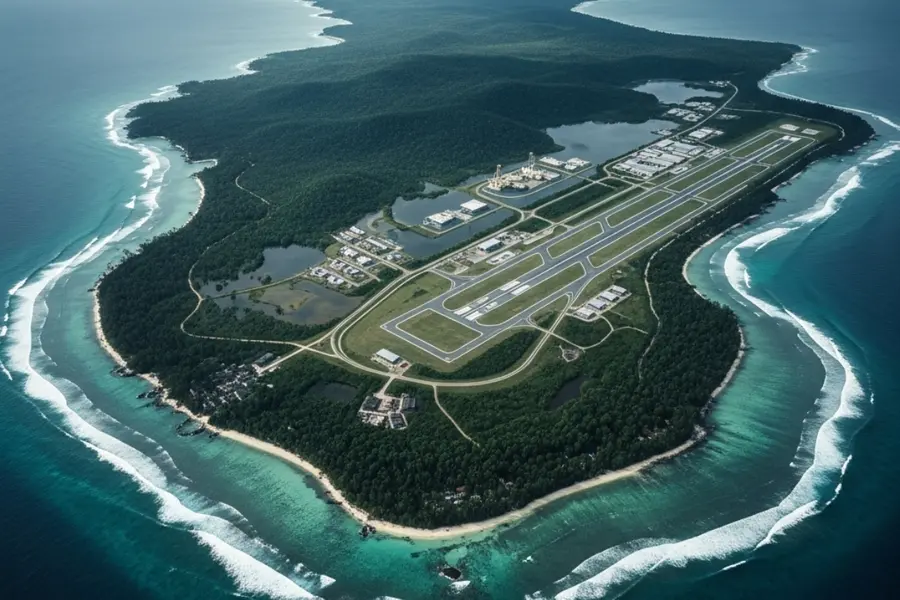
India’s Great Nicobar Island Project aims to expand strategic, economic, and maritime capabilities, but environmental and tribal concerns raise questions about its long-term sustainability and impact.
Background of the Great Nicobar Island Project
Launched in 2021 under the Planning Commission and executed by the Andaman and Nicobar Islands Integrated Development Corporation (ANIIDCO), the Great Nicobar Island Development Project (GNI) is a mega infrastructure initiative in India’s southernmost territory. The ₹72,000 crore project includes:
- International Container Transshipment Terminal (ICTT) at Galathea Bay, designed for handling 6 million TEUs annually
- Greenfield International Airport with dual civil and military use
- 450 MVA Gas and Solar Power Plant
- Township spanning 66 sq km for a projected population of 1 lakh residents
While primarily framed as a development project, the infrastructure has a clear strategic and dual-use component aimed at enhancing India’s presence in the eastern Indian Ocean.
Strategic and Geopolitical Significance
Great Nicobar Island’s location near the Malacca Strait—one of the world’s busiest shipping lanes—makes it critical for India’s maritime and defense strategy. The Malacca Strait handles nearly one-third of global sea trade, and proximity allows India to monitor and influence shipping movements in case of regional conflicts.
The island also hosts key Indian Navy bases, including INS Baaz and INS Utkarsh, under the Andaman and Nicobar Command (ANC), India’s only tri-service theatre command. The development of a deep-water port and airfield strengthens India’s naval and air capabilities, providing the ability to deploy ships, aircraft, and drones closer to critical trade and defense corridors.
Geopolitically, the project has generated concern from China, which relies heavily on the Malacca Strait for energy and trade routes. India’s enhanced surveillance and potential to restrict movement through the strait in times of conflict contribute to rising regional tension.
Also read: OTT releases this week: Dhurandhar, Sarvam Maya, Tere Ishq Mein and more
Economic and Connectivity Objectives
The project aims to reduce India’s dependency on foreign ports like Singapore and Colombo, enabling domestic trans-shipment of cargo. The expected benefits include:
- Foreign exchange savings by handling cargo within India
- Increased Foreign Direct Investment (FDI) in the region
- Enhanced trade and tourism through improved infrastructure
- Job creation in construction, operations, and ancillary services
- Currently, nearly 75% of India’s trans-shipped cargo is handled outside the country, highlighting the economic rationale for the project.
Environmental and Ecological Concerns
The GNI project faces significant environmental scrutiny. Experts warn that construction could lead to:
- Massive deforestation, with millions of trees potentially cut down, threatening local biodiversity
- Loss of habitat for endangered species, including the leatherback sea turtle in Galathea Bay
- Coastal and marine ecosystem damage due to dredging and industrial activity in CRZ A zones
- Increased disaster vulnerability, as the islands lie in Seismic Zone V, with heightened tsunami and cyclone risks
- Environmental activists and professionals have petitioned the Calcutta High Court and National Green Tribunal, raising concerns over the ecological sustainability of the project.
Social and Tribal Impact
The project could disrupt the lives of indigenous communities such as the Shompens and Nicobarese, who rely on traditional forest-based subsistence and ecological knowledge. Allegations from the Tribal Council suggest local residents are being pressured to surrender ancestral land for the project.
These concerns raise questions about cultural preservation, community rights, and compliance with national and international legal frameworks regarding indigenous populations.
Also read: Free Fire MAX Codes for January 25, 2026 | Claim your free diamonds & outfits!
Political and Public Debate
Opposition parties and civil society have criticised the project for being “ecologically disastrous” and for circumventing public consultation. Congress leaders, including Sonia Gandhi and Jairam Ramesh, have repeatedly highlighted the potential displacement of tribes and environmental degradation.
Meanwhile, the Indian government has defended the project as necessary for national development and defense readiness, claiming all statutory clearances have been obtained.
The Great Nicobar Island Project represents a significant strategic, economic, and defense initiative for India, strengthening its maritime presence and infrastructure capabilities. At the same time, the project faces environmental, social, and geopolitical challenges, making it a subject of intense national and international scrutiny. The debate continues over balancing development, security, and sustainability in this sensitive region.
Published: 25 Jan 2026, 08:36 pm IST
Related Topics
Disclaimer: Kindly avoid objectionable, derogatory, unlawful and lewd comments, while responding to reports. Such comments are punishable under cyber laws. Please keep away from personal attacks. The opinions expressed here are the personal opinions of readers and not that of Mathrubhumi.
