
India targets 2027 for first crewed mission, with plans for space station and Moon landing
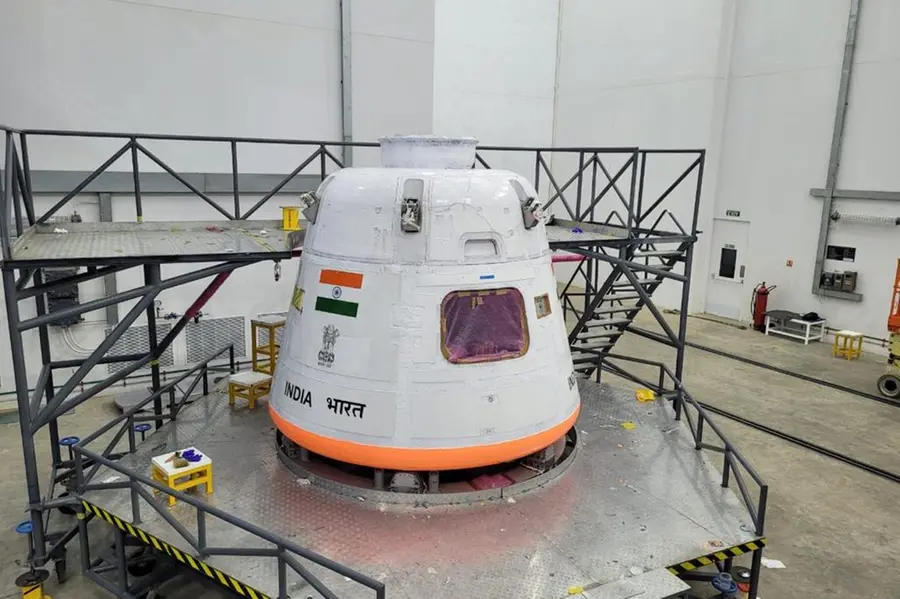
New Delhi: India’s flagship human spaceflight program, Gaganyaan, has achieved several key technological milestones, the government informed Parliament on Thursday. The mission, led by the Indian Space Research Organisation (ISRO), aims to send Indian astronauts into space by early 2027 and execute a Moon landing by 2040, marking a major leap in the country’s space ambitions.
In a written reply to the Rajya Sabha, Union Minister of State for Science & Technology Dr. Jitendra Singh outlined the current progress and long-term vision of the program.
Singh highlighted the current status and key milestones achieved in the Gaganyaan program. “ Human Rated Launch Vehicle (HLVM3): Development and ground testing completed. Orbital Module: Propulsion systems for Crew Module and Service Module developed and tested. ECLSS engineering model realized. Crew Escape System (CES): 5 types of motors developed and static tested. Infrastructure established: Orbital Module Preparation Facility, Gaganyaan Control Centre, Gaganyaan Control facility, Crew training facility, Second Launch pad modifications”, said Singh in a written reply.
He further added, “Precursor Missions: A Test Vehicle developed for validating CES and flight tested in TV-D1. Activities progressing for TV-D2 and IADT-01.Flight Operations and Communication Network: Ground network configuration finalized. IDRSS-1 feeder stations and terrestrial links established. Crew Recovery Operations: Recovery assets finalized. Recovery Plan worked out. First Uncrewed Mission (G1): C32-G stage and CES motors realised. HS200 Motors and CES Fore end up to Crew Module Jettisoning Motor stacked. Crew Module and Service module structure realised. Crew Module Phase-1 checks completed. The first crewed mission is slated for launch by Q1 of 2027.”
Dr. Singh also shared the long-term vision of the Indian Human Spaceflight Programme, which includes the establishment of the Bharatiya Antariksha Station (BAS) by 2035 and a human landing on the Moon by 2040. As part of the BAS roadmap, five modules are planned to be launched and assembled. The first, BAS-1, is expected to be launched by June 2028, followed by a docking mission in December 2028. The full station is expected to be operational by 2035.
On India’s Moon mission ambitions, he said that ISRO centres are currently working on the mission aspects and defining the configuration of both the launch vehicle and the orbital module system required to land an Indian on the Moon by 2040.
Published: 26 Jul 2025, 05:36 pm IST
Related Topics
Disclaimer: Kindly avoid objectionable, derogatory, unlawful and lewd comments, while responding to reports. Such comments are punishable under cyber laws. Please keep away from personal attacks. The opinions expressed here are the personal opinions of readers and not that of Mathrubhumi.
