
Pradhan’s exit marks the first time a Cabinet minister in the Modi government has resigned specifically to take responsibility for a governance crisis.
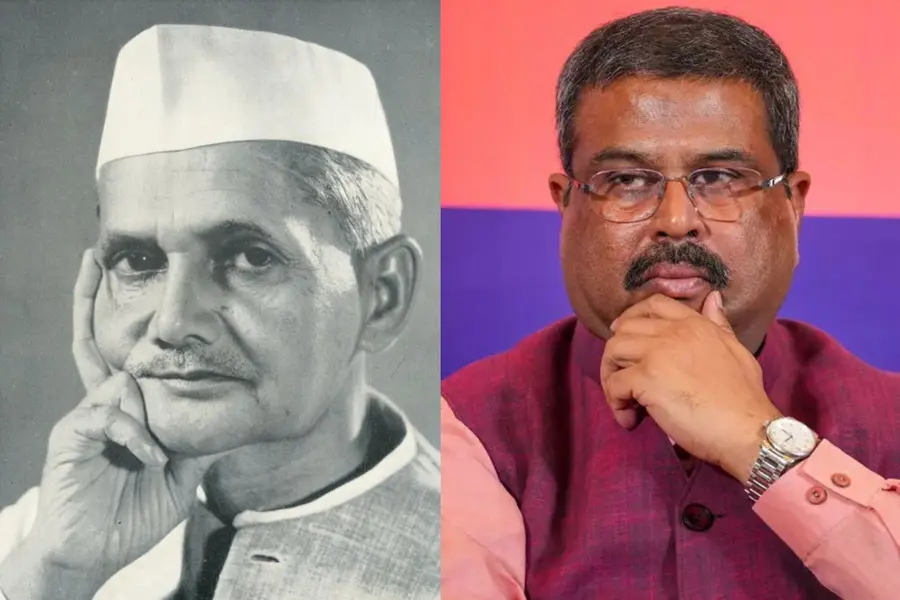
Union Education Minister Dharmendra Pradhan has stepped down following massive protests and a hunger strike over the NEET exam leak. His exit marks the first time a Cabinet minister in the Modi-led BJP government has resigned specifically to take responsibility for a governance crisis. He resigned to protect students' interests.
This move breaks a 12-year trend in which the government resisted calls for ministers to quit over controversies. Before this, Railway Minister Suresh Prabhu offered to resign in 2017 after multiple accidents, but he remained in the Cabinet until a later reshuffle. Similarly, Mamata Banerjee offered to resign in 2001 after train accidents, but her offer was not accepted.
In the UPA era, Law Minister Ashwani Kumar and Home Minister Shivraj Patil departed after the coal scandal and the 26/11 Mumbai attacks. Patil's exit followed intense public criticism over security lapses and his appearance in the media during the crisis. Earlier, A. Raja and Dayanidhi Maran left amid significant corruption allegations related to telecom deals.
A legacy of moral responsibility
In 1999, Nitish Kumar resigned as Railway Minister after the Gaisal train disaster claimed nearly 290 lives. Going back further, V.P. Singh left the Cabinet in 1987 during a submarine deal probe. Madhavrao Scindia also famously quit twice, once following a plane crash in 1993 and again during a 1996 corruption scandal.
The 1960s saw V.K. Krishna Menon resign as Defence Minister after the 1962 war with China. Before him, Finance Minister T.T. Krishnamachari stepped down over a financial scam involving the LIC. However, the ultimate benchmark remains Lal Bahadur Shastri. In 1956, he insisted on resigning as Railway Minister after a tragic train derailment in Ariyalur, taking full moral responsibility despite Prime Minister Jawaharlal Nehru's initial reluctance to lose him from the Cabinet.
Published: 26 Jul 2026, 02:59 pm IST
Related Topics
Disclaimer: Kindly avoid objectionable, derogatory, unlawful and lewd comments, while responding to reports. Such comments are punishable under cyber laws. Please keep away from personal attacks. The opinions expressed here are the personal opinions of readers and not that of Mathrubhumi.
