
Former Vice President Jagdeep Dhankhar begins vacating VP residence; opposition leaders denied meetings
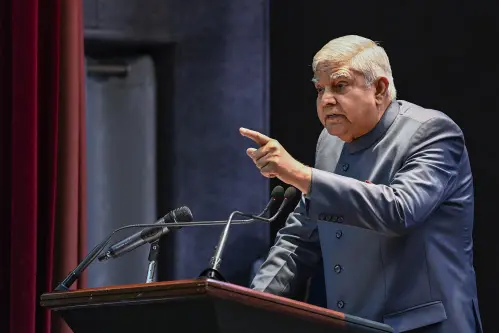
New Delhi: Former Vice President Jagdeep Dhankhar, who stepped down from his post on Monday citing health reasons, has initiated the process of vacating the Vice President Enclave, leaving both the ruling and opposition parties taken aback by the unexpected development.
According to reports, Dhankhar began packing soon after submitting his resignation to President Droupadi Murmu late on Monday night. The resignation was formally accepted by the President on Tuesday.
In the hours that followed, several opposition leaders reportedly reached out to seek appointments with Dhankhar. Among them were NCP (Sharad Pawar faction) chief Sharad Pawar and Shiv Sena (UBT) Sanjay Raut. However, according to sources, all such requests were declined, and no meetings were scheduled.
The 74-year-old had moved into the newly built Vice President Enclave on Church Road, near the Parliament House Complex, in April 2024. After spending around 15 months there, he is set to vacate the residence — well before the official end of his term in 2027.
The Vice President’s official residence and office were built under the Central Vista redevelopment initiative to meet contemporary functionality and security standards.
Dhankhar's decision to step down so abruptly has sparked speculation across political circles, with many questioning whether health concerns were the sole reason behind his move.
However, the government denied reports that the former vice president has been asked to vacate his residence or that his office has been sealed.
"It is being widely claimed on social media that the vice president’s official residence has been sealed and former VP has been asked to vacate his residence immediately ", the government media wing PIB's Fact Check Team said in a post on X.
Despite vacating the official VP residence, Dhankhar will continue to receive government accommodation. He is reportedly eligible for a Type VIII bungalow, typically reserved for senior Union ministers or national party presidents, most likely within Lutyens' Delhi.
As political analysts continue to interpret the broader implications of his resignation, attention now shifts to who may succeed him and what the move signals for the nation's political climate.
IANS
Published: 23 Jul 2025, 10:18 pm IST
Disclaimer: Kindly avoid objectionable, derogatory, unlawful and lewd comments, while responding to reports. Such comments are punishable under cyber laws. Please keep away from personal attacks. The opinions expressed here are the personal opinions of readers and not that of Mathrubhumi.
