
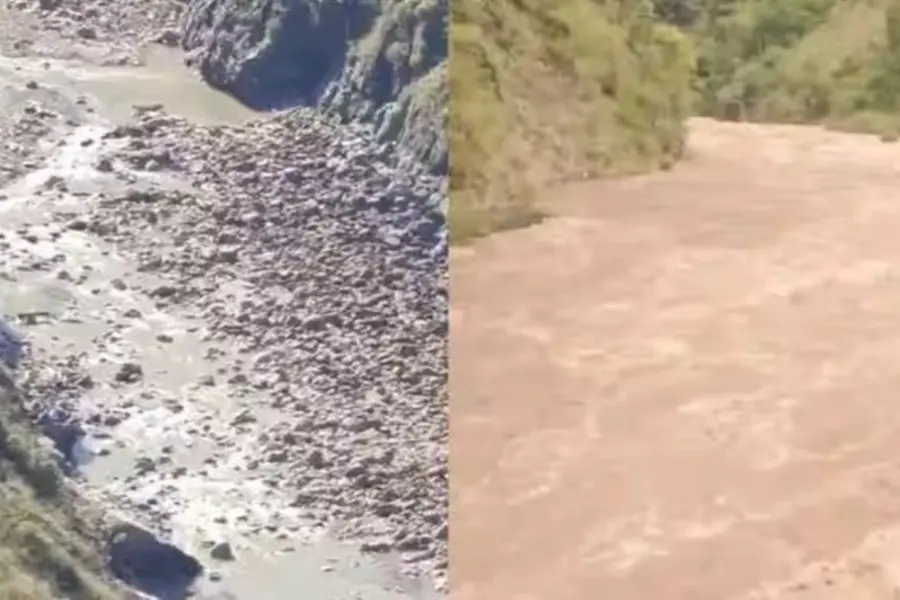
Jammu and Kashmir: On Saturday the residents of Muzaffarabad and nearby areas in Pakistan-occupied Kashmir (PoK) were taken by surprise as the Jhelum River’s water levels surged dramatically. Pakistan has accused India of releasing water from the Uri Dam without giving prior warning, which it claims violates the 1960 Indus Waters Treaty.
In a recent statement, the Ministry of Information & Broadcasting (MoIB) expressed its condolences to President Dr. Masoud Pezeshkian over the tragic incident at Shahid Rajaee Port, the MoIB also reaffirmed Pakistan’s support for Iran and condemned terrorism in all its forms.
The statement comes amidst escalating tensions in the region, as Pakistan accuses India of weaponizing water by releasing a sudden surge of water into the Jhelum river from the Uri Dam. This unannounced release of water has been described by Pakistani officials as "water terrorism," citing the violation of the 1960 Indus Waters Treaty. This breach has caused panic in Pakistan-occupied Kashmir (PoK), with local authorities in Muzaffarabad and surrounding areas issuing flood warnings and urging residents to evacuate.
The local administration in Muzaffarabad quickly declared a water emergency, urging residents from flood-prone areas such as Hattian Bala to evacuate. Sirens were sounded across the region, and mosques made announcements, instructing people to leave. Many were left scrambling to protect themselves and their property, with one local, Muhammad Asif, stating, "The water came rushing in, and we’re struggling to protect lives and property."
This development comes just days after India suspended the Indus Waters Treaty on April 23, 2025, citing national security concerns following a terrorist attack in Pahalgam that left 26 Indian tourists dead. India clarified that the treaty would remain suspended until Pakistan "credibly and irreversibly" ends its support for cross-border terrorism.
The Indus Waters Treaty, brokered by the World Bank and signed in 1960, divides control of the Indus River system between the two countries, with India controlling the eastern rivers (Ravi, Beas, and Sutlej) and Pakistan having rights to the western rivers (Indus, Jhelum, and Chenab). The treaty, which has survived various conflicts, is now at the centre of a growing dispute amid rising tensions between the two nuclear-armed nations.
Pakistani authorities have labelled India’s actions as "water terrorism" and accused India of deliberately releasing water without the necessary advance notice, a violation of international agreements under the treaty. Meanwhile, on the Indian side, officials have remained silent about the release.
Published: 27 Apr 2025, 09:47 am IST
Related Topics
Disclaimer: Kindly avoid objectionable, derogatory, unlawful and lewd comments, while responding to reports. Such comments are punishable under cyber laws. Please keep away from personal attacks. The opinions expressed here are the personal opinions of readers and not that of Mathrubhumi.
