
Exit polls, conducted immediately after voting ends, are survey-based estimates of election outcomes that reflect voter choices but do not represent official results.
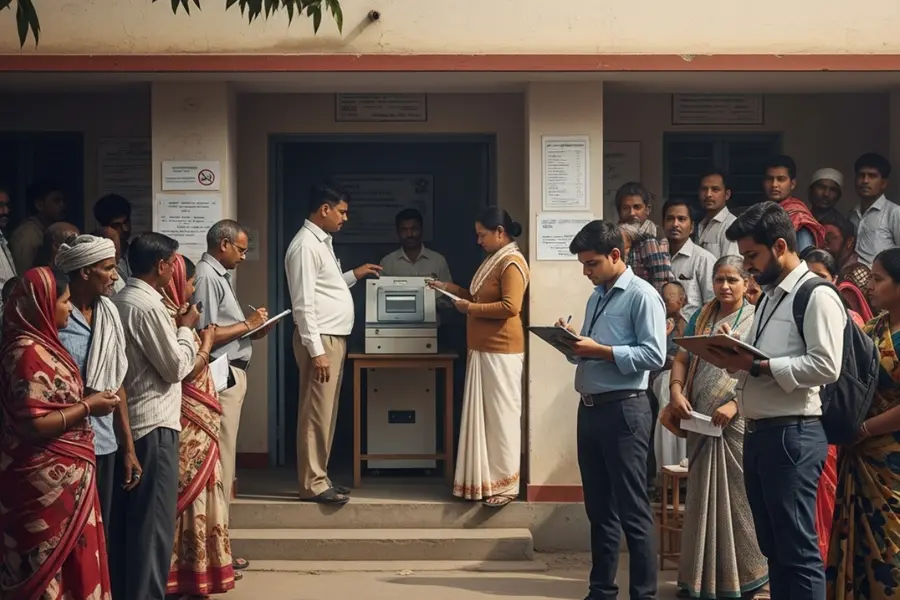
Exit polls, also known as post-poll surveys, are conducted after voting ends to estimate election outcomes based on voter responses outside polling stations, but they remain projections rather than final results.
As the 2026 election cycle progresses, attention has shifted to exit polls, which are expected to be released after 6:30 pm on April 29, following the completion of voting in all phases, in line with Election Commission guidelines.
Also Read

Exit polls are surveys conducted immediately after voters leave polling stations. Their purpose is to capture voting behaviour by asking people which party or candidate they supported, allowing agencies to project possible election outcomes before official counting begins.
These surveys are conducted by multiple independent organisations, including media houses and polling agencies, each using different statistical methods to collect and interpret data. The objective is to reflect voter sentiment across regions and demographics.
How’s Exit Poll done?
Exit poll agencies typically rely on structured sampling techniques to ensure coverage across diverse voter groups. Common methods include random sampling and systematic sampling, where voters are selected based on predefined patterns or intervals outside polling stations.
To improve accuracy, samples are designed to reflect key demographic factors such as age, gender, caste composition, urban and rural distribution, and regional voting patterns. Survey teams interact with voters immediately after they cast their vote using structured questionnaires, often with close-ended questions to maintain consistency in responses.
Once data is collected, it is compiled and analysed using statistical models to estimate vote shares and predict seat distributions for different political parties or alliances. However, the methodology can vary between agencies, which sometimes leads to differing projections across exit poll results.
Legal framework and timing restrictions
Exit polls in India are strictly regulated under Section 126A of the Representation of the People Act, 1951. The law prohibits the conduct, publication or dissemination of exit poll results during the voting period.
For the 2026 elections, exit poll data cannot be published between 7:00 am on April 9 and 6:30 pm on April 29. Any violation of this rule can lead to imprisonment of up to two years, a fine, or both, as specified by the Election Commission.
Broadcasters and digital platforms are also barred from airing content that could influence voters during this restricted period, including opinion polls or politically suggestive analysis.
Reliability and limitations of exit polls
Exit polls are widely followed as they offer an early indication of voter sentiment and electoral trends. They are often used to gauge which direction public opinion may be leaning immediately after voting concludes.
However, they are not always accurate. In several past elections, exit polls have significantly differed from final results due to methodological limitations and external factors. These include sampling errors, regional imbalances in data collection, reluctance of voters to disclose their actual choices, and last-minute shifts in voter behaviour.
Because of these limitations, exit polls are considered predictive tools rather than definitive outcomes. They provide an overview of possible trends but cannot replace official results announced by the Election Commission after counting.
Why exit polls are widely watched
Despite their limitations, exit polls remain significant because they offer the first structured insight into voter behaviour after elections. They help political analysts, media organisations and the public understand broad electoral trends before official results are declared.
However, final and binding outcomes are determined only after the counting of votes is completed by the Election Commission, which remains the sole authority for declaring election results.
Published: 28 Apr 2026, 09:27 pm IST
Related Topics
Disclaimer: Kindly avoid objectionable, derogatory, unlawful and lewd comments, while responding to reports. Such comments are punishable under cyber laws. Please keep away from personal attacks. The opinions expressed here are the personal opinions of readers and not that of Mathrubhumi.