
DMK moves Supreme Court against Tamil Nadu voter roll verification: Calls Election Commission’s SIR ‘unconstitutional and arbitrary’
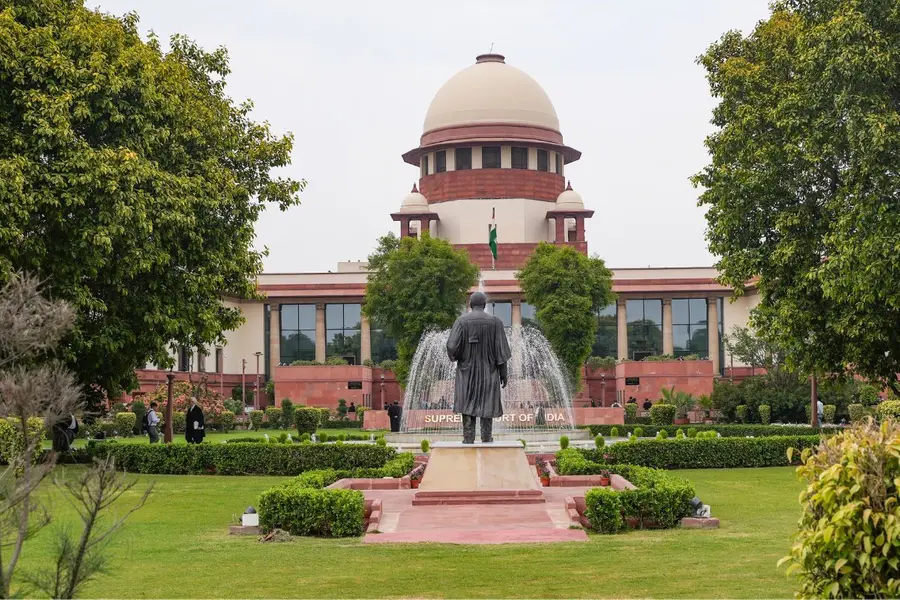
The Dravida Munnetra Kazhagam (DMK) has approached the Supreme Court challenging the Election Commission of India’s (ECI) decision to conduct a Special Intensive Revision (SIR) of electoral rolls in Tamil Nadu, calling the move unconstitutional and beyond the poll body’s powers.
Why did the DMK move the Supreme Court?
Also Read

According to the petition filed by DMK organising secretary RS Bharathi, the Election Commission’s order dated October 27, 2025, extending the SIR process to Tamil Nadu, violates several constitutional provisions, including Articles 14, 19, 21, 325, and 326. The plea argues that Tamil Nadu had already completed a Special Summary Revision (SSR) between October 2024 and January 2025, and that list has been continuously updated since — making another large-scale verification unnecessary.
“The SIR amounts to a colourable exercise of power and is patently arbitrary, unreasonable and illegal,” the DMK’s plea stated.
What does the SIR process involve?
The Special Intensive Revision requires Booth Level Officers (BLOs) to conduct door-to-door verification of voters, distribute and collect forms, and recommend inclusions or deletions — procedures which, according to the DMK, are not provided for under the Representation of the People Act, 1950, or the Registration of Electors Rules, 1960.
The petition also points out that several commonly used identification documents, such as ration cards, PAN cards, and voter ID cards, are excluded from the list of valid proofs under the SIR. Only 13 specified documents are accepted, with Aadhaar being included only after a Supreme Court order in the Bihar SIR case.
Why does DMK say the process is unconstitutional?
According to the plea, the ECI’s SIR guidelines give Electoral Registration Officers (EROs) the authority to verify citizenship and refer suspected foreign nationals to the competent authority under the Citizenship Act, 1955. The DMK argues that citizenship verification is the exclusive jurisdiction of the Union government and not within the Election Commission’s mandate.
The petition also challenges the timeline of the SIR, which requires BLOs and EROs to complete the entire verification and claims process within two months — a period overlapping with Tamil Nadu’s monsoon and Pongal season — calling it “unrealistic and arbitrary”.
What sparked the controversy?
The controversy originated in Bihar, where the ECI first introduced the SIR in June 2025. That move faced legal challenges from groups like the Association for Democratic Reforms (ADR) and the National Federation for Indian Women (NFIW), both pending before the Supreme Court. Despite this, the ECI extended the same process to other States, including Tamil Nadu, on October 27.
What does this mean for Tamil Nadu voters?
The DMK contends that the SIR could lead to mass disenfranchisement of genuine voters, especially from marginalised communities, if BLOs exclude names during verification. The party argues that the absence of an effective appeal mechanism — as the schedule for claims, objections, and appeals overlaps — renders the statutory right to appeal under Section 24 of the Representation of the People Act “nugatory in practice”.
If the Supreme Court stays or strikes down the SIR orders, Tamil Nadu’s electoral roll process could revert to the regular annual summary revision model, preventing any major deletions before the 2026 Assembly elections.
Parallel petition on regulating political parties
In a separate case, the Supreme Court also issued notice on a public interest petition seeking directions to the Election Commission to frame rules for the regulation of political parties, ensuring transparency and reducing corruption and criminalisation in politics. The petition cited recent income tax raids revealing black money linked to fake political parties.
The DMK’s challenge adds to a growing list of legal battles questioning the Election Commission’s recent voter verification initiatives. Critics argue that without clear legal authority, such large-scale exercises risk undermining citizens’ voting rights. The Supreme Court’s decision on this plea could have national implications for electoral governance and the balance of power between the ECI and state governments.
Published: 04 Nov 2025, 11:43 am IST
Related Topics
Disclaimer: Kindly avoid objectionable, derogatory, unlawful and lewd comments, while responding to reports. Such comments are punishable under cyber laws. Please keep away from personal attacks. The opinions expressed here are the personal opinions of readers and not that of Mathrubhumi.