
A campus speech by DMK MP Dayanidhi Maran, meant to highlight Tamil Nadu’s focus on women’s education, has snowballed into a political controversy, drawing sharp reactions from the BJP over alleged regional stereotyping.
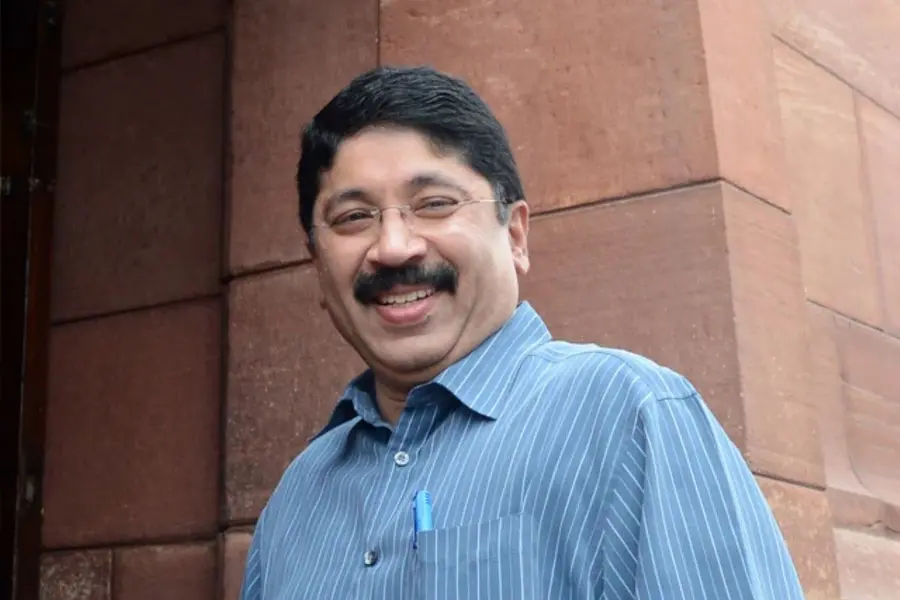
A speech by DMK leader Dayanidhi Maran, delivered at a women’s college in Chennai, has triggered a fierce political backlash after remarks made during his address were seen as reinforcing regional stereotypes about women’s roles in India.
Speaking to students at Quaid-e-Millath Government College for Women, the DMK leader sought to underline Tamil Nadu’s emphasis on women’s education and workforce participation. However, his attempt to contrast this with what he described as regressive expectations elsewhere quickly snowballed into controversy.
Also Read

Maran urged young women to pursue higher education and careers with confidence, saying Tamil Nadu’s social model encouraged girls to study, build skills, and participate in the modern economy.
In the same breath, he drew a sharp comparison with parts of North India, suggesting women there were often discouraged from working outside the home — a remark that drew immediate political ire.
The MP framed his comments within the larger Dravidian ideological narrative, invoking the legacy of leaders such as M Karunanidhi and CN Annadurai, and praising Chief Minister MK Stalin.
He described Tamil Nadu as a national leader in education, industrial growth, and women’s employment, asserting that these factors attract global companies to Chennai.
The remarks, however, drew sharp condemnation from the Bharatiya Janata Party, which accused Maran of indulging in divisive rhetoric.
BJP spokesperson Narayanan Thirupathy termed the comments offensive and habitual, while party leader Anila Singh said the MP’s words undermined India’s cultural unity.
She cited women leaders across political and regional lines, including Droupadi Murmu, to argue that empowerment cannot be reduced to geography.
The event itself also saw Deputy Chief Minister Udhayanidhi Stalin distribute laptops to students under a state-run digital education scheme, reinforcing the government’s emphasis on access to technology for women.
DMK leaders moved swiftly to defend Maran, arguing that his intent was motivational rather than derogatory.
Senior leader TKS Elangovan said women’s empowerment depended largely on political will, adding that Tamil Nadu’s long-standing policies on education, job reservations, and social justice had yielded measurable outcomes.
Party sources said the controversy should be viewed in the context of Tamil Nadu’s workforce data, noting that the state accounts for a significant share of India’s industrial women employees.
While conceding that the comparison invited debate, they maintained that the broader message was about encouraging young women to fully utilise state-backed opportunities.
Published: 14 Jan 2026, 11:50 am IST
Related Topics
Disclaimer: Kindly avoid objectionable, derogatory, unlawful and lewd comments, while responding to reports. Such comments are punishable under cyber laws. Please keep away from personal attacks. The opinions expressed here are the personal opinions of readers and not that of Mathrubhumi.