
Shivakumar must now navigate a political landscape in which his predecessor’s legacy, including the recent caste census, remains a sensitive issue.
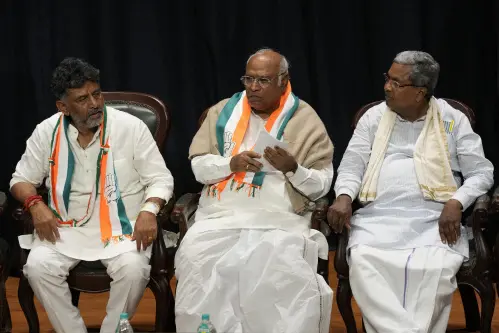
D.K. Shivakumar has officially taken the helm as Chief Minister of Karnataka, marking a significant transition for the Congress party in the South. This change comes after a carefully managed handover from his predecessor, Siddaramaiah, who had completed half of his term.
The party’s national leadership, including Rahul Gandhi and Mallikarjun Kharge, worked behind the scenes to ensure the transition appeared smooth and united. While Siddaramaiah has stepped down, he remains a powerful figure, recently joining the Congress Working Committee and vowing to stay active in state politics. The move is seen as a strategic calculation to revitalise the government ahead of the 2028 elections.
The battle for portfolios
The process of assigning roles to the new ministers was far from simple. It required hours of intense negotiations to settle disagreements among senior leaders who were unhappy with their initial offers. Shivakumar has decided to retain the Finance portfolio, but gave up the highly sought-after Bengaluru Development role.
This important position has been handed to Krishna Byre Gowda. Other veteran leaders, such as Ramalinga Reddy, were initially frustrated — reportedly even threatening to resign — before being assigned the Major and Medium Irrigation Department. The final list shows a delicate balancing act, attempting to satisfy the demands of various party factions while rewarding loyalty.
Balancing caste and youth
The new cabinet features a mix of experienced hands and fresh faces. Following instructions from the party high command, there has been a clear push to include younger ministers under the age of 60 to represent Dalits, OBCs and minority groups.
Priyank Kharge has been appointed Home Minister, while also managing IT and e-governance. Meanwhile, Yathindra Siddaramaiah, the former Chief Minister’s son, has entered the cabinet for the first time, taking charge of Urban Development. This strategy aims to build a new generation of leaders while maintaining the party’s traditional support bases across different communities, particularly the Vokkaliga and AHINDA groups.
The shadow of predecessors
Despite the change at the top, the influence of the former Chief Minister remains visible. Many of the ministers inducted into the new cabinet are considered close associates of Siddaramaiah, suggesting that power-sharing is essential for the government’s stability.
Shivakumar must now navigate a political landscape in which his predecessor’s legacy, including the recent caste census, remains a sensitive issue. Furthermore, the political shift in Karnataka is being closely watched by rivals such as the JD(S) and the BJP, which are eager to capitalise on any internal friction or signs of government weakness in the coming years.
Infrastructure versus welfare
One of the biggest challenges for the new administration is the state’s financial health. The “five guarantees” welfare schemes introduced by the previous leadership have cost the treasury approximately Rs 1.5 lakh crore, moving the state from a budget surplus to a deficit.
Shivakumar, known for his focus on infrastructure, is keen to push forward major projects such as the Bengaluru tunnel and the Mekedatu reservoir. However, he will need to find a way to fund these multi-crore ambitions while continuing the welfare programmes the public expects. Effectively managing this tightrope walk between development and social spending will likely define his success as leader.
Published: 05 Jun 2026, 07:50 am IST
Disclaimer: Kindly avoid objectionable, derogatory, unlawful and lewd comments, while responding to reports. Such comments are punishable under cyber laws. Please keep away from personal attacks. The opinions expressed here are the personal opinions of readers and not that of Mathrubhumi.
