
After Indore’s water contamination scare, a similar crisis is unfolding in Delhi, where decades-old pipelines in areas like Prem Nagar, Nabi Karim, Patel Nagar and Sadar Bazaar are supplying sewage-mixed, foul-smelling water, triggering health fears and forcing residents to buy bottled water daily.
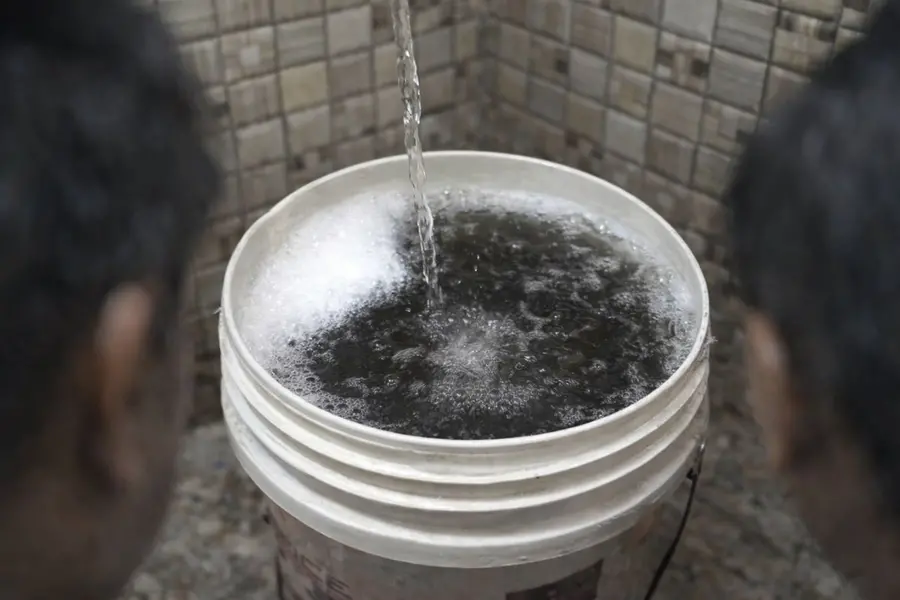
New Delhi: The drinking water crisis unfolding in several parts of Delhi is increasingly drawing parallels with the recent water contamination emergency reported from Indore, where leakage and ageing pipelines led to sewage mixing with potable water, triggering health concerns and public outrage.
In Delhi, residents of Prem Nagar, Baljit Nagar, Patel Nagar, Nabi Karim, Sadar Bazaar, Chandni Chowk, Paharganj, and Daryaganj say they are being forced to consume foul-smelling and visibly dirty water due to pipelines that are nearly five decades old.
Also Read

Locals allege that the pipelines, many of which have not been replaced for 48–50 years, are riddled with leaks, allowing sewage water to mix with drinking water lines.
A similar pattern was seen recently in Indore, where corroded underground pipelines and delayed repairs resulted in contaminated water reaching households in multiple localities.
While civic authorities in Indore eventually acknowledged the problem and began repair work, residents in Delhi complain that their crisis has persisted for years without a permanent solution.
In several Delhi neighbourhoods, water lines are exposed above ground, making them even more vulnerable to contamination. Due to the unsafe supply, families are compelled to purchase 20-litre bottled water cans every day, spending Rs 20 to 30 per bottle—an additional burden for low-income households.
Health concerns are mounting. Residents report a surge in water-borne diseases such as stomach infections, diarrhoea, vomiting, and fever—complaints that closely mirror those reported during the Indore water crisis. In Prem Nagar, the situation is described as the worst, with sewage allegedly entering household drinking water lines, particularly in narrow lanes.
“Almost every house has an RO purifier, but the water is so dirty that the machines break down frequently,” said Meenakshi, a resident of Nabi Karim. “Those who can’t afford purifiers or bottled water have no option but to drink this contaminated supply.”
Residents also raised concerns over filtered water available in some areas, claiming there is no information about mineral content, further adding to health risks.
New Delhi Municipal Council Vice Chairperson Kuljeet Singh Chahal on Thursday said that the civic body has a robust mechanism in place to monitor the quality of drinking water across the capital.
He stated that the New Delhi Municipal Council conducts regular water sampling, collecting 50, 60 or even up to 70 samples from different locations as per requirement.
“We routinely carry out water sampling, and so far, no negative reports have been received,” Chahal said, asserting that the water supplied under NDMC’s jurisdiction meets prescribed safety standards.
Despite repeated complaints to civic agencies, including the Delhi Municipal Corporation, locals allege that no long-term corrective measures have been taken. Many residents say they collectively pay to get sewers cleaned, but contamination returns within days due to the deteriorating pipeline network.
Unlike Indore—where the crisis prompted emergency inspections and pipeline replacement plans—Delhi residents say the capital continues to rely on temporary fixes.
With nearly 40 percent of the population in these affected areas reportedly consuming contaminated water, citizens are demanding urgent pipeline replacement and accountability to prevent a full-blown public health emergency.
Published: 08 Jan 2026, 08:31 am IST
Related Topics
Disclaimer: Kindly avoid objectionable, derogatory, unlawful and lewd comments, while responding to reports. Such comments are punishable under cyber laws. Please keep away from personal attacks. The opinions expressed here are the personal opinions of readers and not that of Mathrubhumi.