
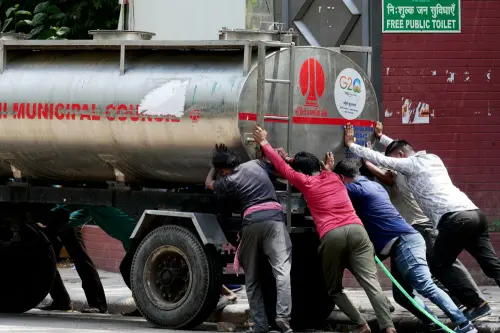
New Delhi: Delhi woke up to the scenes of long queues at water tankers across the city owing to severe water shortage exacerbated by scorching temperatures.
From Kusumpur Pahadi in Vasant Vihar to Geeta Colony and Okhla, residents are grappling with daily hardships to secure water for their daily needs. This crisis has become a grim routine with the onset of summer, affecting localities like Chanakyapuri's Sanjay Camp, Geeta Colony, Patel Nagar, Mehrauli, and Chhatarpur.
Residents describe the situation as dire, emphasising that while efforts by the Delhi government have provided some relief over the past decade, the recurring crisis underscores the need for long-term solutions. The current standoff with neighbouring Haryana, which has declined additional water supply citing its own limitations, has added to the urgency. Despite efforts by Delhi's officials, including high-level meetings and appeals for humanitarian assistance, the water scarcity persists unabated.
Atishi, Delhi's Water Minister, has been vocal about the urgent need for cooperation, urging all political parties to set aside differences and focus on resolving the crisis. She stressed that while discussions on water distribution are crucial, immediate action to alleviate suffering during the extreme heat is paramount.
The political landscape has heated up as well, with accusations traded between the Aam Aadmi Party (AAP) and Bharatiya Janata Party (BJP). AAP accuses BJP of orchestrating the water shortage to undermine Delhi's governance, while BJP blames AAP for failing to tackle water theft by criminal elements operating water tankers. Congress, having recently aligned with AAP in Delhi, has also joined protests against the crisis.
The situation has led to frustration among Delhi's residents, who face daily struggles amid rising temperatures and uncertain water supplies. Many have expressed dismay over the politicisation of the issue, urging swift and effective action to ensure basic amenities.
In response to the crisis, local authorities have intensified efforts to manage water distribution more effectively, but the fundamental challenge remains unresolved. As Delhiites endure this challenging period, there is a collective call for sustainable water management strategies and inter-state cooperation to prevent such crises in the future.
With the monsoon expected to bring some relief in the coming months, the immediate focus remains on mitigating the current hardships through coordinated efforts and community support. The plight of Delhi's residents underscores the critical need for infrastructure investment, proactive governance, and cooperative regional policies to secure essential resources, especially during periods of heightened demand and environmental stress. ANI
Published: 19 Jun 2024, 12:01 pm IST
Related Topics
Disclaimer: Kindly avoid objectionable, derogatory, unlawful and lewd comments, while responding to reports. Such comments are punishable under cyber laws. Please keep away from personal attacks. The opinions expressed here are the personal opinions of readers and not that of Mathrubhumi.
