
Delhi’s air quality hovered near the ‘severe’ mark on Saturday, with multiple hotspots crossing hazardous levels even as airport operations continued under low-visibility protocols.
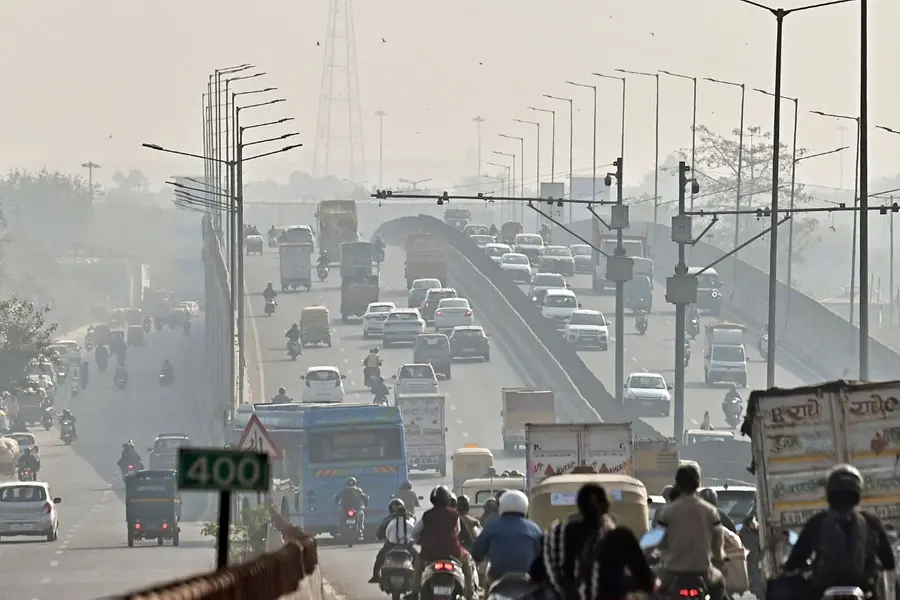
Delhi and its surrounding areas woke up to dense smog on Saturday, with air quality slipping dangerously close to the ‘severe’ category. Data from the Central Pollution Control Board (CPCB) showed the city’s overall Air Quality Index (AQI) at 390 at 8 am, placing it in the “very poor” category, while several localities recorded “severe” levels of pollution.
Among the worst-affected areas were Anand Vihar and Ghazipur (AQI 435 each), Jahangirpuri (AQI 442), Rohini (AQI 436), Chandni Chowk (AQI 419), Burari Crossing (AQI 415), and RK Puram (AQI 404). An AQI reading above 400 is classified as ‘severe’ and is associated with serious health risks.
A combination of smog and shallow fog reduced visibility across parts of the national capital during the early morning hours. According to CPCB classifications, AQI levels between 301 and 400 are considered ‘very poor’, while readings between 401 and 500 fall in the ‘severe’ category, indicating a heightened risk of respiratory illnesses, even among healthy individuals, if exposure is prolonged.
Amid concerns over visibility, Delhi Airport said flight operations were continuing normally. In an advisory posted on X, the airport said low-visibility procedures were in effect, but there was no disruption to services. Passengers were advised to check with their respective airlines for the latest updates.
The capital had witnessed similar conditions on Friday, when the overall AQI stood at 386. Thick haze was reported in areas such as Ghazipur and Anand Vihar, with sharply reduced visibility.
Despite marginal improvements in air quality over recent weeks, large parts of Delhi continue to remain under a blanket of dense and toxic smog as winter sets in. The worsening pollution levels have once again triggered sharp political exchanges, with parties trading blame over the capital’s recurring air crisis.
Published: 13 Dec 2025, 08:47 am IST
Disclaimer: Kindly avoid objectionable, derogatory, unlawful and lewd comments, while responding to reports. Such comments are punishable under cyber laws. Please keep away from personal attacks. The opinions expressed here are the personal opinions of readers and not that of Mathrubhumi.
