
The Commission for Air Quality Management (CAQM) on Tuesday invoked Stage 3 of the Graded Response Action Plan (GRAP), ordering an immediate ban on non-essential construction
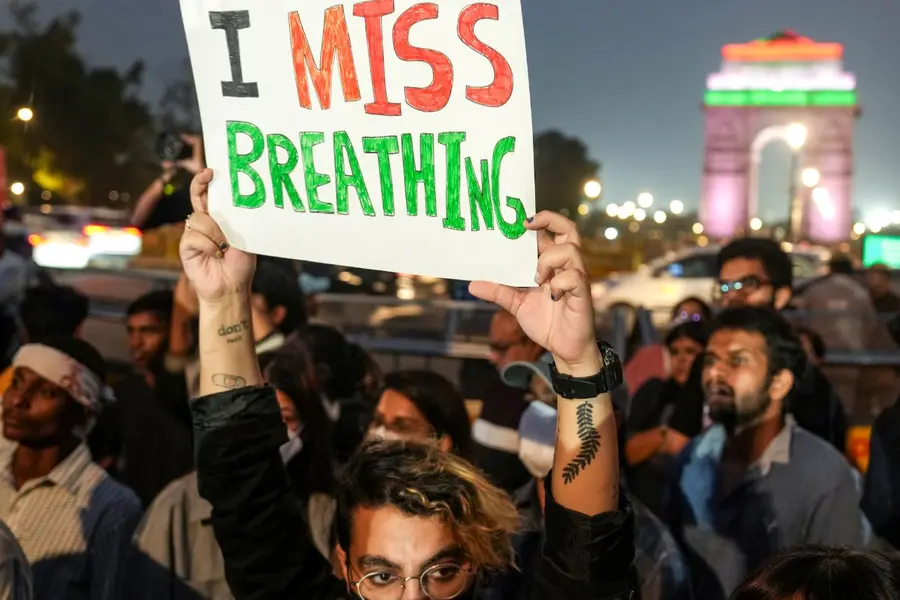
New Delhi: Delhi and the wider National Capital Region (NCR) were engulfed in a toxic haze this week, prompting the government to impose stricter anti-pollution measures as air quality deteriorated to “severe” levels.
The Commission for Air Quality Management (CAQM) on Tuesday invoked Stage 3 of the Graded Response Action Plan (GRAP), ordering an immediate ban on non-essential construction and tightening restrictions on industries using polluting fuels.
According to data from the Central Pollution Control Board, the Air Quality Index (AQI) at several monitoring stations in the capital exceeded 400 — more than eight times the upper limit of the “good” category (0–50). The hazardous levels of smog have drawn growing public anger, with a rare demonstration at India Gate over the weekend leading to the detention of several protesters demanding urgent action for cleaner air.
Satellite imagery has revealed a sharp increase in stubble burning across northern India, particularly in Punjab and Haryana — a recurring seasonal driver of Delhi’s infamous winter smog. While authorities say the latest measures aim to prevent further deterioration, experts warn that pollution remains an entrenched and complex problem for the capital.
Delhi’s toxic air stems from a mix of year-round local emissions and seasonal external factors.
Vehicular Emissions: Traffic exhaust remains the single largest contributor, releasing fine particulate matter (PM2.5, PM10) and nitrogen oxides (NOx). The city’s dense fleet of private cars, lorries and buses adds to the burden.
Dust: Road dust and particles from widespread construction and demolition are significant sources of airborne pollution.
Industrial Activity: Factories, brick kilns and thermal power plants in and around the NCR emit sulphur dioxide (SO₂) and particulate matter, compounding the problem.
Waste and Biomass Burning: The open burning of rubbish, crop residue and biomass (including wood and cow dung) for cooking or heating continues to release harmful pollutants, especially during colder months.
Seasonal Triggers
Each autumn, Delhi’s air quality worsens dramatically due to regional and meteorological factors.
Crop Residue Burning: Post-harvest stubble fires in Punjab and Haryana, combined with north-westerly winds, blow dense smoke into Delhi. On peak days, this can account for up to 45% of the city’s pollution.
Weather Conditions: Low wind speeds, temperature inversions and Delhi’s landlocked geography trap pollutants near the surface, creating the city’s characteristic winter smog.
As pollution levels in Delhi-NCR hit yet another crisis point, a combination of traffic emissions, construction dust, domestic biomass use, industrial output, seasonal crop burning and adverse winter weather continues to choke the capital.
Published: 13 Nov 2025, 03:51 pm IST
Disclaimer: Kindly avoid objectionable, derogatory, unlawful and lewd comments, while responding to reports. Such comments are punishable under cyber laws. Please keep away from personal attacks. The opinions expressed here are the personal opinions of readers and not that of Mathrubhumi.
