
Delhi-NCR`s air quality plummets to `severe`. Stage 4 GRAP pollution restrictions are now active. Understand the new curbs and how they affect you. Act now for cleaner air!
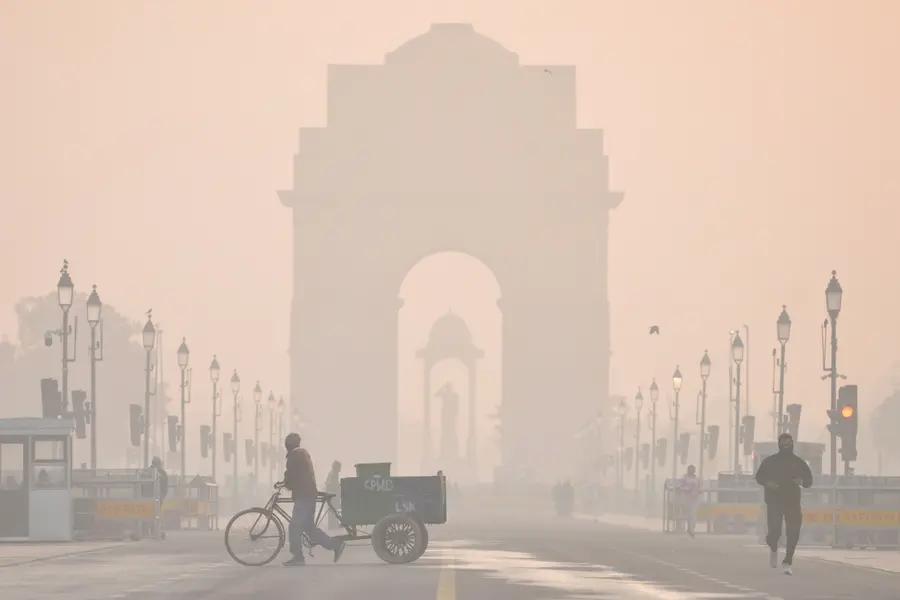
The Centre’s pollution control watchdog on Saturday enforced Stage 4 restrictions under the Graded Response Action Plan (GRAP) across Delhi-NCR after the capital’s air quality deteriorated sharply into the ‘severe’ category.
According to the Commission for Air Quality Management (CAQM), Delhi’s Air Quality Index (AQI) rose from 400 at 4 pm to 428 by 8 pm, driven by a western disturbance, unfavourable weather conditions and weak dispersion of pollutants.
“Keeping in view the prevailing trend of air quality and relevant factors and in an effort to prevent further deterioration of air quality in the region, the CAQM Sub-Committee on GRAP unanimously decides to invoke all actions as envisaged under Stage-IV of extant GRAP – 'Severe+' Air Quality (DELHI AQI > 450), with immediate effect, in the entire NCR, as a proactive measure,” a senior official said.
The move comes just a day after Stage 3 restrictions were imposed in the region as pollution levels surged.
Under GRAP norms, air quality is classified into four stages, 'poor' (AQI 201-300), 'very poor' (AQI 301-400), 'severe' (AQI 401-450) and 'severe plus' (AQI above 450), with stricter curbs triggered as pollution worsens.
Authorities said the emergency measures aim to curb emissions, protect public health, and prevent Delhi’s air quality from slipping further into the ‘severe plus’ zone.
What restrictions kick in as Delhi enters GRAP-4 mode?
Under GRAP-4, vehicles that are not BS-VI compliant and not registered in Delhi — including petrol vehicles — will not be allowed to enter the city.
Non-essential trucks are banned from entering Delhi, except those carrying essential goods or running on cleaner fuels like CNG, LNG, electric or BS-VI diesel.
All construction and demolition work will stop, including major public projects such as roads, flyovers, highways, power lines and pipelines.
Schools in NCR and Delhi may shift Classes 6–9 and 11 to online classes, while Classes 10 and 12 are usually exempt due to board exams.
Offices are advised to allow at least 50% staff to work from home, with staggered timings to reduce traffic.
Authorities may also consider closing colleges, limiting commercial activities, or implementing odd-even vehicle rules, while the Centre may allow its employees to work from home.
Published: 17 Jan 2026, 10:01 pm IST
Related Topics
Disclaimer: Kindly avoid objectionable, derogatory, unlawful and lewd comments, while responding to reports. Such comments are punishable under cyber laws. Please keep away from personal attacks. The opinions expressed here are the personal opinions of readers and not that of Mathrubhumi.
