
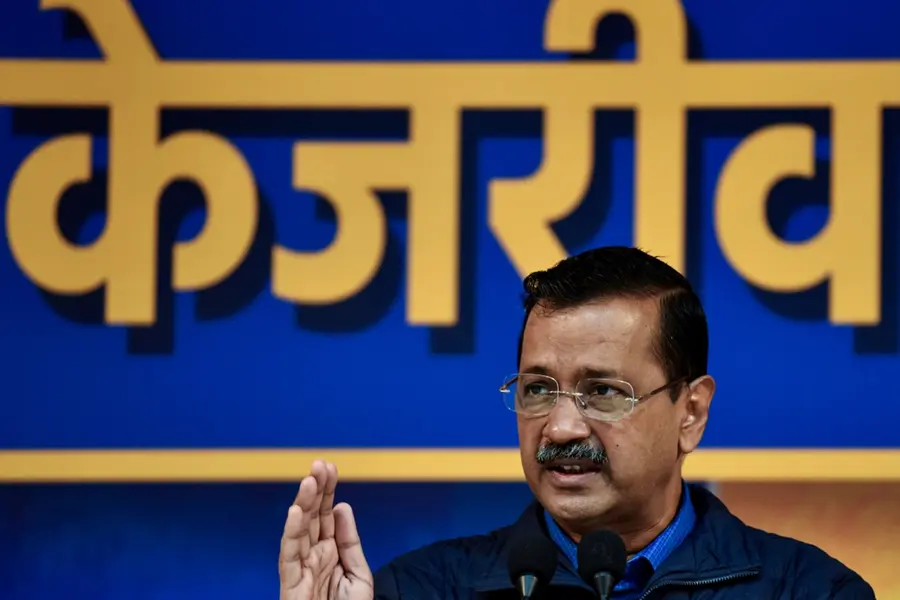
New Delhi: The Delhi Jal Board (DJB) has strongly rejected allegations made by former Delhi Chief Minister and Aam Aadmi Party (AAP) convenor Arvind Kejriwal, who accused the Haryana government of releasing "poison" into the raw water flowing into the national capital. Kejriwal referred to the situation as "water terrorism" in a letter addressed to the Election Commission of India (ECI).
Dismissing the claims, the DJB said in a statement, "These statements are factually incorrect, without any basis and misleading."
The DJB assured the public that it regularly monitors the quality of incoming water and adjusts supplies based on various water quality parameters. According to the Board, a seasonal rise in ammonia levels in the Yamuna River is a natural occurrence during winter, particularly between October and February.
The DJB explained, "Our Water Treatment Plants are designed to treat ammonia levels up to 1 ppm (parts per million), and we manage concentrations between 2 and 2.5 ppm through a dilution process using water from the Carrier Line Channel (CLC) and Delhi Sub Branch (DSB)."
Reasons for ammonia rise
The DJB attributed the rise in ammonia levels to the mixing of untreated sewage or industrial waste upstream of the Wazirabad Barrage, compounded by reduced water flow during winter months after the monsoon season.
"This year also, the ammonia started increasing from October month," the Board stated, elaborating on the current situation.
At one point, ammonia levels in the river reached 6.5 ppm at Wazirabad pond. Despite this, the DJB noted that the treatment plants at Wazirabad and Chandrawal remained operational, albeit with a reduced capacity. Production at these plants has been curtailed by 15 to 20 per cent to address the high ammonia levels.
Routine measures in place
The DJB reassured the public that such curtailment measures were routine during winter months.
"These steps have been taken in past winters to maintain water quality," the statement read.
The Board also highlighted ongoing efforts by Haryana officials to address the issue.
"Haryana officials have taken up a work to lay the pipeline at DD-6 in compliance with NGT orders so that the untreated sewage of DD-6 should not mix up with DD-8," the DJB noted.
This project is expected to mitigate ammonia-related issues in the future.
Improvements on the horizon
According to the DJB, recent water sample analyses upstream of the Wazirabad pond indicated a downward trend in ammonia levels, and the situation is expected to improve soon. Once ammonia concentrations decrease, production at the affected water treatment plants will be restored to normal levels.
The DJB expressed concern over the potential impact of Kejriwal's allegations, stating that such claims foster unnecessary fear among Delhi residents and could harm inter-state relations.
"False claims like these contribute to fear-mongering and harm the relationship between Delhi and Haryana," the DJB stated.
The Board also noted the seriousness of the matter given its potential to impact inter-state relations. "These facts may be brought to the attention of the Hon'ble Lieutenant Governor in terms of the Transaction of Business Rules," it added.
To support its assertions, the DJB shared ammonia level data for December 2024 and January 2025, which reflected fluctuating concentrations. It reiterated its commitment to closely monitoring the situation and ensuring water quality for Delhi residents.
ians
Published: 27 Jan 2025, 10:40 pm IST
Related Topics
Disclaimer: Kindly avoid objectionable, derogatory, unlawful and lewd comments, while responding to reports. Such comments are punishable under cyber laws. Please keep away from personal attacks. The opinions expressed here are the personal opinions of readers and not that of Mathrubhumi.
