
Union Home Minister Amit Shah chaired a high-level meeting on Tuesday to assess the security situation in Delhi and other parts of the country following the powerful explosion near the Red Fort that killed 12 people.
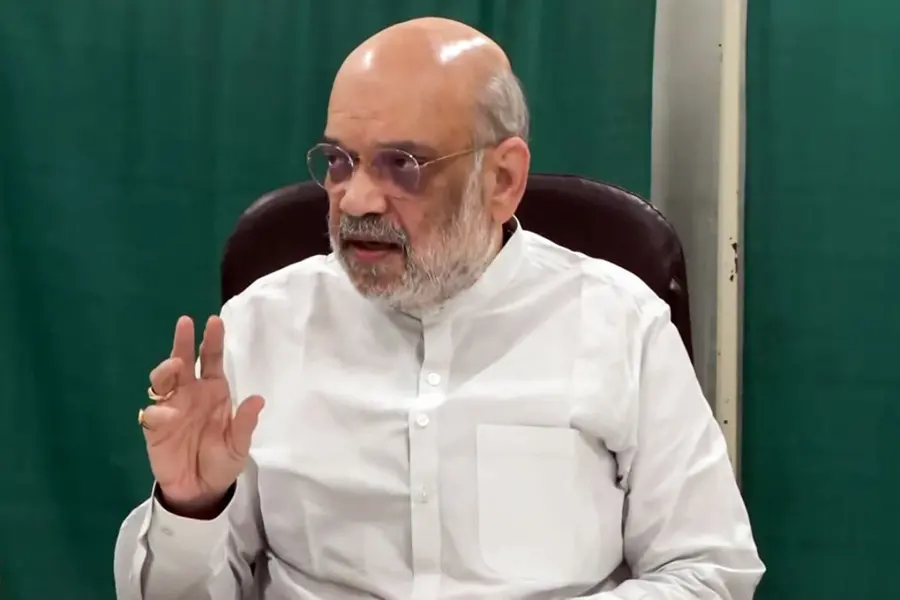
New Delhi: Union Home Minister Amit Shah on Tuesday chaired a high-level meeting to review the security situation in Delhi and other parts of the country following Monday’s deadly explosion near the Red Fort that claimed 12 lives and injured several others, officials said.
Top officials attend review
The meeting was attended by Union Home Secretary Govind Mohan, Intelligence Bureau Director Tapan Deka, Delhi Police Commissioner Satish Golcha, and National Investigation Agency (NIA) chief Sadanand Vasant Date. Jammu and Kashmir Director General of Police Nalin Prabhat joined the discussion virtually, sources confirmed.
During the review, senior officials presented detailed briefings on the incident and the ongoing probe. Shah directed top investigative agencies to conduct an in-depth inquiry into all aspects of the blast and identify those responsible.
Explosion near Red Fort
The explosion occurred on Monday evening around 7 pm in a slow-moving Hyundai i20 car near the Red Fort metro station. The high-intensity blast set multiple vehicles ablaze and caused chaos in the busy area, which was crowded with commuters and tourists at the time.
Initial findings from the Delhi Police suggest the explosion may have been a fidayeen-style (suicide) attack. Investigators believe the suspect might have altered plans after learning about the recent busting of a terror module in Faridabad and decided to trigger the blast prematurely to cause maximum casualties and avoid arrest.
Investigation and early leads
Police and forensic teams from the Special Cell, Crime Branch, and Forensic Science Laboratory (FSL) are jointly investigating the scene. The Rapid Action Force (RAF) has been deployed near the Red Fort as precautionary reinforcement.
Officials said CCTV footage has been pivotal in tracking the vehicle’s movements. Surveillance clips show the car entering and exiting the Red Fort parking area shortly before the explosion, with the driver appearing to be alone. Investigators are now analysing more than 100 CCTV recordings from the surrounding zones and nearby toll plazas to reconstruct the route taken before the blast.
Technical surveillance and probe links
Authorities have obtained mobile dump data from the Red Fort vicinity to examine communication patterns and identify numbers that may have been in contact with the suspect. Similar analysis is underway in Faridabad, where a related terror module was dismantled earlier this week.
Investigators are also carrying out Internet Protocol Detail Record (IPDR) analysis to trace devices that went offline soon after the explosion – a possible attempt to evade detection.
Connection to Faridabad terror module
The Delhi Police are probing potential links between the blast and the terror module uncovered in Haryana’s Faridabad on Monday, when 360 kg of explosive material and ammunition were seized. Two individuals – Dr Mujammil and Dr Adil Rather – were arrested during the operation.
Officials said the Red Fort blast may have been carried out in panic after the module’s exposure. Agencies are now focused on piecing together the sequence of events and the wider intent behind the attack.
Authorities continue to treat the explosion as an act of terrorism, with sections of the Unlawful Activities (Prevention) Act (UAPA) invoked. Security has been tightened across key locations in the capital, and intelligence agencies remain on high alert.
(With inputs from PTI, ANI)
Published: 11 Nov 2025, 12:13 pm IST
Related Topics
Disclaimer: Kindly avoid objectionable, derogatory, unlawful and lewd comments, while responding to reports. Such comments are punishable under cyber laws. Please keep away from personal attacks. The opinions expressed here are the personal opinions of readers and not that of Mathrubhumi.
