
While some localities saw higher readings, others like the IGI Airport and Lodhi Road are in the 'moderate' range.
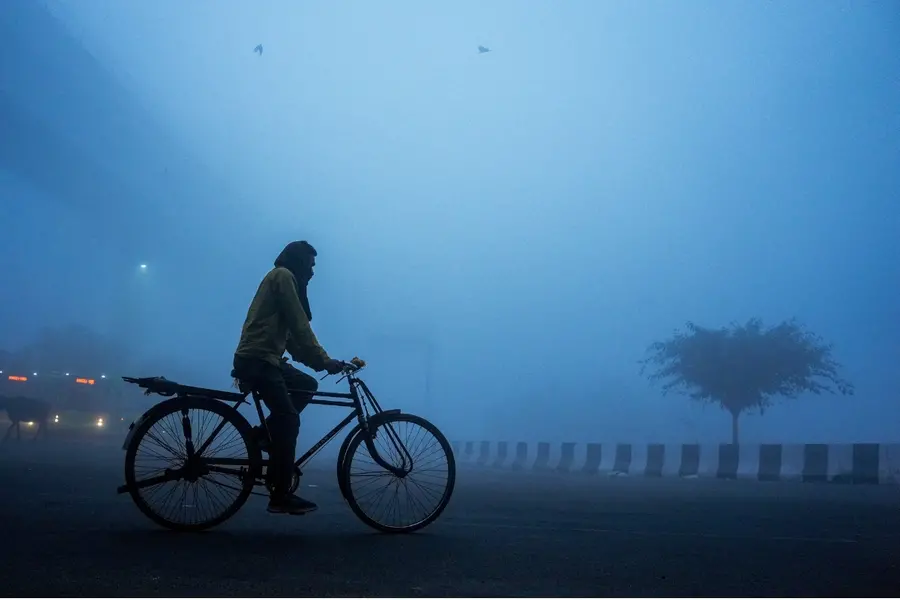
New Delhi: Air quality in India’s capital showed marginal improvement Friday morning as the overall Air Quality Index (AQI) dropped to 226, though atmospheric conditions remained firmly within the "poor" category.
Data released by the Central Pollution Control Board (CPCB) at 8:00 a.m. indicated a slight recovery from Thursday’s reading of 241. Despite the modest gains, many residential and industrial hubs across Delhi were blanketed in a thin layer of fog and persistent smog.
Regional Pollution Hotspots
While the city-wide average improved, localised readings highlighted ongoing health risks. Several neighbourhoods recorded AQI levels deep in the "poor" range:
- Shadipur: 280
- Dwarka Sector 8: 273
- RK Puram: 271
- Rohini: 268
- Bawana: 266
- Sonia Vihar and Okhla Phase 2: 262
- Anand Vihar: 261
- Ashok Vihar: 259
- Chandni Chowk: 240
- DTU: 228
On Thursday, several of these locations, including Anand Vihar (332) and Dwarka Sector 8 (328), had breached the "very poor" threshold.
Pockets of Relative Relief
In contrast to the industrial and densely populated sectors, several areas transitioned into the "moderate" category on Friday morning. The IGI Airport (T3) recorded an AQI of 148, followed by Lodhi Road (157), Mathura Road (183), and Pusa (190). North Campus also saw a relative improvement with a reading of 202.
The CPCB’s classification system defines AQI levels as follows:
- 0-50: Good
- 51-100: Satisfactory
- 101-200: Moderate
- 201-300: Poor
- 301-400: Very Poor
- 401-500: Severe
Weather and Temperature Trends
The India Meteorological Department (IMD) reported a minimum temperature of 9.4°C in the capital this morning. Forecasters noted a slight warming trend, with minimum temperatures rising by approximately 1-2°C over the last 24 hours, while maximum temperatures remained steady.
Earlier in the week, some districts had experienced even higher pollution levels, with Sonia Vihar touching 299 and Aya Nagar recording 214. The recent fluctuation in AQI is attributed to shifting wind patterns and the gradual rise in seasonal temperatures.
With inputs from ANI
Published: 06 Feb 2026, 09:00 am IST
Related Topics
Disclaimer: Kindly avoid objectionable, derogatory, unlawful and lewd comments, while responding to reports. Such comments are punishable under cyber laws. Please keep away from personal attacks. The opinions expressed here are the personal opinions of readers and not that of Mathrubhumi.
