
Delhi’s AQI remains in the poor category as February temperatures rise above 30°C, raising health concerns.
New Delhi: Delhi’s air quality continued to remain in the ‘poor’ category on Friday, with the Air Quality Index (AQI) staying elevated across several parts of the national capital, even as unusually warm February weather pushed daytime temperatures past 30 degrees Celsius.
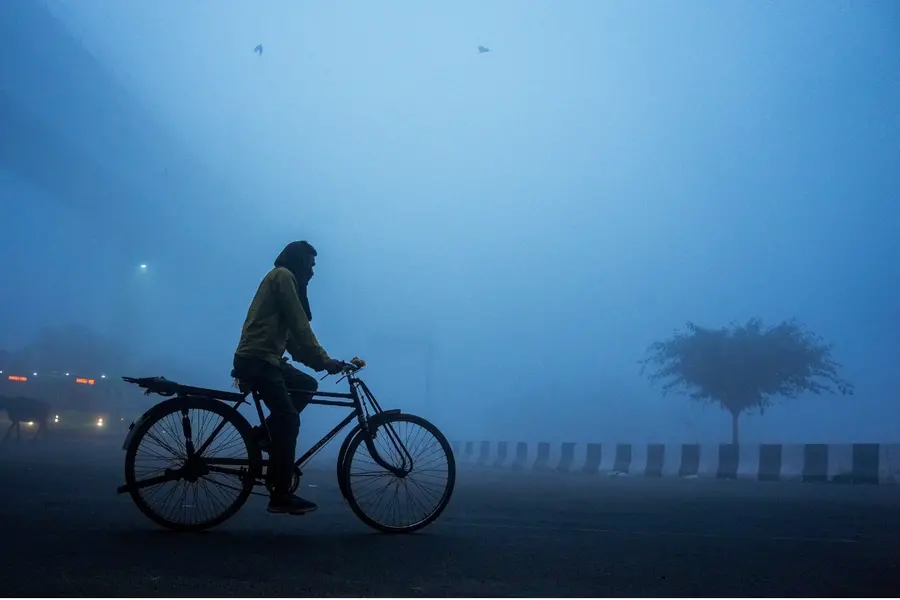
The city woke to a cool and hazy morning with clear skies and light winds. The minimum temperature settled at 14°C, offering a brief respite before warmer conditions intensified later in the day.
Delhi AQI today: Several areas report ‘poor’ air quality
According to data from the Central Pollution Control Board (CPCB), air pollution levels varied across monitoring stations, with many localities recording AQI levels in the moderate to poor range.
Anand Vihar recorded an AQI of 280, followed by North Campus (258), Wazirpur (238), Jahangirpuri (230), Dwarka Sector-8 (228), Mundka (219), R K Puram (218), Bawana (213) and Chandni Chowk (203). Ashok Vihar (192), Narela (184) and Sonia Vihar (178) reported comparatively lower but still concerning levels.
Also Read| PM Modi to address stakeholders on Union Budget 2026–27 implementation and economic reforms
Relatively better air quality was recorded at DTU (145), IIT Delhi (147), Mandir Marg (138) and Pusa (136), placing them in the moderate category.
Health experts have advised residents, particularly those with respiratory conditions such as asthma and chronic bronchitis, to limit outdoor exposure during early morning hours when pollution levels and mist are typically higher.
Delhi weather update: Unusually warm February days
Despite the cool start, Delhi's weather has turned unusually warm for late February, with afternoon temperatures resembling early April conditions. On Thursday, the maximum temperature reached 30.2°C, while the minimum was 12.6°C. Light winds provided limited relief from the rising heat.
The India Meteorological Department (IMD) has forecast mostly clear skies across Delhi-NCR over the coming days, with no significant change in temperature trends. Between February 28 and March 4, maximum temperatures are expected to range between 31°C and 33°C, while minimum temperatures are likely to hover between 15°C and 16°C.
Also Read| Big political shift in Tamil Nadu: Ex-CM O Panneerselvam set to join DMK today
Western Disturbances to affect the Himalayan region
The IMD has also indicated two weak Western Disturbances that may bring light rain and snowfall to the Western Himalayan region from February 26 to 28 and again from March 2 to 3. Increased cloud cover is expected over Himachal Pradesh, Uttarakhand and Jammu & Kashmir, with light precipitation likely in higher-altitude areas.
With Delhi air pollution levels remaining elevated and temperatures rising steadily, residents may continue to experience a combination of poor air quality and early summer-like conditions in the days ahead.
IANS
Published: 27 Feb 2026, 09:23 am IST
Disclaimer: Kindly avoid objectionable, derogatory, unlawful and lewd comments, while responding to reports. Such comments are punishable under cyber laws. Please keep away from personal attacks. The opinions expressed here are the personal opinions of readers and not that of Mathrubhumi.
