
Experts warn that falling temperatures, calm winds, and stubble burning in neighbouring states could push pollution levels higher in the coming weeks.
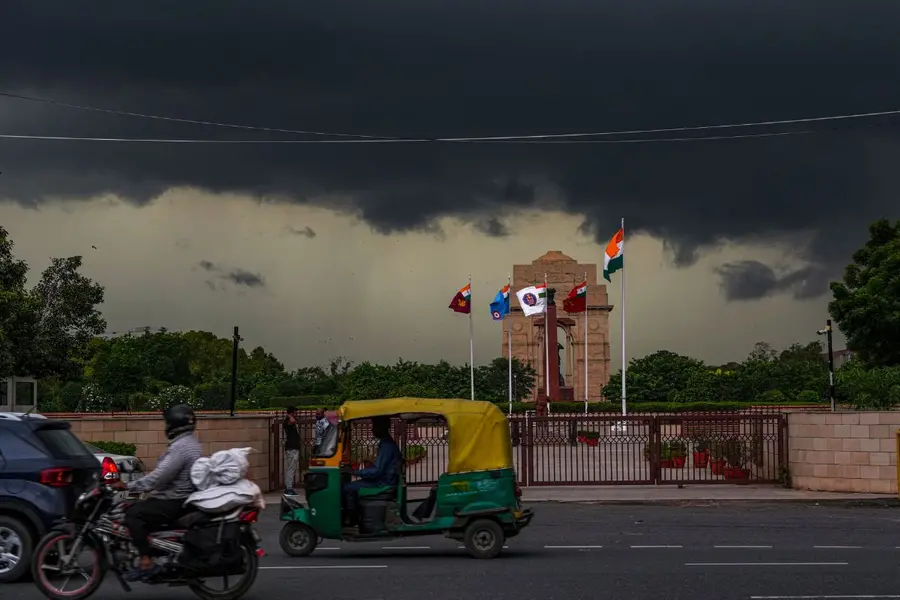
As Delhi begins to feel the first chill of the season, the city is also witnessing a familiar and worrying trend — a steady rise in air pollution levels.
On Saturday, the national capital’s Air Quality Index (AQI) stood at 199, placing it in the ‘moderate’ category but just a few points shy of tipping into the ‘poor’ zone.
According to the India Meteorological Department (IMD), Delhi recorded a minimum temperature of 19.4 degrees Celsius — around 1.6 degrees below normal — while the maximum settled at 30.3 degrees Celsius, nearly 4 degrees below the seasonal average.
The dip in mercury marked the arrival of autumnal coolness, but also set the stage for the annual pollution surge that typically accompanies Delhi’s winter months.
As per the Central Pollution Control Board (CPCB), AQI levels between 201 and 300 are classified as ‘poor’, a range Delhi last entered in June this year.
Data from the Decision Support System (DSS) revealed that the transport sector continues to be the largest contributor to the capital’s pollution load, accounting for 17.9% of total emissions.
Vehicular exhaust, combined with stagnant air movement in cooler conditions, has long been a major trigger of winter smog episodes in the NCR.
Meanwhile, satellite monitoring has begun to pick up early signs of stubble burning in neighbouring states — a recurring seasonal factor behind Delhi’s worsening air.
On Saturday alone, Punjab reported 14 farm fire incidents, Haryana one, and the neighbouring UP-NCR region 42. While these numbers remain relatively low compared to the peak in November, officials warn that the counts are likely to rise in the coming weeks.
The IMD has forecast mainly clear skies for Sunday, with the minimum and maximum temperatures expected to hover around 19 and 31 degrees Celsius, respectively.
Experts caution that as night temperatures drop further, calm winds and increased crop residue burning could push the AQI into the ‘poor’ category soon.
Published: 12 Oct 2025, 07:25 am IST
Disclaimer: Kindly avoid objectionable, derogatory, unlawful and lewd comments, while responding to reports. Such comments are punishable under cyber laws. Please keep away from personal attacks. The opinions expressed here are the personal opinions of readers and not that of Mathrubhumi.
