
While social media portrayed the froth as visually striking, experts urge caution.
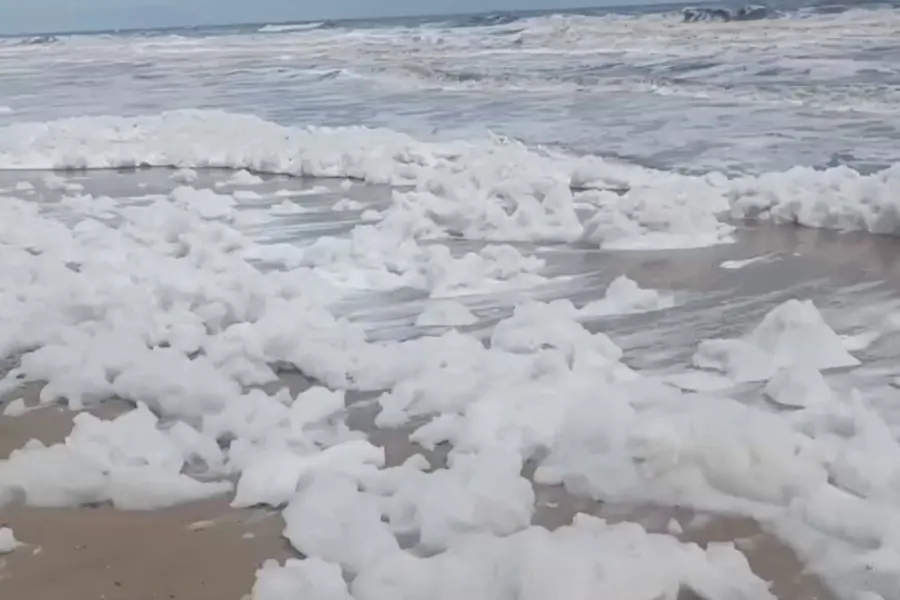
Chennai’s beaches took on a surreal appearance on Wednesday as thick white foam covered nearly 1.5km of coastline between Pattinapakkam and Srinivasapuram. Social media users captured striking visuals of the froth, drawing widespread attention for its unusual and almost magical look.
Why has the foam appeared?
Officials said the frothing followed heavy rainfall over the Adyar basin, which increased river discharge into the sea. The flow, mixed with untreated sewage rich in phosphates, created a churning effect at the Adyar estuary, resulting in the froth.
Fishing communities noted that such foam often appears with changes in wind direction and sea currents. However, local leaders emphasised that chemical waste from industries, rather than soap residues, could be a major contributor.
Risks to the ecosystem and livelihoods
Community leaders warned that persistent foam could disrupt fish breeding, as estuaries serve as safe havens for spawning fish during monsoon months. Reduced safety of these areas could ultimately threaten the livelihoods of local fishermen.
The Tamil Nadu Pollution Control Board (TNPCB) previously found phosphate concentrations in the estuary to be high, although pH and dissolved oxygen levels remained within safe limits. National Centre for Coastal Research (NCCR) data also confirmed phosphate as the main factor behind frothing, which experts say can be toxic and irritate skin, particularly among children and fishermen.
Visual appeal vs public health concerns
While social media portrayed the froth as visually striking, experts urge caution. Beaches including Marina, Thiruvanmiyur, and Besant Nagar, where public contact is high, could pose health risks if the froth is touched.
Fishermen and environmentalists have called for stricter action against industries discharging chemical waste, highlighting the need to protect both public health and marine life.
Published: 23 Oct 2025, 03:07 pm IST
Disclaimer: Kindly avoid objectionable, derogatory, unlawful and lewd comments, while responding to reports. Such comments are punishable under cyber laws. Please keep away from personal attacks. The opinions expressed here are the personal opinions of readers and not that of Mathrubhumi.
