
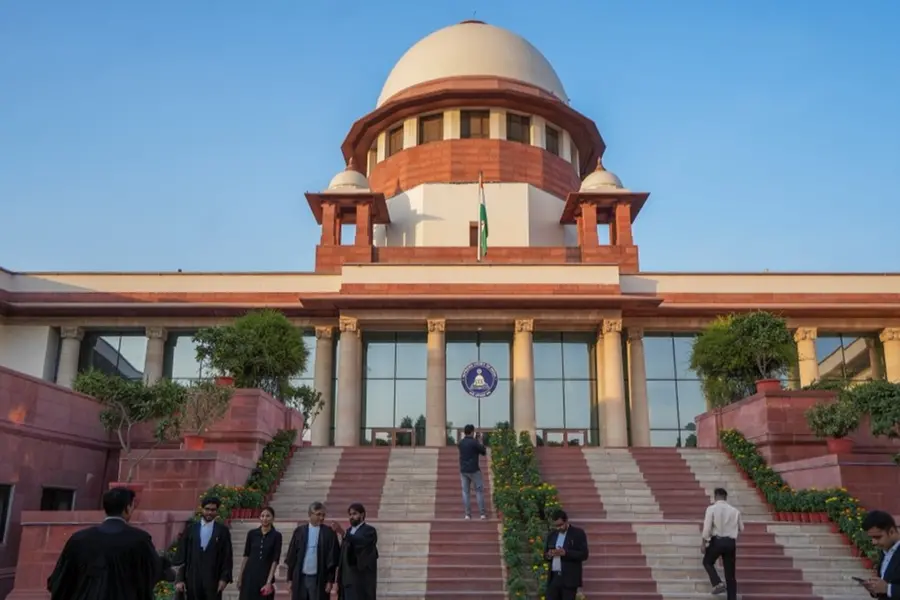
The government has opposed a petition in the Supreme Court for a life ban on guilty politicians, maintaining that it is only Parliament that can impose such a disqualification. In an affidavit filed before the apex court, the Centre contended that the plea, which calls for a permanent ban on individuals convicted of criminal offenses from contesting elections, amounts to an attempt to rewrite the law.
The Centre asserted that courts do not have the power to direct Parliament to legislate in a specific manner.
"The issue as to whether or not a life ban would be fitting is an entirely parliamentary question," the affidavit read.
The government again underlined that the present regime of disqualification for a limited term ensures deterrence without being too severe. Under the Representation of the People Act, 1951, convicted persons are disqualified for six years from the date of conviction or six years from the time of their release from prison—a policy the Centre contends is constitutionally justified and proportionate.
Legal and policy considerations
The affidavit noted that penalties and disqualifications tend to be time-limited, a rule that is applicable in many laws. It emphasized that Parliament has legislative choice in setting the duration of disqualification.
Further, it noted that judicial review should not be employed to challenge the effectiveness of legislative decisions. Section 8(1) of the Representation of the People Act stipulates a definite time-limited disqualification which conforms to legal standards.
"The disqualifications under the Act are a question of parliamentary policy and it would not be proper to substitute it by the petitioner's conception of the problem," argued the Centre.
Petition and Supreme Court Reaction
The plea, moved by advocate Ashwini Kumar Upadhyay, demands a lifelong ban for politicians found guilty and wants quicker disposal of criminal cases against Members of Parliament (MPs) and Members of Legislative Assemblies (MLAs).
But the Centre vigorously defended the current legal system, asserting that only Parliament has the power to decide the term and reasons for disqualification under Articles 102 and 191 of the Constitution. These articles specify the disqualifications of members of Parliament and state legislatures.
"Parliament can decide both the reasons and the length of disqualification. These provisions enable Parliament to structure laws that regulate electoral disqualifications as considered necessary," the government's affidavit added.
Further, the affidavit highlighted that the reason for disqualification—conviction of a criminal offense—is not altered, but the duration of disqualification can be time-limited.
The Centre also dismissed the petitioner's analogy of criminal conviction-based disqualification with others such as insolvency, office of profit, or mental unsoundness, on the basis that these are not permanent disqualifications either.
Government's reasoning against lifetime ban
The affidavit justified the proportionality and reasonableness of the current duration of disqualification by invoking principles in penal legislation where punishments have a nexus with the seriousness of crimes.
The Bharatiya Nyaya Sanhita, 2023 (new penal code) provides for limited imprisonment and fines for a range of offenses. Likewise, the majority of penal legislation places time-limited restrictions on basic rights and freedoms. It would be disproportionate and excessive to impose a permanent disqualification on convicted politicians.
The Centre also made clear that although courts can pronounce laws as unconstitutional, the relief in the petition would involve judicial rewriting of laws, which is not within the domain of the judiciary.
On February 10, the Supreme Court had sent notices to the Centre and the Election Commission of India (ECI), calling for their replies on the constitutional validity of the Representation of the People Act sections 8 and 9. The sections provide for disqualification of convicted legislators.
Published: 26 Feb 2025, 03:44 pm IST
Related Topics
Disclaimer: Kindly avoid objectionable, derogatory, unlawful and lewd comments, while responding to reports. Such comments are punishable under cyber laws. Please keep away from personal attacks. The opinions expressed here are the personal opinions of readers and not that of Mathrubhumi.
