
While Class 10 exams remain traditional, this move aims for greater efficiency, sustainability, and accuracy for millions of students annually.
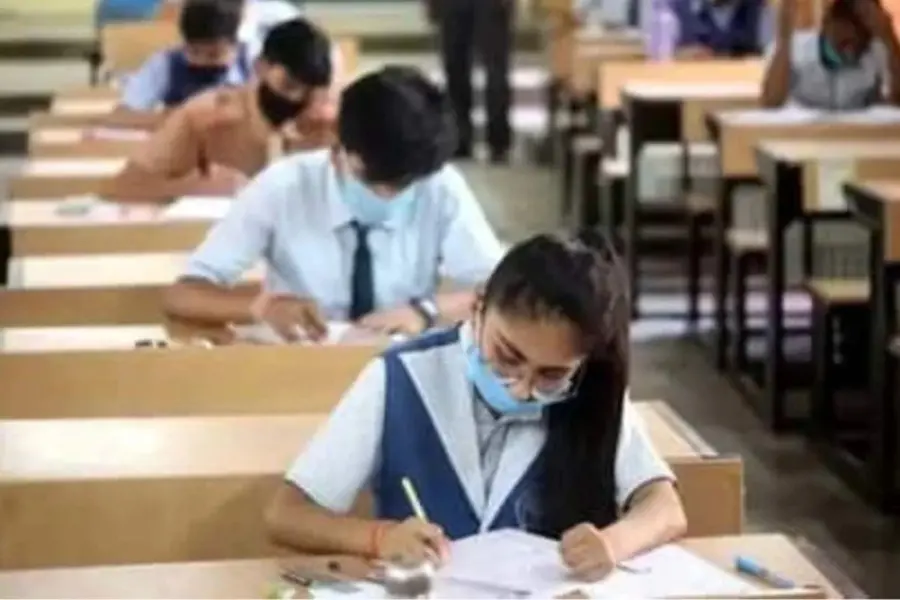
New Delhi: The Central Board of Secondary Education (CBSE) on Friday announced a major shift to digital evaluation for Class 12 board exams, a move that will eliminate the need for students to seek mark verification after results are declared.
Beginning with the 2026 examination cycle, the board is transitioning to a fully digital "On-Screen Marking" (OSM) system for senior secondary students. Under this framework, answer scripts will be scanned and assessed by teachers on computer screens, with software automatically calculating totals to remove human arithmetic errors.
"Post-result verification of marks will no longer be required, and there will be a reduced manpower requirement for verification as there would be no scope for any totalling errors," Examination Controller Sanyam Bhardwaj said during a workshop held for teachers and school principals.
Ending Manual Discrepancies
Bhardwaj explained that the traditional verification process was primarily used by students to catch missing marks or summation mistakes. "In the older system, students would seek verification to check for discrepancies in the whole numbers or missing numbers. In the new scheme of digital evaluation, such discrepancies would be eliminated at the outset," he said.
While Class 12 evaluations go digital, the board confirmed that Class 10 answer books will continue to be graded in the traditional physical mode.
A Phased Modernisation
The reform follows years of internal review and global benchmarking. Bhardwaj noted that the transition was not an "overnight" decision. "Before taking a final call, we analysed lessons from past experiences, redesigned systems, carried out dry runs, identified glitches, took stakeholder feedback, conducted global testing and reinforced the safety and security protocols," he added.
The move is expected to streamline operations for an organisation that oversees nearly 4.6 million students annually across India and 26 other countries.
Sustainability and Efficiency
Beyond accuracy, the board highlighted the environmental and logistical benefits of the change. By digitising the roughly 10.4 crore answer books generated each year, the CBSE aims to reduce its carbon footprint and speed up the result-processing timeline.
"The option for digital marking is not only environmentally sustainable but will ensure faster evaluation with wider teacher participation. Teachers can remain in their schools and continue their regular duties," Bhardwaj said. The system will also record the time spent on each script to ensure quality control.
Schools have been directed to upgrade their IT infrastructure, including high-speed internet and dedicated computer labs, to facilitate the new marking process, which begins after the exams conclude in April.
With inputs from PTI
Published: 13 Feb 2026, 07:22 pm IST
Related Topics
Disclaimer: Kindly avoid objectionable, derogatory, unlawful and lewd comments, while responding to reports. Such comments are punishable under cyber laws. Please keep away from personal attacks. The opinions expressed here are the personal opinions of readers and not that of Mathrubhumi.
