
He stressed that HSR is a necessity, not a luxury, for a country with demographics similar to China.
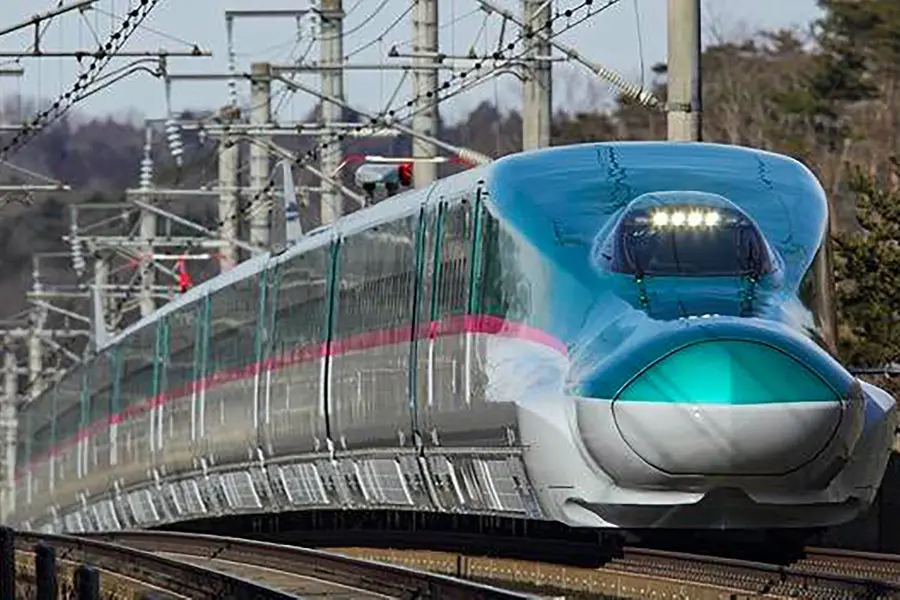
Sudhanshu Mani, the former railway officer often credited as the ‘brain behind Vande Bharat,’ has launched a sharp critique of India’s Mumbai–Ahmedabad High-Speed Rail (HSR) project (India’s first bullet train project), arguing the nation's decade-long delay is "painful" when compared to China’s velocity.
In his recent blog, Mani confessed to being among the mockers, describing India’s HSR journey as a “khichdi” (mishmash or concoction)—a stew of mixed ingredients, half-cooked and over-seasoned. He stressed that HSR is a necessity, not a luxury, for a country with demographics similar to China.
The painful contrast with Beijing
The delay in India’s flagship project stands in stark contrast to Chinese progress. While India debated HSR's "elitist" nature, China built the world's largest HSR system—over 46,000 km of high-speed tracks.
Mani highlighted the incredible speed achieved by China’s new CR450 trains, which clocked 453 kmph during testing, aiming for a 400 kmph operating speed, making it the fastest wheel-on-rail service globally. India's own 98,000-crore project, greenlit in 2015, became a "saga of delays," with costs doubling and progress moving at the pace of a "train stuck behind buffaloes". Even critical German-made tunnelling machines, needed for the project, were temporarily “trapped at a Chinese port in 2024” amid supply-chain restrictions imposed by Beijing.
The pragmatic hybrid solution
Faced with Japan's "astronomical prices" for rolling stock and signalling, Indian Railways (IR) has now loosened Japan’s grip. Mani supports this new pragmatic approach, where the "best must not become the enemy of the good".
The way forward is a hybrid system: Japanese civil works, paired with European signalling (the contract went to a Siemens–DRA Infracon joint venture). This shift from East to West feels "almost poetic". IR is also pushing ahead with indigenous 280 kmph HSR trains, expected by 2027/2028, proving that "Make in India" can also mean “Create, Manufacture and Move fast in India.”.
Mani asserts that regardless of the final speed (250 or 320 kmph), the project's success is paramount, transforming India’s metaphor from one of endurance to one of aspiration.
Published: 08 Nov 2025, 01:45 pm IST
Related Topics
Disclaimer: Kindly avoid objectionable, derogatory, unlawful and lewd comments, while responding to reports. Such comments are punishable under cyber laws. Please keep away from personal attacks. The opinions expressed here are the personal opinions of readers and not that of Mathrubhumi.
