
The BJP’s ‘Sankalp Patra’ for the 2026 West Bengal elections promises ₹3,000 monthly aid for women, a Uniform Civil Code within six months, and a sweeping crackdown on corruption, as Amit Shah sharpens his attack on the Mamata Banerjee government.
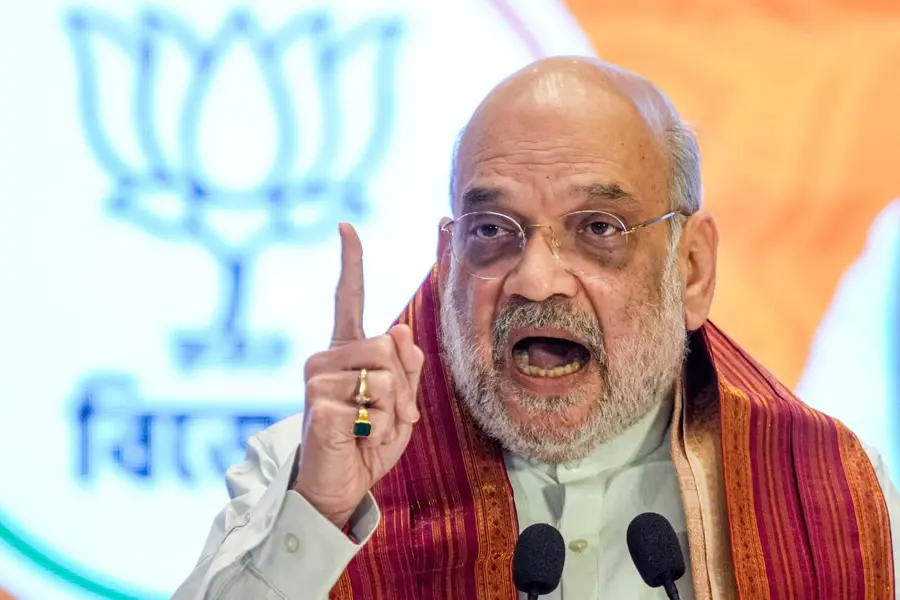
The Bharatiya Janata Party on Friday rolled out its manifesto for the 2026 West Bengal Assembly elections, positioning it as a roadmap to revive the state’s economy, strengthen governance, and address public grievances.
Union Home Minister Amit Shah, while launching the ‘Sankalp Patra’, said the party’s vision is aligned with Prime Minister Narendra Modi’s goal of building a “Viksit Bharat” and aims to restore confidence among farmers, women, and youth in the state.

Shah argued that Bengal is grappling with multiple challenges, from unemployment and agrarian distress to concerns over safety and cultural identity, and said the BJP’s promises are designed to tackle these issues head-on.
He added that the manifesto reflects both welfare commitments and structural reforms to bring “lasting change” if the party comes to power.
Welfare focus with cash support and social schemes
- At the heart of the BJP’s manifesto is a strong welfare pitch, particularly targeting women and economically vulnerable sections.
- The party has promised a monthly financial assistance of ₹3,000 for women, a move aimed at providing direct economic support at the household level.
- In addition, the manifesto commits to implementing the 7th Pay Commission for state government employees within 45 days of forming the government, signalling an attempt to appeal to a significant segment of salaried voters.
- Healthcare has also been given prominence, with the BJP pledging free cancer screening services for women across the state.
Through these measures, the party is trying to combine immediate financial relief with long-term social support systems, especially for women and working families.
UCC push and tough stand on corruption
- A major highlight of the manifesto is the promise to introduce a Uniform Civil Code (UCC) within six months of assuming office. The BJP has framed this as a step towards ensuring equal rights and a uniform legal framework for all citizens, making it one of the most significant policy commitments in the document.
- Alongside legal reform, the party has taken an aggressive stance on corruption. Amit Shah said that all alleged corruption cases from the past 15 years under the current state government would be reopened and investigated. He asserted that those found guilty would face strict legal consequences, including imprisonment. The BJP also claimed it had already presented a “chargesheet” to the people of Bengal, which it says reflects widespread dissatisfaction with the existing administration led by Chief Minister Mamata Banerjee.
‘Zero tolerance’ on infiltration, border security focus
- Illegal immigration has been positioned as a key electoral issue in the BJP’s campaign narrative. Shah reiterated the party’s commitment to a hardline approach, promising a “detect, delete, and deport” policy to deal with infiltrators.
- The manifesto also includes plans to strengthen border security, with assurances that steps will be taken to seal vulnerable stretches and prevent unlawful entry. By foregrounding this issue, the BJP is attempting to tap into concerns around national security and demographic change.
Overall, the ‘Sankalp Patra’ combines welfare assurances with strong political messaging on governance, law enforcement, and identity—setting the tone for what is expected to be a high-stakes electoral battle in West Bengal.
Published: 10 Apr 2026, 01:34 pm IST
Disclaimer: Kindly avoid objectionable, derogatory, unlawful and lewd comments, while responding to reports. Such comments are punishable under cyber laws. Please keep away from personal attacks. The opinions expressed here are the personal opinions of readers and not that of Mathrubhumi.