
Portions of the legendary shehnai maestro's Varanasi residence have been demolished, triggering a political row after Akhilesh Yadav accused the BJP of disrespecting India's cultural heritage.
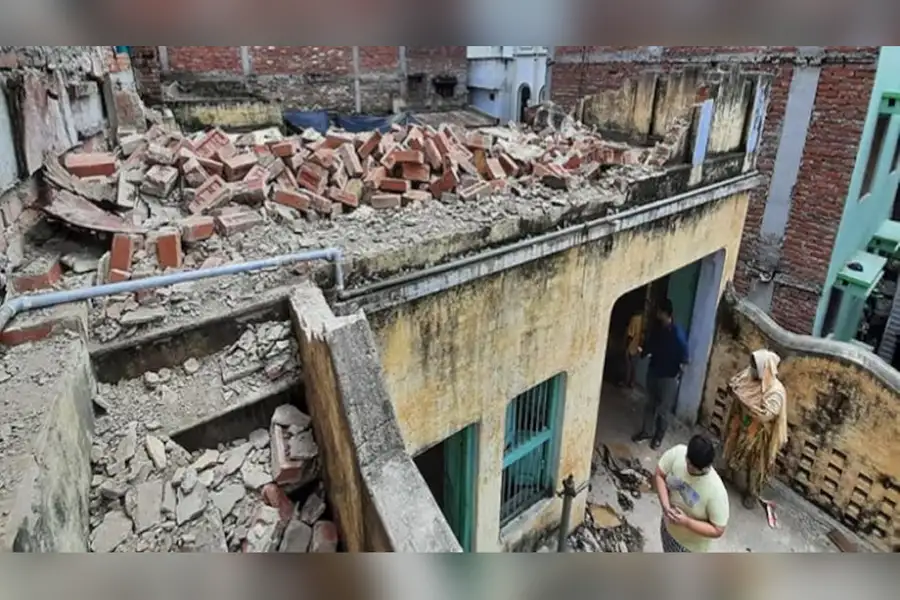
The home of Bharat Ratna awardee and legendary shehnai maestro Ustad Bismillah Khan in Varanasi has become the centre of a political controversy after portions of the property were demolished, prompting Samajwadi Party chief Akhilesh Yadav to launch a sharp attack on the BJP government.
Calling the demolition ‘utterly reprehensible’, Yadav accused the BJP and its ideological allies of being hostile towards art, culture and artistes.
The former Uttar Pradesh chief minister also alleged that destroying a cultural landmark associated with one of India's most celebrated musicians amounted to an assault on the country's shared heritage.
‘What more can you expect from those for whom the shehnai did not play?’ Yadav wrote in Hindi in a post on X (formerly Twitter) on Saturday morning.
In a strongly worded statement, the SP chief argued that art can nurture empathy, tolerance, and social transformation, qualities he claimed clashed with the BJP's ideological outlook.
He alleged that the ruling party viewed creative expression as an obstacle to its agenda, unless it could appropriate it for political purposes.
‘Destroying the shared legacy of someone who has been awarded the Bharat Ratna is tantamount to destroying not only their dignity and honour but also the honour of India,’ Yadav wrote, accusing the BJP of damaging the country through hatred.
The SP chief also made a political promise, saying that if his party returned to power, it would establish a 'listening museum' to preserve and celebrate Bismillah Khan's musical legacy.
Varanasi civic body denies involvement in demolition
However, the Varanasi Municipal Corporation has rejected suggestions that it was responsible for the demolition, maintaining that the late musician's family made the decision independently.
According to civic officials, the corporation had approached the family with a proposal to convert a room in Bismillah Khan's residence into a museum as part of a larger initiative to honour prominent personalities associated with the city.
The proposal also envisaged developing roads leading to their residences along themes reflecting their lives and contributions.
Sandeep Srivastava, public relations officer of the Varanasi Municipal Corporation, said the civic body had discussed the proposed museum with the family, but they did not agree to the plan.
He said the family cited the building's deteriorating condition and said it intended to demolish the structure and independently redevelop the property.
The civic body had also issued a notice concerning the building's dilapidated condition.
Officials said an internal disagreement among family members over the proposed demolition had delayed the process. The dispute has since been resolved, following which the family proceeded with the demolition.
Srivastava maintained that since the family had not consented to the museum project, the municipal corporation neither undertook the proposed development nor had any role in bringing down the structure.
Police say property owner carried out demolition
Chowk police station house officer Vijay Kumar Shukla also said the property owner carried out the demolition.
According to Shukla, the municipal corporation had earlier issued a notice over the poor condition of the house.
Family members had approached the police over an internal dispute concerning certain portions of the property, but the matter has since been settled.
The owner is now independently carrying out the demolition, the police officer said.
The controversy has renewed attention to preserving Bismillah Khan's physical and cultural legacy, whose music helped establish the shehnai as a prominent instrument in Indian classical music.
While the civic authorities maintain that the demolition was a private family decision, Yadav has turned the episode into a larger political question concerning the protection of India's artistic heritage.
Published: 07 Nov 2026, 07:35 pm IST


ABOUT THE AUTHOR

Related Topics
Disclaimer: Kindly avoid objectionable, derogatory, unlawful and lewd comments, while responding to reports. Such comments are punishable under cyber laws. Please keep away from personal attacks. The opinions expressed here are the personal opinions of readers and not that of Mathrubhumi.