
After meeting MK Stalin in Chennai, Rahul Gandhi and senior INDIA bloc leaders reached Mumbai to meet Sharad Pawar. The Opposition is attempting to coordinate its position ahead of Parliament's special session on delimitation and women's reservation.
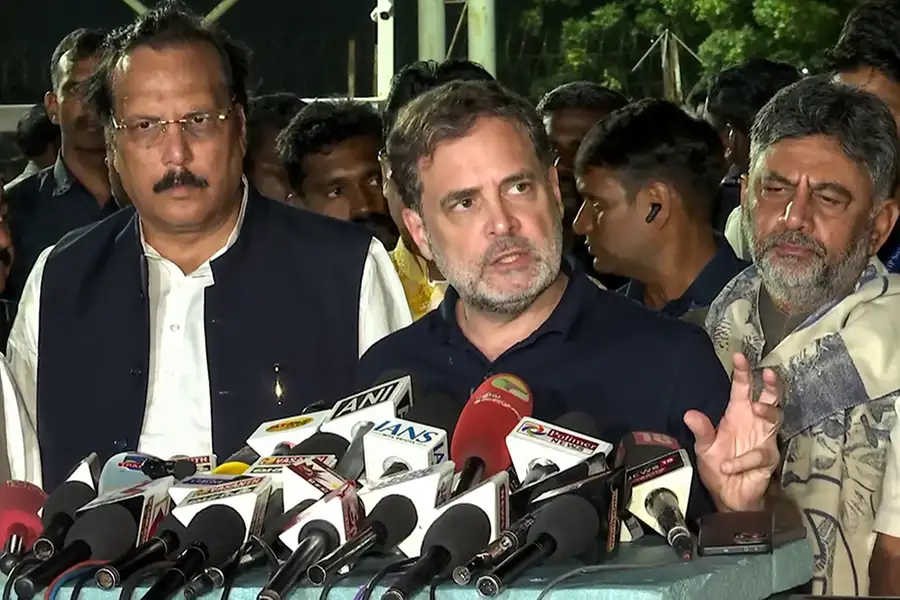
Mumbai: Lok Sabha leader of the opposition Rahul Gandhi and senior Congress leaders met NCP (SP) chief and MP Sharad Pawar in Mumbai on Sunday after their outreach to DMK president MK Stalin in Chennai, as the INDIA bloc attempts to build a united Opposition position against the Centre's proposed delimitation-related constitutional amendments.
Congress leader Rahul Gandhi, party president Mallikarjun Kharge and other INDIA bloc leaders reached Breach Candy Hospital in Mumbai on Sunday to meet Sharad Pawar.
The meeting was part of the Opposition's efforts to secure support against the Centre's proposed delimitation legislation ahead of the special Parliament session beginning November 30.
After the meeting, Rahul Gandhi said, "Our fight is continuing. It's all good."
The Congress delegation subsequently left the hospital. NCP (SP) leader Supriya Sule was absent from the meeting.
After Stalin, Congress reaches out to Pawar
The Mumbai meeting followed Rahul Gandhi's discussions with DMK chief and former Tamil Nadu Chief Minister M K Stalin in Chennai.
Rahul Gandhi, Kharge and Sonia Gandhi had sought Stalin's support in opposing the proposed constitutional amendments linked to delimitation and women's reservation.
During the discussions, Rahul Gandhi reportedly warned that increasing the Lok Sabha's strength to 850 seats could affect democratic representation.
Stalin responded by saying history would remember those opposing the proposals as "Kattabommans and not Ettappans".
However, the DMK has indicated that it intends to support the legislation, highlighting differences within the INDIA bloc.
The subsequent meeting with Pawar was another attempt by the Congress leadership to coordinate the Opposition's position before Parliament takes up the bills.
Rahul Gandhi raises concerns over delimitation
Rahul Gandhi has accused the BJP of attempting to push India towards dictatorship through the proposed delimitation exercise.
He has argued that increasing the number of Lok Sabha seats could allow the ruling party to redraw constituencies to its political advantage.
The Congress leader has demanded that delimitation be based on the 2027 Census and conducted by an impartial, all-party commission.
The BJP has rejected his allegations and defended delimitation as a constitutional requirement.
Chirag Paswan responds to Rahul Gandhi
Union Minister Chirag Paswan criticised Rahul Gandhi for seeking the DMK's support against the delimitation proposals.
Paswan pointed to the Congress's political realignment in Tamil Nadu, arguing that it had broken its decades-old alliance with the DMK and joined a rival coalition.
He also defended delimitation, saying it was a constitutional requirement.
"The problem is that the Constitution isn't just something to be carried around in one's pocket," Paswan said.
What is at stake in the Parliament session?
The government is scheduled to introduce three bills in the Lok Sabha from November 30:
- Constitution (One Hundred and Thirty-Second Amendment) Bill, 2026.
- Union Territories Laws (Amendment) Second Bill, 2026.
- Delimitation (Second) Bill, 2026.
The proposals are linked to changes in parliamentary representation and the implementation of 33% women's reservation in legislatures.
The Opposition has raised concerns about how the proposed delimitation exercise could affect the distribution of Lok Sabha seats among states, particularly those that have controlled population growth.
The government has defended the proposed changes, while Opposition parties have sought greater clarity on the process and its implications.
Can the INDIA bloc maintain a united position?
The meetings with Stalin and Pawar underline the Congress leadership's efforts to coordinate regional allies before the parliamentary debate.
However, the DMK's reported willingness to support the legislation has exposed differences within the alliance. The position of the NCP (SP) is also important as the party's support could influence the Opposition's coordination.
The debate is not limited to women's reservation. It also concerns the process through which parliamentary constituencies may be redistributed and how different states could be represented in the expanded Lok Sabha.
The immediate test for the INDIA bloc will be whether its constituent parties can agree on a common position when the bills are introduced in Parliament.
Published: 29 Nov 2026, 11:27 pm IST


ABOUT THE AUTHOR

Disclaimer: Kindly avoid objectionable, derogatory, unlawful and lewd comments, while responding to reports. Such comments are punishable under cyber laws. Please keep away from personal attacks. The opinions expressed here are the personal opinions of readers and not that of Mathrubhumi.