
Analysts note that women voters in Bihar have exercised their rights at higher rates than men since 2010, influenced by welfare policies and empowerment schemes.
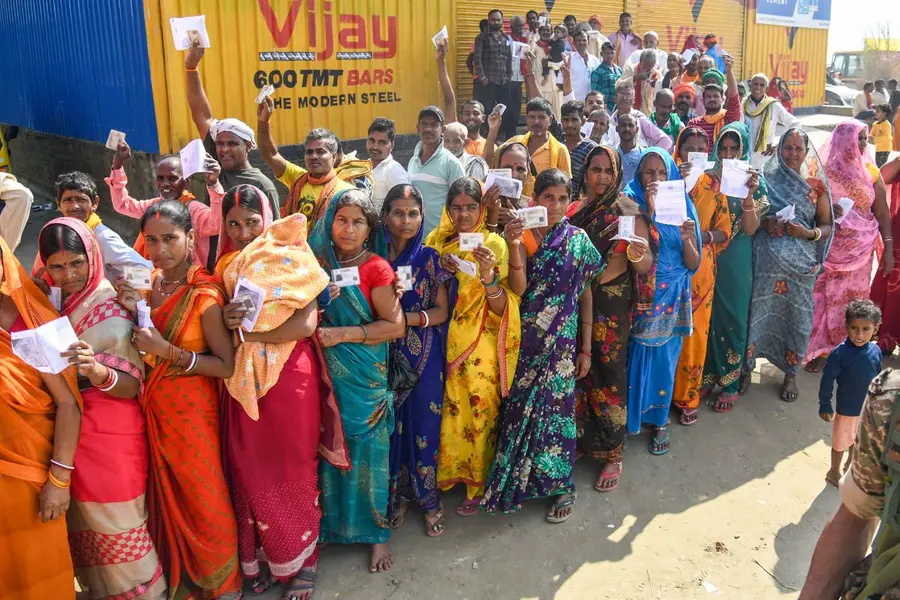
Bihar: In Bihar, women voters have been turning out in higher numbers than their male counterparts since the 2010 Assembly elections, challenging perceptions that they are politically silent. Analysts attribute this trend to the state’s inclusive policies and programmes aimed at women’s welfare and empowerment.
Measures such as cash support for small businesses, Jeevika livelihood groups, bicycles for schoolgirls, panchayat reservations for women, and broader social, economic, and political empowerment have encouraged female participation at the ballot box. Direct cash transfers and targeted subsidies strengthened the link between the state and women voters, making them a reliable electoral bloc. Grassroots initiatives, including self-help groups, village institutions, and improved girls’ schooling, also enhanced social and political awareness among women.
Historical data show a significant shift over decades. In 1962, around 32.5 per cent of women voted compared with 55 per cent of men. The gender gap widened in 1977, during the Janata Party wave that brought Karpoori Thakur to power, when male turnout reached 71.2 per cent and female turnout lagged at 38.3 per cent.
By the 1990s, following the implementation of the Mandal Commission recommendations and various socio-political changes, the male-female turnout gap began to narrow. In the 1990 Assembly elections, women’s participation rose to 53.3 per cent, while male turnout stood at 69.6 per cent. Five years later, male turnout fell to 67 per cent, and female turnout climbed to 55.8 per cent.
The decade was also marked by Bihar’s economic decline, with a 1999 survey naming it the worst state for investment. Political shifts, including the fodder scam and alliances between the BJP and Janata Dal (United), influenced voter behaviour. In the 2000 Assembly elections, male turnout was 70.7 per cent, far higher than the 53.3 per cent of women, but political instability saw Rabri Devi return as Chief Minister.
The 2005 Assembly elections saw a decline in both male (50 per cent) and female (42.5 per cent) turnout in February, further dropping in the October-November polls to 47 per cent for men and 44.6 per cent for women. After this, Nitish Kumar led a JD(U)-BJP coalition government.
Since 2010, women have consistently voted in higher proportions than men. Female turnout was 54.4 per cent in 2010, 60.5 per cent in 2015, and 59.7 per cent in 2020, surpassing male participation of 51.1, 53.3, and 54.5 per cent respectively.
Early indications from phase 1 of the 2025 Assembly elections suggest that women are again turning out in large numbers, though which way they will cast their votes will only be known when results are announced on November 14.
IANS
Published: 06 Nov 2025, 02:51 pm IST
Related Topics
Disclaimer: Kindly avoid objectionable, derogatory, unlawful and lewd comments, while responding to reports. Such comments are punishable under cyber laws. Please keep away from personal attacks. The opinions expressed here are the personal opinions of readers and not that of Mathrubhumi.
