
While the BJP has secured a historic statewide mandate in West Bengal, Siddique’s win reaffirms the ISF’s influence in this critical constituency, proving the party’s long-term viability against established political powers.
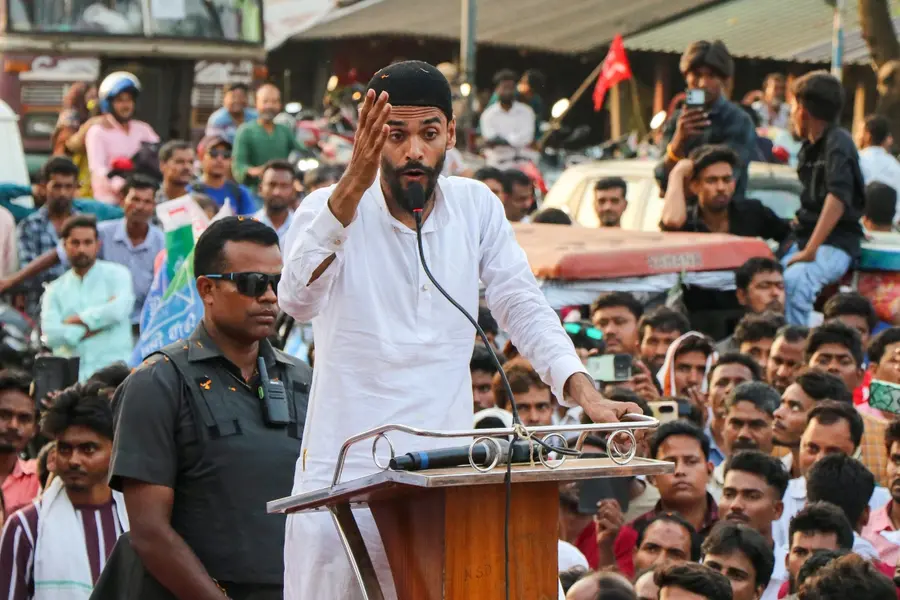
Kolkata: Md. Nawsad Siddique of the All India Secular Front (AISF) has officially retained his seat in the Bhangar assembly constituency, delivering a decisive blow to the Trinamool Congress (TMC) in one of the state's most volatile districts.
Upon the conclusion of the 18th and final round of Electronic Voting Machine (EVM) tabulation, Siddique emerged victorious with 126,555 votes. He defeated his primary opponent, Saokat Molla of the TMC, by a substantial margin of 32,088 votes, as Molla finished with 94,467.
The result in Bhangar arrives amidst a sweeping statewide realignment. As of 9:40 p.m. Monday, the Bharatiya Janata Party (BJP) has officially secured 182 seats and maintains leads in 25 others, well clear of the 148-seat majority. The TMC has won 62 seats and holds leads in an additional 18.
Ongoing Political Volatility
The electoral climate in Bhangar remains fraught with tension, as the region is historically categorised as one of the most unstable political zones in West Bengal. Following the second phase of voting on April 29, new skirmishes broke out between supporters of the Indian Secular Front (ISF) and the TMC.
The ISF has submitted formal complaints to election officials, claiming that their polling representatives were illegally intimidated and removed from various voting stations. In response to these persistent friction points, a large contingent of paramilitary forces remained on-site to secure the final stages of the count.
The 2026 Contestants
The expansive roster of candidates for this high-profile seat included:
- Md. Nawsad Siddique (AISF)
- Saokat Molla (TMC)
- Jayanta Gayen (BJP)
- Mahabubul Islam (INC)
- Sima Bhattacharyya (AJUN)
- Sujata Ranjan (BSP)
- Rafique Akunji (SUCIC)
- Independent Candidates: Kamaluddin Molla, Ikbal Molla, Akiyabul Middya, Rajib Ahamed, Md. Rabiul Islam Gazi, Md. Momtajur Rahaman Molla, Md. Mir Samsuddin, Mirja Hasan, Masadul Molla, Mafijul Ali Biswas, Naosan Molla, and Karimul Molla.
Constituency Profile and Strategic Importance
Situated in the South 24 Parganas district, Bhangar is a critical centre for minority politics and agrarian movements. Defined by fierce local competitions, the area has become a laboratory for "Third Front" political strategies. Analysts suggest that Siddique’s victory serves as a vital indicator that traditional voting patterns among minority populations are being disrupted by new political movements.
The 2026 race was a significant confrontation between the established power of the TMC and a rising opposition. Siddique, an influential voice in the ISF, sought to prove his party’s long-term viability, while Molla, a veteran TMC leader, attempted to re-establish the ruling party’s control over the district’s influential vote bank.
Historical Context and Significance
In 2021, Bhangar made national headlines when it elected Siddique as the only ISF member of the state legislature, a result that shattered the TMC’s previous monopoly in the region. That victory turned the constituency into a central theatre for minority-led political opposition.
While initial exit polls suggested a narrow contest for the 148-seat majority across the state, the ISF’s strong showing in Bhangar remained a focal point for observers. The result confirms the fragmentation of the opposition vote in this corridor, even as the BJP secured a historic overall mandate to form the next government in West Bengal.
Published: 04 May 2026, 04:04 am IST
Disclaimer: Kindly avoid objectionable, derogatory, unlawful and lewd comments, while responding to reports. Such comments are punishable under cyber laws. Please keep away from personal attacks. The opinions expressed here are the personal opinions of readers and not that of Mathrubhumi.
