
Bank strike in September 2026: Bank unions have called a 3-day strike from September 28. Check dates, possible 5-day disruption and govt response.
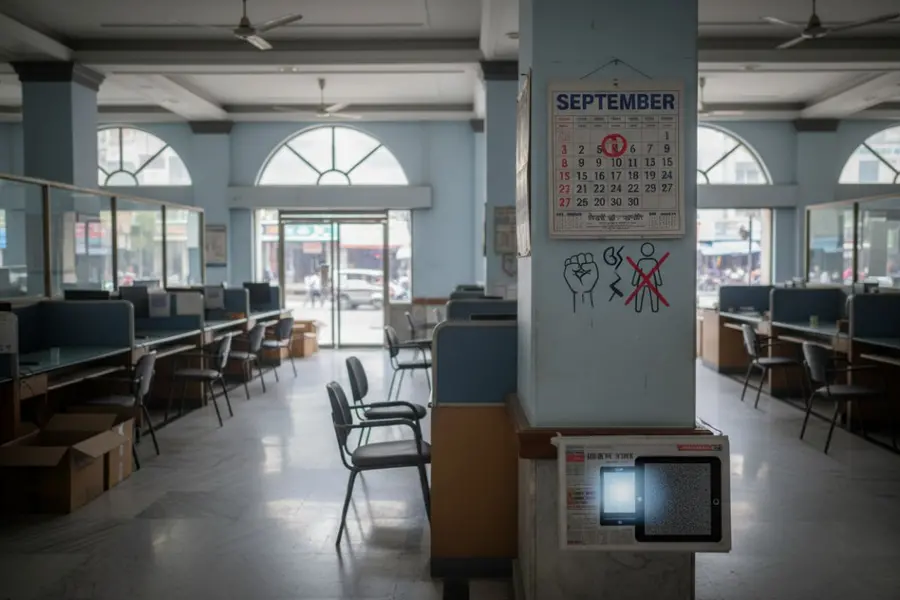
Bank customers could face disruption in banking services at the end of September as the United Forum of Bank Unions has called a three-day nationwide bank employee strike from September 28 to September 30.
The proposed bank strike in September 2026 comes at a particularly important time for the banking sector, with September 30 marking the half-yearly closing of banks. With the weekend immediately preceding the strike also being a holiday, the disruption could effectively stretch to five days for customers.
The Finance Ministry has now urged bank employees to reconsider the strike and resolve their remaining demands through dialogue.
When is the next bank strike?
The upcoming bank strike is scheduled to begin on September 28, 2026, and continue for three days.
The strike has been called by the United Forum of Bank Unions over demands including five-day banking and other issues concerning bank employees.
The timing could make the impact particularly noticeable for customers. The strike period includes September 30, the half-yearly closing of banks, when reconciliation, provisioning, treasury and market-related operations are carried out.
Since the weekend before September 28 is also a holiday, banking services could effectively be affected for five consecutive days.
Customers, businesses and those relying on banking services may therefore want to plan transactions around the proposed strike dates.
Why are bank employees going on strike?
One of the major issues raised by the unions is the withdrawal of the Performance Linked Incentive (PLI) scheme. According to the Finance Ministry, the scheme was put in abeyance earlier this month following discussions.
The government said one of the two major demands has already been addressed, while the remaining demand continues to be examined.
Despite this, a one-day bank employee strike was held on September 11, the ministry said.
What did the government say about the bank strike?
The Finance Ministry has appealed to bank employees to avoid industrial action and continue discussions with the government.
It said most of the concerns raised by bank unions have been substantially addressed and that measures are also being taken to improve the welfare of bank employees.
The government pointed to several measures, including revised pay scales, increases in salary and allowances, changes to the Staff Welfare Fund and an increase in executive-level posts in public sector banks.
The ministry also said negotiations for the next Bipartite Settlement have begun ahead of schedule, with the aim of completing the process before the November 2027 deadline.
The government said these steps were intended to address employee concerns while ensuring that banking services continue without disruption.
Why September 30 matters for banks
The proposed strike coincides with the half-yearly closing of banks on September 30, which the Finance Ministry described as an important date for several banking and financial operations.
A three-day strike combined with the preceding weekend could result in an effective five-day interruption of regular banking services, the ministry said.
The government warned that such a disruption could inconvenience customers and businesses and affect government transactions as well as international banking operations.
It also stressed that public sector banks play an important role in financial inclusion, digital banking, financial literacy and rural outreach.
For customers, the key point is the September 28–30 bank strike window and the possibility of extended disruption because of the preceding weekend.
With agency inputs
Published: 22 Sept 2026, 08:05 am IST
ABOUT THE AUTHOR

Related Topics
Disclaimer: Kindly avoid objectionable, derogatory, unlawful and lewd comments, while responding to reports. Such comments are punishable under cyber laws. Please keep away from personal attacks. The opinions expressed here are the personal opinions of readers and not that of Mathrubhumi.