
Bagdogra Airport's new terminal blends climate-resilient infrastructure with regional identity to boost Eastern Himalayan connectivity
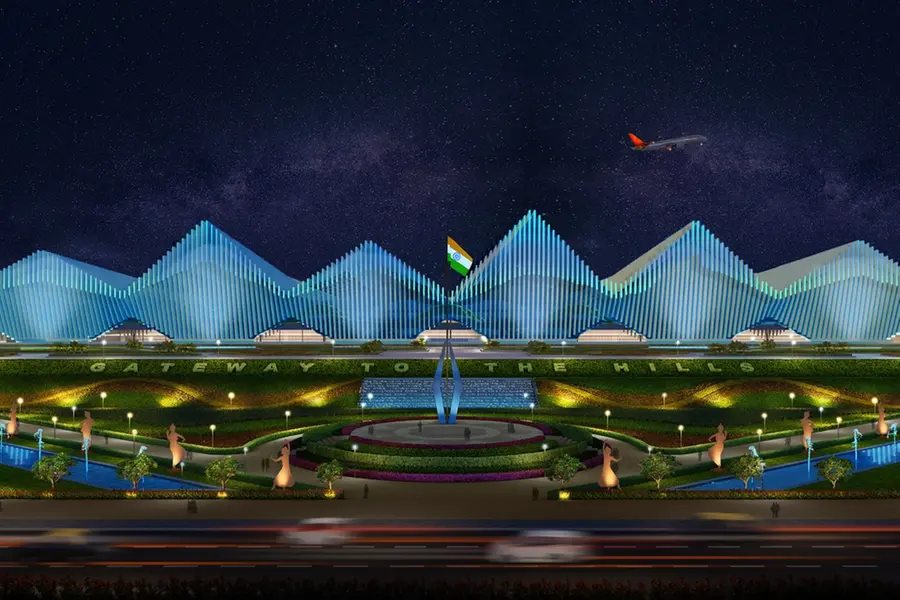
West Bengal: In a major boost to aviation infrastructure in Eastern India, the Airports Authority of India is developing a new Civil Enclave at Bagdogra Airport, one that aspires to set a national precedent for climate-conscious design and regional integration. Situated at the foothills of the Eastern Himalayas, the new terminal is being hailed as a forward-looking, sustainable aviation hub, designed to serve as a vital connector to Darjeeling, Gangtok, Kalimpong, and beyond.
Currently under construction, the terminal spans a vast built-up area of approximately 1.28 lakh square metres (13.8 lakh square feet), within a site footprint of 4.5 million square feet. Once operational, it will be capable of handling 1,000 passengers per hour, significantly enhancing the region’s capacity to accommodate both domestic and international travellers.
But beyond numbers and scale, what sets the project apart is its deep environmental sensibility. Developed on terrain vulnerable to seasonal flooding, the terminal incorporates a comprehensive stormwater management system featuring culverts, retaining walls, and a network of drainage channels to ensure all-weather operability. The design prioritizes not just operational resilience but long-term climate adaptability, marking a rare instance of infrastructure planning that integrates environmental risk from the outset.
“This terminal is not just about expanding capacity, it is about reimagining how we build in the face of ecological realities,” said Ar. Dikshu C. Kukreja, Managing Principal at CP Kukreja Architects, the firm leading the design. “At Bagdogra, we’ve tried to ensure that architecture speaks to both the needs of people and the demands of the climate. It’s a fusion of performance and poetry.”
The design draws heavily from the cultural and geographic essence of the region. Its distinctive façade lined with vertical aluminium fins and angular pitched roofs is inspired by the slopes of Darjeeling’s tea gardens and the majestic ridgelines of the Kangchenjunga range. This interplay of local identity and modern engineering creates a structure that’s not only efficient but emotionally resonant.
Inside, the terminal promises an elevated passenger experience. Wide, column-free spans offer visual openness, while natural ventilation zones and regionally inspired finishes foster a warm and welcoming ambiance. The terminal’s layout has been carefully designed for seamless passenger flow, ensuring hassle-free movement through check-in, security, and boarding processes.
In line with India’s net-zero goals, the project also aims to be a carbon-neutral terminal, integrating passive design strategies, low-emissivity (low-E) glazing, and on-site renewable energy systems. The ambition is to dramatically cut energy usage and set a template for future regional airport development that does not compromise on sustainability.
“Our goal was to create a terminal that reflects the Eastern Himalayan spirit while championing sustainability at every level,” Kukreja added. “From material selection to orientation and energy systems, every detail has been conceived with climate responsibility in mind.”
The Bagdogra terminal is part of a broader strategy by the Airports Authority of India to strengthen aviation access in under-served but strategically significant regions. With its proximity to both North Bengal and the Northeast, Bagdogra is expected to play a key role in facilitating tourism, economic growth, and regional logistics.
Once completed, the new terminal will not only address existing capacity constraints but also stand as a landmark of context-sensitive, climate-resilient infrastructure raising the bar for how India builds its next generation of airports.
Published: 29 Jul 2025, 02:16 pm IST
Related Topics
Disclaimer: Kindly avoid objectionable, derogatory, unlawful and lewd comments, while responding to reports. Such comments are punishable under cyber laws. Please keep away from personal attacks. The opinions expressed here are the personal opinions of readers and not that of Mathrubhumi.
