
For many, the singer remains a powerful voice that continues to shape the state's identity even from his final resting place.
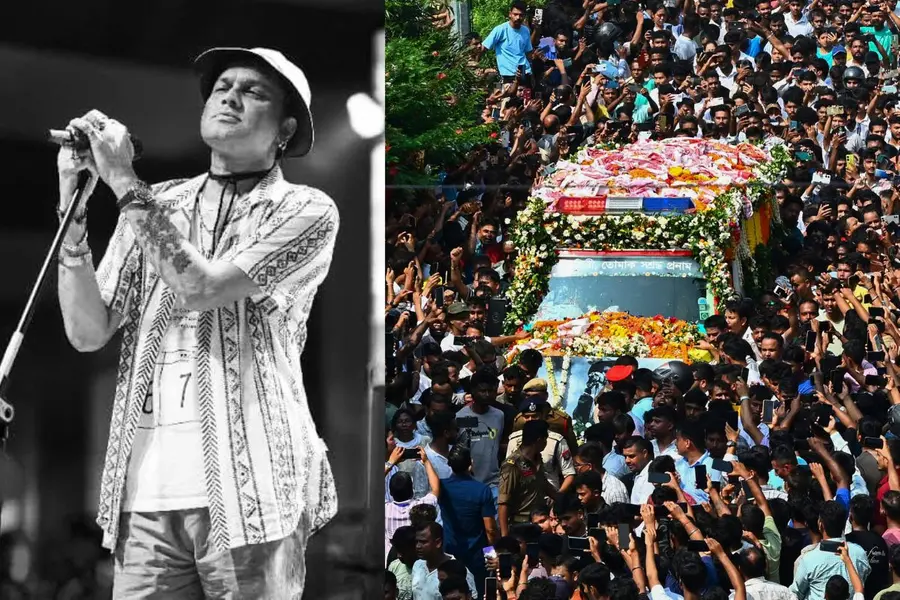
Assam’s 2026 elections are witnessing a unique phenomenon: the enduring influence of a dead singer. As the state prepares for the 9 April polls, the legacy of music icon Zubeen Garg has emerged as a volatile political factor that could swing results in a reshaped electoral landscape.
A pilgrimage for justice
At Hatimura, near Guwahati, a 10-bigha site known as ‘Zubeen Kshetra’ has become a focal point for public grief and political manoeuvring. Thousands of fans visit the memorial to offer incense and flowers at the spot where the singer was cremated. Garg died at age 52 while swimming in Singapore, a tragedy that still haunts the state.
While a Singapore coroner recently ruled the death an accidental drowning, the Assam government maintains it was a murder conspiracy. Seven individuals, including the singer’s manager and a festival organiser, remain in custody. This pursuit of "justice" has become a central campaign theme. The BJP government has fast-tracked the trial and recently began construction on a boundary wall at the memorial site, just as the election schedule was announced.
Politics vs public grief
The "Zubeen factor" has sparked a fierce debate over politicisation. The Chief Minister previously stated that the public should not vote for his party if the government failed to deliver justice for the singer. The BJP even organised a "Nyay Yatra" to highlight their investigation efforts.
However, the opposition Congress party claims the ruling government is exploiting a tragedy for votes. They point out that Garg was often a vocal critic of the government, specifically opposing the Citizenship (Amendment) Act and the felling of ancient trees for urban projects. Some younger fans are so disillusioned that they have suggested they may boycott the vote entirely. In a rare tribute, election officials have kept Garg’s name on the voter list for the Dispur constituency out of respect.
A reshaped battleground
This emotional surge comes at a time when Assam’s political map has been fundamentally altered. A 2023 boundary redrawing exercise increased seats for Scheduled Tribes and consolidated indigenous-majority areas. The BJP claims these changes protect local heritage, but traditional voting blocs remain essential.
The state’s 126-member Assembly is a complex puzzle of ethnic Assamese voters, Tea Tribes who make up 18% of the population, and Bengali-origin Muslims who hold sway in over 30 seats. While the new map is expected to help the ruling party, observers believe the undercurrent of anger regarding Garg’s death could influence young voters and shift the balance in key constituencies. For many, the singer remains a powerful voice that continues to shape the state's identity even from his final resting place.
Published: 29 Mar 2026, 04:13 pm IST
Related Topics
Disclaimer: Kindly avoid objectionable, derogatory, unlawful and lewd comments, while responding to reports. Such comments are punishable under cyber laws. Please keep away from personal attacks. The opinions expressed here are the personal opinions of readers and not that of Mathrubhumi.
