
The committee suggested defining an “Aravalli Hill” as any landform located in notified Aravalli districts that rises at least 100 metres above the local terrain
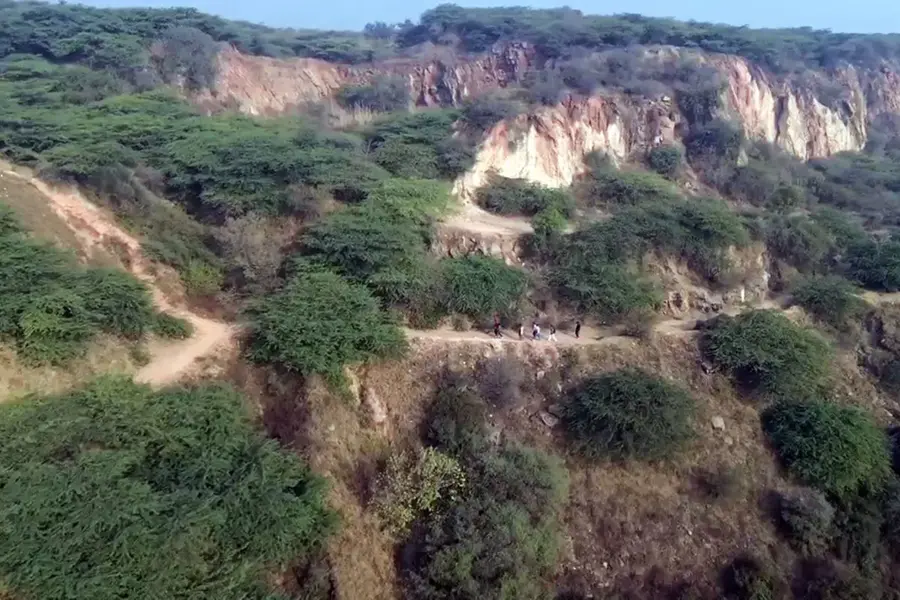
The Aravalli hills, among the oldest mountain systems in the world, have become the centre of an intensifying political and environmental debate following a proposed change in how the range is officially defined and the potential impact of that change.
Here is an explainer on what the issue is and why it matters.
1. What is the controversy about?
In October this year, a committee appointed by the Ministry of Environment, Forest and Climate Change (MoEFCC) proposed a revised definition of the Aravalli hills and ranges, saying the move was aimed at protecting the ancient mountain system. The Supreme Court accepted the committee’s recommendations last month but on Monday put its order on hold.
2. What did the committee recommend?
The committee suggested defining an “Aravalli Hill” as any landform located in notified Aravalli districts that rises at least 100 metres above the local terrain. An “Aravalli Range” would consist of two or more such hills situated within 500 metres of each other.
Elaborating on the definition, the committee said that the entire landform enclosed by the lowest contour of such a hill — including supporting slopes and associated landforms, regardless of gradient — should be treated as part of the Aravalli Hills.
3. Why is there opposition to the new definition?
Environmental activists, scientists and opposition parties have raised concerns that the revised definition could leave large areas of the fragile ecosystem vulnerable to mining. Critics argue that the changes were proposed without sufficient scientific studies or public consultation and could allow mining activities in parts of the Aravallis across Haryana, Rajasthan and Gujarat.
4. Why are the Aravallis important?
The Aravalli hills stretch from Delhi through Haryana and Rajasthan into Gujarat and are among India’s oldest geological formations. State governments have historically recognised the range across 37 districts. Ecologically, the Aravallis act as a barrier against desertification from the north, support biodiversity, and play a crucial role in groundwater recharge.
In November, the Supreme Court warned that unchecked mining in the Aravallis poses a “great threat to the ecology of the nation” and called for uniform criteria to protect the range, underlining its importance for environmental balance and sustainable development.
5. What has the Supreme Court said about mining?
On November 20, the Supreme Court accepted a uniform definition of the Aravalli hills and ranges and barred the issuance of new mining leases in Aravalli areas across Delhi, Haryana, Rajasthan and Gujarat until expert reports are submitted.
Amid growing concern over the implications of the revised definition, the MoEFCC also announced a ban on granting fresh mining leases.
6. What areas would remain protected under the new definition?
Several parts of the Aravallis are already designated as tiger reserves, national parks, wildlife sanctuaries, eco-sensitive zones, wetlands and compensatory afforestation sites. These areas would continue to remain closed to mining or development unless explicitly permitted under wildlife or forest laws, regardless of how they are classified under the Aravalli definition.
Published: 29 Dec 2025, 08:54 pm IST
Related Topics
Disclaimer: Kindly avoid objectionable, derogatory, unlawful and lewd comments, while responding to reports. Such comments are punishable under cyber laws. Please keep away from personal attacks. The opinions expressed here are the personal opinions of readers and not that of Mathrubhumi.
