
For generations, the AN-32 aircraft have been true lifelines for our soldiers and civilians in the remote corners of the Northeast and Himalayas.
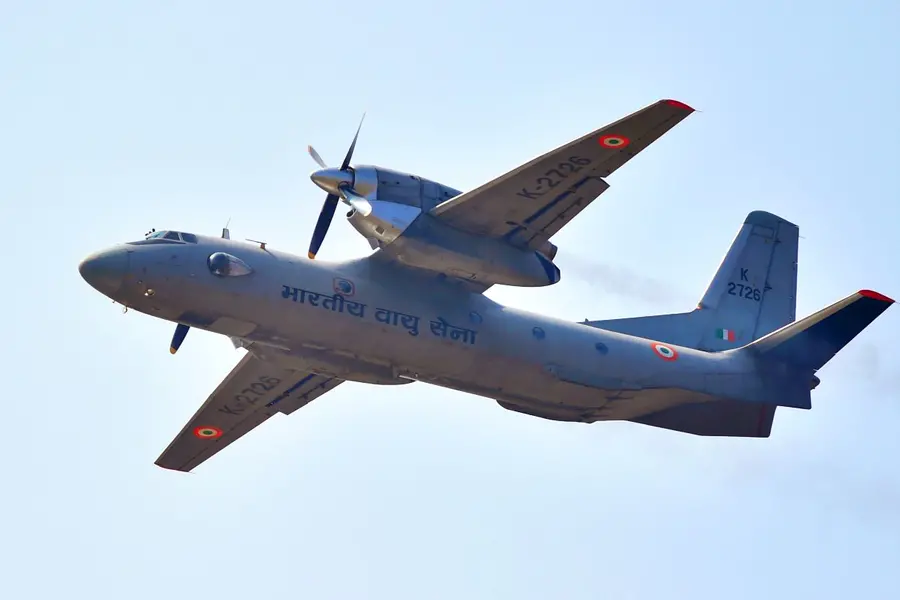
A quiet Saturday morning in Assam turned into a day of national mourning. On June 13, at around 10 am, an Indian Air Force AN-32 transport aircraft crashed while attempting to land at the Rowriah (Jorhat) Air Force Station. Five courageous IAF personnel made the supreme sacrifice -- Squadron Leader Prashant Singh, Flight Lieutenant Shubham Kumar, Sergeant Jitendra Sharma, Agniveervayu Khemaram Kumawat, and Agniveervayu Danish Alam.
The co-pilot survived and is receiving medical treatment. The aircraft came down within the airbase premises, overturned, and caught fire. Firefighting and rescue teams responded swiftly, and the station was secured during recovery operations.
AN-32: India's rugged lifeline in the skies
The Antonov An-32, known as the Cline in NATO terminology, has been the backbone of the IAF’s transport fleet for over four decades. This Soviet-origin twin-turboprop aircraft was specially developed in Ukraine to meet India’s unique “hot and high” requirements.
India began inducting these robust machines in the mid-1980s and currently operates over 100 of them.
Key specifications of AN-32
-- Crew: 4 (typically two pilots, flight engineer, and loadmaster)
-- Capacity: Up to 42 paratroopers, 50 passengers, or 24 casualties on stretchers with medical attendants; maximum payload of 6,700 kg
-- Dimensions: Length 23.78 m, wingspan 29.2 m, height 8.75 m
-- Engines: Two Ivchenko-Progress AI-20DM turboprop engines, each producing around 5,100 horsepower
-- Performance: Maximum speed 530 km/h, cruise speed 470 km/h; service ceiling 9,500 metres; range up to 2,500 km with lighter loads
-- STOL Capability: Excellent short takeoff and landing performance on unprepared or short runways (takeoff distance around 1,240 metres at maximum takeoff weight of 27,000 kg)
What makes the AN-32 extraordinary is its ability to operate in the most unforgiving conditions. Its high-wing design with engines mounted above the wings protects against debris on rough surfaces, while the rear ramp enables rapid loading and unloading -- allowing the same aircraft to switch roles from troop carrier to cargo hauler or casualty evacuation (CASEVAC) platform within minutes.
For generations, these aircraft have been true lifelines for our soldiers and civilians in the remote corners of the Northeast and Himalayas.
From Ladakh and Leh in the north to the Andaman & Nicobar Islands and Lakshadweep in the south, the AN-32s have delivered troops, supplies, medicines, and hope where roads simply do not exist.
They perform para-drops, disaster relief missions, and search-and-rescue operations in terrain that tests both man and machine to the limit. Jorhat itself has been home to these aircraft for more than 35 years.
The IAF has been progressively upgrading the fleet with modern avionics, new engines, and indigenous systems. While the Russia-Ukraine conflict slowed some external support, India is now focusing on overhauling and sustaining these workhorses through domestic Base Repair Depots.
The older aircraft are expected to be phased out gradually from around 2032, making way for newer platforms like the Airbus C-295.
Why such tragedies occur
Aviation experts note that nearly 90 percent of air accidents -- whether civil or military -- happen during the critical phases of takeoff and landing. At these moments, the aircraft flies dangerously close to its stalling speed -- the minimum speed needed to keep the wings generating enough lift.
Any sudden loss of power, gust of wind, or minor handling challenge leaves very little time or altitude for recovery.
Many forward and remote airstrips used by the IAF, including those in the Northeast, allow only one direction of approach. Due to surrounding hills, mountains, or other terrain obstacles, pilots cannot circle around or approach from the opposite end of the runway.
They must commit to a single heading, often threading through narrow valleys with limited room for error or go-around. A slight misjudgment in such conditions can quickly turn critical.
The AN-32 is not an unsafe aircraft. In fact, its rugged design has earned it deep respect. But the missions it flies for the IAF are among the most demanding in the world.
In the Northeast, pilots often operate without full radar coverage, in heavy monsoon clouds, pouring rain, and through narrow valleys surrounded by towering hills. Many airstrips allow only one direction of approach with little room for error.
A slight misjudgment can lead to catastrophe in what pilots call “dead valleys” -- narrow gorges with rising peaks that leave no escape route.
This is not the first time the AN-32 has faced tragedy in these skies. Similar challenges contributed to past incidents, including the 2019 crash near Mechuka in Arunachal Pradesh and the 2016 disappearance over the Bay of Bengal. The aircraft and its crews routinely push the boundaries to keep India’s frontiers connected and secure.
As Jorhat mourns this loss, the entire nation salutes the five brave hearts who gave their lives in service of the motherland. Their sacrifice reminds us of the silent courage and unmatched skill of IAF personnel who fly into the harshest skies on earth every single day. The Court of Inquiry will hopefully provide clarity and help strengthen safety measures for the future.
The AN-32 and its crews have written countless stories of resilience. Today, we bow our heads in gratitude and remember that freedom has a price — often paid by the bravest among us.
The author is a defence, aerospace & geopolitical analyst.
Published: 13 Jun 2026, 05:28 pm IST
Related Topics
Disclaimer: Kindly avoid objectionable, derogatory, unlawful and lewd comments, while responding to reports. Such comments are punishable under cyber laws. Please keep away from personal attacks. The opinions expressed here are the personal opinions of readers and not that of Mathrubhumi.
