
New video evidence points to catastrophic dual engine failure. Black box data holds the key
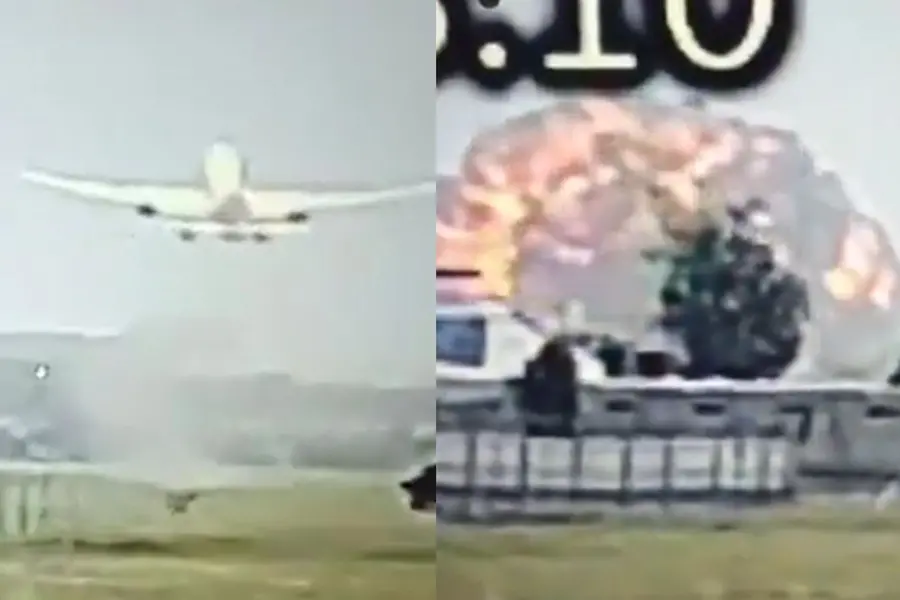
On June 12, 2025, Air India Flight 171 -- a Boeing 787-8 Dreamliner -- crashed shortly after takeoff from Ahmedabad Airport, killing 241 passengers and crew. Only one passenger survived. What was supposed to be a routine flight to London became aviation's worst nightmare when the aircraft issued a Mayday call after reaching just 625 feet and then disappeared off the radar. Now, breakthrough video analysis has identified a game-changing piece of evidence: the RAT.
What changed the investigation
Captain Steve Scheibner, a former US Navy pilot and seasoned aviation analyst, discovered a small gray dot beneath the aircraft's belly in enhanced footage -- the Ram Air Turbine (RAT) had deployed. This tiny emergency propeller only comes out when something has gone terribly wrong.
The RAT looks like a little Evinrude motor -- a two-blade prop that provides electrical and hydraulic pressure for aircraft in extreme emergencies. It only deploys during massive electrical failure, huge hydraulic failure, or dual engine failure.
4 evidences that point to catastrophic engine failure
1) Visual: "That little gray dot is the RAT," Scheibner explains, pointing to enhanced footage. "This is visual confirmation that the RAT deployed."
2) Audio: Playing the original crash video, you can hear a distinctive high-pitched sound like 'a little Cessna going by' -- the RAT spinning at near-sonic speeds to generate emergency power.
3) Survivor statement: The lone survivor in seat 11A told investigators he heard a loud bang and saw cabin lights flicker before impact -- 'consistent with RAT deployment'.
4) Mayday call: The flight crew issued a mayday call, reporting a loss of power and thrust shortly after takeoff.
Why did both engines fail?
"This puts the dual engine failure theory in first place," Scheibner concludes. "But we're still at square one. We don't know why both engines on a 787 flamed out after takeoff. It's a real head-scratcher." Possible causes include:
* Bird strike affecting both engines
* Fuel contamination
* Electrical system failure in the 787's advanced systems
* Hydraulic failure cascade
Meanwhile, both black boxes have been recovered. The data will be sent to Boeing for initial diagnostics, with global aviation bodies watching closely. The black boxes will reveal:
* Every word spoken in the cockpit
* Every warning light and alarm
* Every switch movement
* Exact engine performance data
* Hydraulic and electrical system status
Was this preventable?
There are modern safety technology available to counter such scenarios. These include:
* Predictive Analytics: Tools like Honeywell Forge and Rolls-Royce Blue Data Thread use AI to spot tiny issues before they become disasters
* Real-time Monitoring: Systems like Inmarsat's SwiftBroadband-Safety keep aircraft connected at all times
* Advanced Diagnostics: Live data streaming from cockpit to ground control
Aviation safety isn't just about technology -- it is about budgets, policy, accountability, and global cooperation. The question remains: why wasn't more done to prevent this tragedy?
India's aviation authority ordered Air India to undertake extra safety checks on all Boeing 787-8 and 787-9 planes "as a preventative measure."
With the RAT evidence changing everything, the aviation community is asking hard questions about the 787's electrical systems, dual engine failure scenarios, and whether current safety protocols are enough.
The RAT deployment footage has transformed the Air India 171 investigation from multiple theories to a focused look at catastrophic dual engine failure. While the visual evidence is compelling, the real answers lie in the black box data that will take weeks to decode. The tragedy highlights the gap between available safety technology and its implementation -- a gap that may have cost 279 lives.
Key Takeaway: In aviation, small details can reveal big truths. The "little gray dot" spotted by Captain Scheibner may be the key to understanding not just what happened to Flight 171, but how to prevent similar disasters in the future.
The author is a defence, aerospace and geopolitical analyst.
Published: 17 Jun 2025, 04:47 pm IST
Disclaimer: Kindly avoid objectionable, derogatory, unlawful and lewd comments, while responding to reports. Such comments are punishable under cyber laws. Please keep away from personal attacks. The opinions expressed here are the personal opinions of readers and not that of Mathrubhumi.
